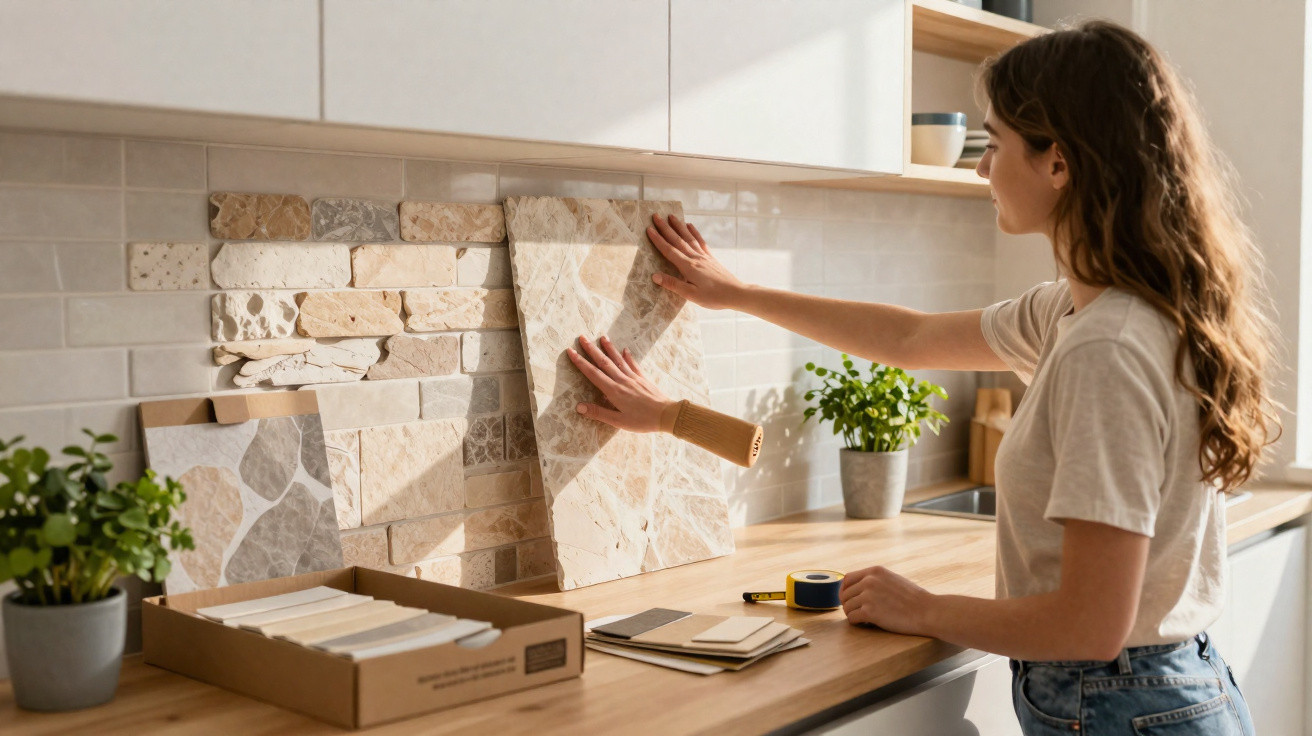
In modern kitchens, traditional white tiles are steadily being replaced by natural stone cladding or stone-effect finishes, typically in neutral, concrete-inspired or earthy shades. This finish can be used in large slabs or smaller pieces, on the splashback behind the sink, around the hob or in selected strips, creating a more refined setting without sacrificing everyday practicality. It is ideal for refreshing a kitchen without having to start entirely from scratch.
Why has stone-effect cladding become popular in kitchens?
Stone-effect cladding has earned its place by producing more seamless surfaces, with fewer visual divisions than small tiles, while introducing warm or grey-toned colours that work well with wood, metal and glass. The result is a more balanced, tailored look with a contemporary yet inviting feel, even in straightforward schemes and compact kitchens.
A further benefit is that it moves away from the cold, "laundry room" appearance often linked to glossy white tiles. Natural stone, stone-look porcelain tiles and concrete-effect finishes offer tonal variation, subtle veining and slight irregularities, giving every kitchen a distinctive, pleasing appearance in natural or artificial light.
How does stone cladding bring personality and style?
Stone cladding has become associated with sophisticated kitchens because it combines visual appeal with practicality. Rather than relying on an entirely white backdrop, it creates a richer visual base that enhances stainless-steel appliances, coloured or wooden cabinets, and even simple decorative pieces placed on the worktop.
In contemporary designs, this type of finish is often paired with LED strip lighting beneath wall cabinets to highlight its relief and texture. To see more clearly how these features can transform the room, it is worth considering several practical details that make a difference every day:
- Texture: adds depth and makes the area behind the worktop more engaging, even with very few accessories.
- Elegant neutral colours: beige, grey and sand shades suit styles ranging from rustic to minimalist.
- Visual unity: using the same material on the upstand, worktop and wall strips gives the scheme a more cohesive finish.
- Connection with the living area: in open-plan kitchens, the stone effect helps it "converse" with the flooring and joinery in the living space.
How can you update a kitchen with stone cladding without major renovation work?
You do not have to tear everything out to replace white tiles with a more current finish. In many kitchens, the update can focus on the most visible wall or simply the worktop upstand, which already changes the perception of the space considerably and can be completed quickly, with less mess and demolition.
For those seeking quicker solutions, certain alternatives can be fitted over the existing covering, provided that the surface beneath is sound and level. The most commonly used options for this smart update include:
- Large-format porcelain tiles: fitted with minimal grout lines, they create an almost continuous surface.
- High-performance adhesive cladding: replicates stone or polished concrete and is suitable for areas away from direct flames.
- Thin or laminated natural-stone panels: secured with dedicated systems, these deliver visual impact with very little thickness.
How do you choose the ideal stone-effect cladding for each type of kitchen?
Choosing stone-effect cladding depends on the size of the room and how frequently it is used. Small kitchens benefit from lighter shades and subtle veining, whereas larger spaces can accommodate bolder marble-inspired patterns without making the design feel heavy. In open-plan kitchens, repeating colours found in the sofa, living-room floor and joinery is a useful way to preserve continuity.
For households that use the kitchen every day, porcelain tiles with a soft texture make cleaning easier and stand up well to grease, water and steam, provided the manufacturer's guidance is followed. Focusing investment on the main wall, worktop upstand or a standout vertical strip is a way to modernise the home gradually, reinforce the identity of those living there, and ensure the room remains practical, attractive and has the "look of a considered design".












Comments
No comments yet. Be the first to comment!
Leave a Comment