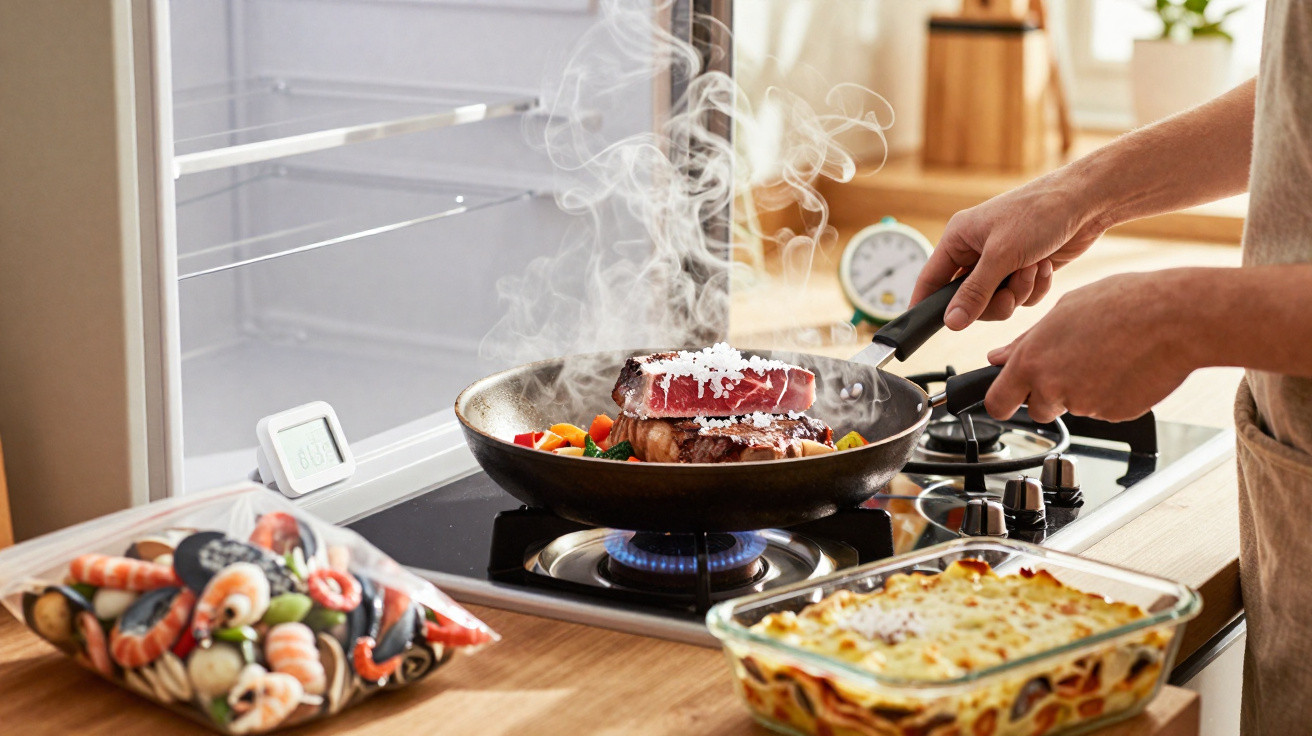
Many households rely on frozen food to cope with busy daily life. It saves time, keeps for a long time and can help cut down on leftovers. However, putting every frozen item straight into a frying pan, saucepan or oven can be a mistake with unpleasant consequences – ranging from spoiled flavour to serious food poisoning. Five food groups should never be heated without being thawed first.
Why cooking straight from the freezer can cause problems
Freezing halts the growth of most bacteria, but in many cases it does not kill them. Food must therefore reach certain temperatures during cooking to ensure germs are destroyed. If the centre remains icy while the outside is already browning, you can end up with a dish that looks cooked but is still raw inside.
Cooking delicate foods from frozen risks uneven heating, bacteria in the centre and a far poorer texture.
Water also expands when it freezes, damaging cell structures and potentially changing both texture and nutrient content dramatically if the food is handled incorrectly. With some products this is barely noticeable; with others, the difference is immediately obvious.
1. Large cuts of meat: a breeding ground for germs in the centre
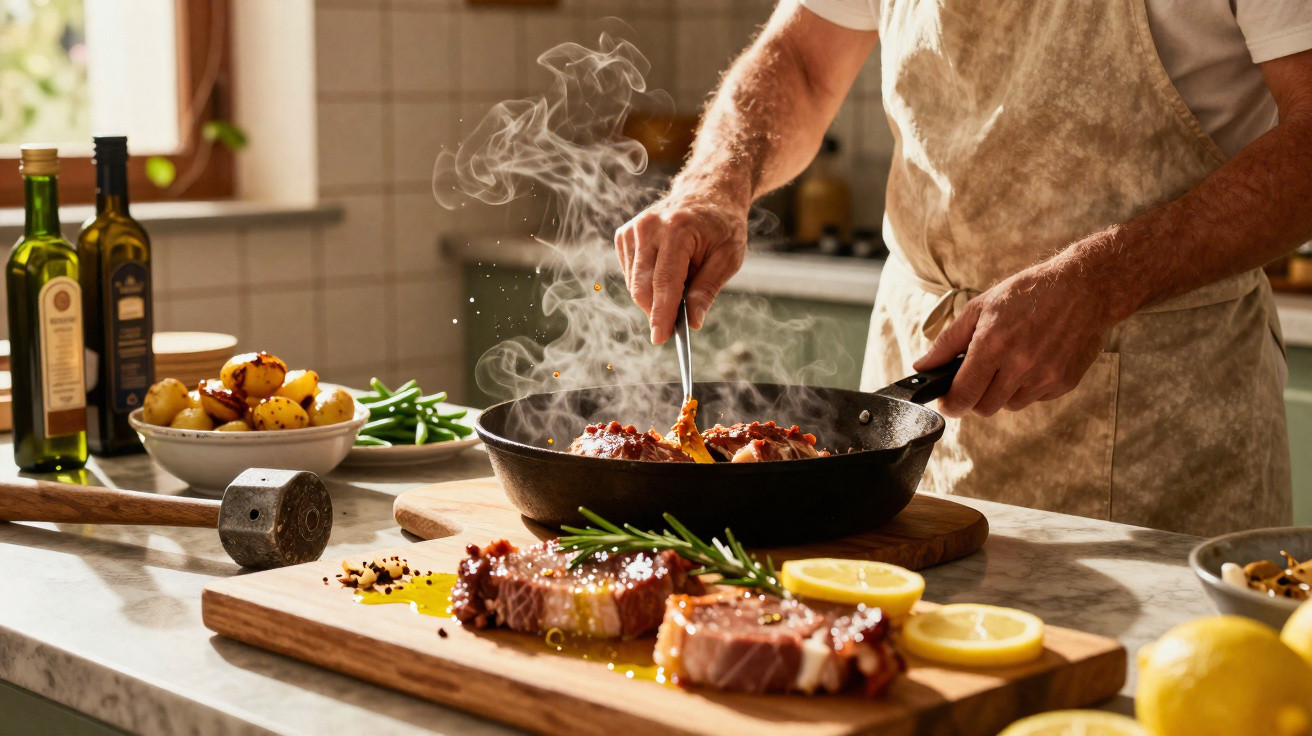
Joints of meat, thick steaks, whole chicken legs and rolled pork joints have one thing in common: they are too substantial to cook evenly from frozen. In a frying pan or oven, the exterior browns quickly while the middle remains partly frozen.
The outcome is crisp on the outside but lukewarm, or even raw, within. This is precisely the range in which bacteria such as salmonella or certain strains of Escherichia coli can thrive. They survive freezer temperatures and may continue multiplying as the food warms slowly.
- The outside heats up too quickly while the internal temperature stays too low
- Greater risk of gastrointestinal infections
- Tough, dry meat rather than a succulent result
Professionals thaw large cuts of meat gently in the fridge and use a meat thermometer. As a guide, poultry should reach at least 75 degrees at its centre, while products similar to minced meat require slightly more.
2. Fish and seafood: delicate and vulnerable
Fish fillets, prawns, mussels and squid all contain a high proportion of water and have very delicate structures. When fried or boiled from frozen, their water escapes abruptly. The result is a soft, watery texture – more canteen-soft than restaurant-quality.
There is an additional, specific risk. If the cold chain is interrupted, some types of fish can produce histamine. This breakdown product may trigger poisoning symptoms, including headaches, flushed skin or palpitations.
Fish and seafood should thaw slowly in the fridge and then be prepared promptly to preserve both quality and safety.
For the safest approach, transfer frozen fish to the fridge overnight, pat it dry before cooking and cook it briefly but at sufficient heat. This helps it remain moist and flavoursome.
3. Water-rich vegetables: from crisp to mushy
Vegetables such as courgettes, tomatoes, cucumbers and aubergines are largely made up of water. Freezing ruptures many of their cells, so even more liquid is released during heating. If these vegetables are cooked directly from frozen, they can quickly become a grey-green, limp mass on the plate.
There is another drawback: delicate water-soluble vitamins, especially vitamin C and parts of the B-complex, are more easily lost when these foods are handled poorly. The meal may still be filling, but it provides considerably fewer nutrients.
Anyone freezing vegetables at home should:
- blanch them briefly before freezing;
- package them as airtight as possible;
- drain or squeeze out excess liquid after thawing.
Frozen vegetables are often unproblematic in soups or stews, where a softer texture is barely noticeable. In stir-fries, bakes or as an accompaniment for the grill, however, it is much more of a disadvantage.
4. Egg-based dishes: from creamy to grainy
Quiches, puddings, custard sauce and delicate desserts often contain a large amount of egg. Freezing alters protein structures. If these products are then heated straight away, the egg sets unevenly: the surface cooks too fast while the centre takes too long to catch up.
A delicate, creamy topping can quickly turn into a crumbly, pale egg mixture that neither looks nor tastes good.
Egg dishes should be thawed in the fridge until fully chilled but no longer frozen. Only then should they go into the oven or a bain-marie. Patience pays off here as well: gentle cooking at moderate temperatures keeps the texture stable.
5. Ready meals and gratins: burnt outside, icy in the middle
Lasagne, potato gratin, cannelloni and bakes with a cheese topping – freezer aisles are full of them. It is tempting to put the package straight into the oven and trust the promise that it can be cooked “straight from the freezer”.
In reality, it often turns out differently: the edges become too dark or hard while the centre remains frozen or only turns lukewarm. This is particularly concerning in dishes containing minced meat or poultry, as germs can survive in the middle.
To avoid unpleasant surprises, allow more time: let the dish thaw partly in the fridge, divide it into smaller portions if necessary, then bake it through completely at a moderate temperature.
Thawing frozen food properly: the safest everyday methods
The way food is thawed plays an important part in determining how safe and enjoyable it will be in the end. High surrounding temperatures encourage bacteria, while slow thawing in cool conditions slows their growth.
Recommended approach for thawing
- Always thaw food in the fridge, ideally overnight.
- Open or pierce the packaging slightly so that thawing liquid can drain away.
- Place thawing meat or fish on a plate and discard the liquid that collects.
- Let high-water foods, such as vegetables and fish, drain thoroughly after thawing.
- Prepare food promptly after thawing rather than leaving it in the fridge for several more days.
Thawing time depends on the size and shape of the item: thin fish fillets often need only a few hours, whereas a large joint can take more than a day.
Methods best avoided
Many home remedies for speeding up thawing may be convenient, but they are risky. The following are particularly problematic:
| Method | Problem |
|---|---|
| Room temperature | The surface becomes warm, bacteria multiply and the centre stays cold for a long time |
| Radiator or sunny windowsill | Major temperature differences create ideal conditions for germs |
| Microwave using the defrost setting | Heating is often uneven, with some areas already starting to cook |
| Slow cooker | Warming is too gradual, allowing bacteria to multiply before the food is fully heated |
How to tell whether a dish is fully cooked
Appearance alone can be misleading. A joint may look dark brown on the outside while still being too cold inside. A meat thermometer, or at least a clean cut into the thickest part of the food, provides greater reassurance.
- Meat juices should run clear rather than reddish.
- Poultry should show no trace of pink.
- Fish should flake easily and should no longer look translucent in the centre.
Extra care is worthwhile for families with young children, pregnant women, older people and anyone with a weakened immune system. They are more sensitive to germs and face a higher risk of severe illness from foodborne infections.
How to make sensible use of frozen food
Frozen products offer major advantages: they make seasonal ingredients available throughout the year, reduce food waste and can be very rich in vitamins if they were freshly flash-frozen. What matters is how they are handled.
Those who plan meals briefly, thaw food in the fridge overnight, remove excess liquid and keep an eye on internal temperatures can enjoy the convenience of the freezer without unnecessary risks. Frozen pizza and chips are less troublesome; the main concerns are raw meat, fish, eggs and vegetables with a high water content.
A simple routine is especially useful during hectic periods: decide in the evening what will be on the table the following day, move the relevant pack into the fridge and give the food the time it needs. That way, frozen food remains convenient without sacrificing flavour or health.










Comments
No comments yet. Be the first to comment!
Leave a Comment