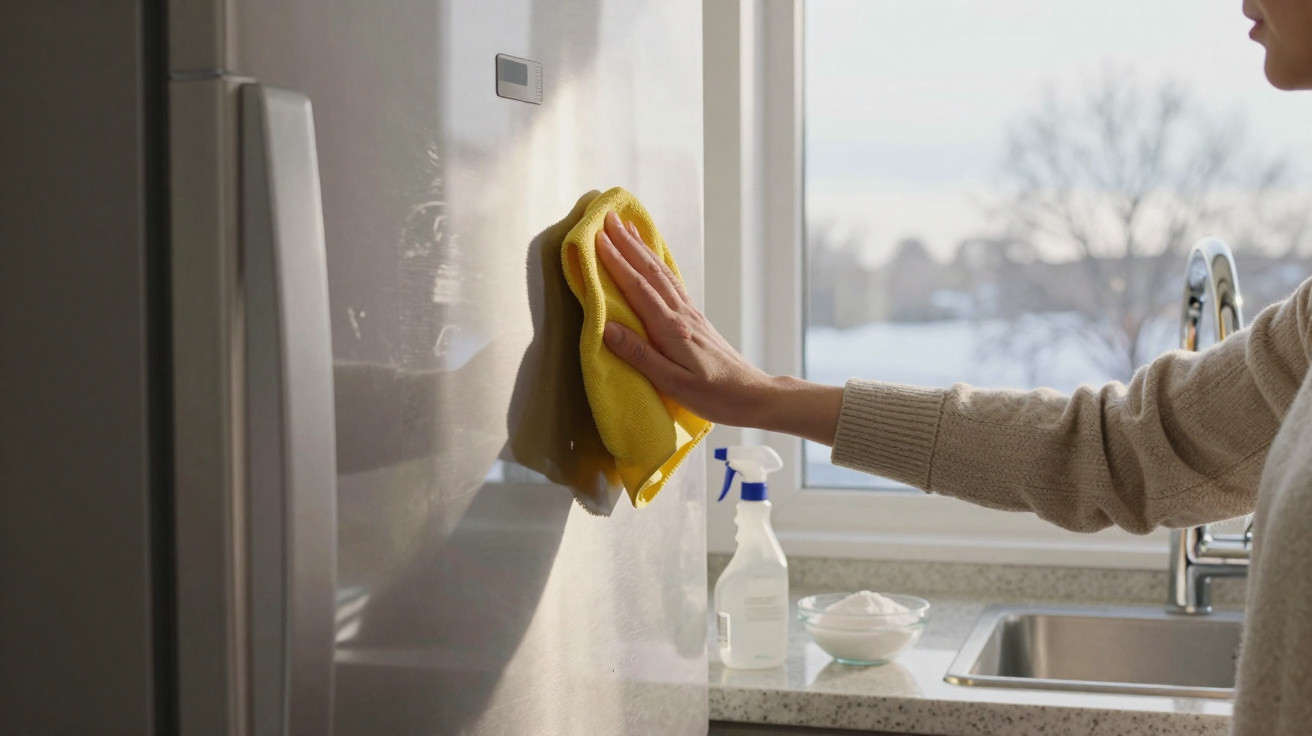
The first properly cold weekend of the year arrives. You are in the kitchen making coffee, still wearing fluffy socks, when you notice it.
The stainless steel fridge door that looked flawless all summer is suddenly marked with dull streaks and odd cloudy patches. You try a dish towel, only for it to look worse. You reach for an assorted spray, and it smears across the surface like sun cream on glass.
You know you have not changed anything: the same fridge, the same cleaner and the same children touching everything with inexplicably sticky fingers. Yet, the moment the temperature falls, your appliances seem to have aged by five years overnight.
Nothing has failed, and you have not “ruined” the steel. A less visible change is taking place in the air, on the metal and in the way you clean as the seasons turn.
Why stainless steel looks dirtier in cold weather
Step into a warm kitchen in July and the stainless steel fridge door will often look... fine. Perhaps not showroom-ready, but good enough. In January, that exact same door reveals every wipe line, fingerprint and casual swipe left from the previous evening. Neither the metal nor your eyesight has changed; the setting around it has.
The colder months bring a subtle combination of dry indoor air, fluctuating temperatures and heavier residues from cooking and heating. With its brushed or polished finish, stainless steel acts almost like a mirror for all of this. The streaks were always present to some degree, but cold weather makes them much more noticeable, rather like increasing the contrast in a photograph.
We also handle appliances differently in winter. There are more soups, more roasting dishes and more trips to the fridge during long evenings spent at home. Oily fingerprints on a colder metal surface produce marks that adhere more firmly and spread further. Before long, your once “easy-care” stainless steel feels like a test you are somehow failing.
Imagine the first frost of the year: dinner is bubbling in the oven and condensation is misting the kitchen window. You take out a baking tray, push the oven door closed with your elbow, then brush against the fridge with a wrist that is still glossy with oil. Your hand feels warm, while the appliance door feels almost icy in comparison.
That difference in temperature is significant. Slightly cold steel does not allow moisture and oils to evaporate as quickly. When cleaner is later sprayed on to the same spot, it stays on the surface for longer, separates and dries unevenly. This is when those ghostly wipe marks appear, visible from across the room, particularly in low winter light.
Manufacturers are quietly aware of this. Some brands even note in small print that stainless steel can “appear more streaky in low humidity” or “when exposed to temperature fluctuations”. You may never read those warnings. What you do see are long vertical smears, almost rainbow-like halos and cloudy patches that appear to shift around without ever completely vanishing.
At a scientific level, stainless steel develops a thin protective oxide layer across its surface. That is what makes it “stainless”. In summer, when humidity is higher and the light is softer, tiny residues from cleaners, tap water and skin oils settle into that layer more evenly, so the eye is less likely to identify every individual line.
During colder months, heating systems generally make the air inside homes drier. Dry air accelerates evaporation unevenly. If you spray cleaner on a cool door, it will not dry into a consistent film. Instead, it leaves irregular surfactant and mineral deposits, resembling tiny dried riverbeds. Your cloth then moves these deposits around, forming visible streaks that catch the crisp winter daylight.
The angle of the light changes as well. A lower winter sun reaches appliances more horizontally, strengthening reflections and shadows. Small differences in surface texture that were barely visible in August can suddenly stand out in January. You are not imagining it - your kitchen lighting really does work against you when it is cold.
How to clean stainless steel in winter without worsening streaks
Begin by altering one thing: the temperature of the metal. Before using any spray, lightly warm the surface with a soft, dry microfibre cloth. Treat it as though you are “waking up” the steel. Rubbing for 20–30 seconds creates a slight increase in surface temperature and distributes oils instead of pulling them into thick bands.
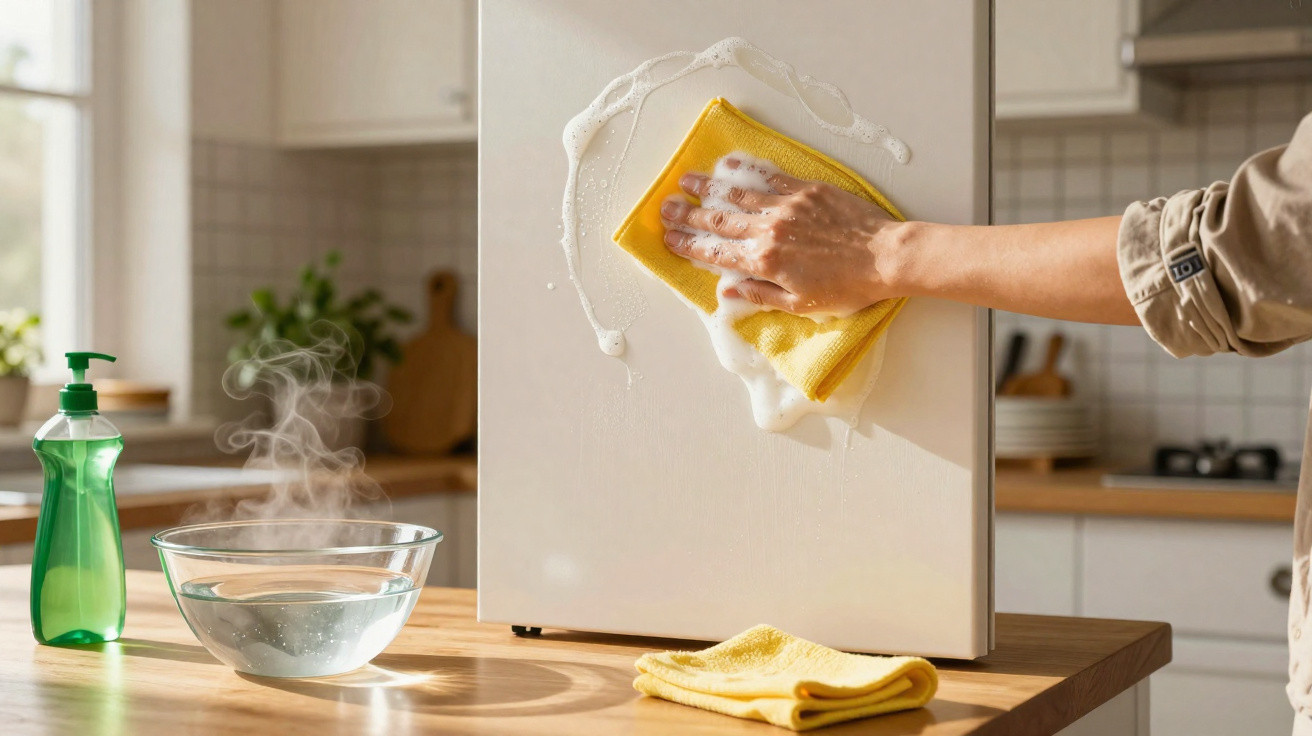
Next, use only a very small amount of product. Apply a pea-sized drop of dedicated stainless steel cleaner, or a mist of diluted washing-up liquid, to the cloth rather than directly to the door. Clean in the direction of the grain in slim vertical or horizontal sections. Move slowly with a slight overlap, as though carefully mowing a lawn rather than zig-zagging in a panic.
As soon as you finish one section, use a second dry microfibre cloth to buff it gently. You are not aiming to polish it as you would a car. The aim is simply to prevent cleaner from drying in strange patterns on a cold surface. This “two-cloth” approach may sound overly particular, but it reduces streaking considerably when the air is dry and the metal is cool.
In winter, most people reach for all-purpose sprays because they are already on the worktop after cleaning tables. These products commonly contain ingredients that leave a protective coating on wood or laminate; on stainless steel, that coating becomes a hazy film. One quick wipe may look acceptable while wet, but by the following morning every wipe mark is sharply visible.
There is also the familiar “vinegar for everything” method. In small quantities on a cloth, it can help to cut through grease. However, when it is splashed or sprayed directly on to a chilly appliance, it can dry in uneven rings and may even react slightly with the oxide layer, exposing uneven shine that resembles staining. Let us be honest: nobody really does this every day while religiously following the manufacturer’s instructions.
The emotional side of this sits behind the chemistry. You arrive home tired, spot the streaks and worry that you have damaged an expensive appliance. You scrub more aggressively, switch products and perhaps start combining home remedies seen online. The more frantic the cleaning becomes, the more residue layers accumulate, especially throughout the heating season.
“Streaks on winter stainless aren’t a sign you’re bad at cleaning,” says a home care specialist from a major appliance brand. “They’re a sign your products and your season are out of sync.”
When the temperature drops, these straightforward rules can help:
- During cold months, use just one cleaner intended for stainless steel rather than rotating between products.
- Put cleaner on the cloth every time; never apply it straight to cold metal.
- Keep two microfibre cloths: one slightly damp for cleaning and one fully dry for buffing.
- Work on smaller areas, follow the grain, then stand back and inspect the surface in natural light.
- Carry out a “reset clean” once a month: use warm water with a drop of mild washing-up liquid, then buff dry to remove old product build-up.
This sort of routine changes winter cleaning from a battle into a manageable habit. It also reduces that quietly stressful moment when daylight hits the fridge door and makes the whole kitchen seem worn out.
Living with winter streaks without losing your mind
There is a simple truth here: in a real home, stainless steel will never look 100% immaculate, particularly in winter. Those kitchens on Instagram are either styled, newly cleaned beneath studio lighting or filtered. Real homes contain steam, apple crumble baking in the oven, children’s drawings on the door and hands reaching for milk during late-night Netflix. Your appliances reflect that life back at you.
On a practical level, you can slightly outsmart the lighting. Warmer bulbs, under-cupboard lighting or even a small lamp left on in a corner can soften the hard reflections that make streaks stand out. Some people also find that a gentle monthly finish with a tiny drop of mineral oil or a dedicated stainless steel polish produces a smoother surface that is more resistant to winter streaking.
On a personal level, allowing yourself to “live with a few marks” changes the atmosphere in the room. We have all had the moment when the kitchen needed to be perfect for visitors, and the smallest mark became an obsession. Once you accept that a lived-in brushed-steel fridge will always reveal part of your everyday story, those cloudy patches lose some of their influence.
Perhaps the most realistic perspective is that winter streaks simply show your home’s seasonal rhythm. Your cooking changes, your heating changes, your light changes, and the steel quietly records every part of it. You can battle that record with harsher products and more frustration, or learn the small seasonal techniques that make the reflection softer, kinder and more suited to the way you actually live.
The more we discuss these minor household mysteries - why the same appliance appears perfect in June yet messy in January - the less they resemble personal failures. It is not that you have suddenly forgotten how to clean; your environment has changed, and nobody told you that the rules had changed with it.
The next time you catch streaks on stainless steel in pale winter sunshine, you may look at them differently. Rather than judging them, notice what they reveal: dry air, sharper light, heartier meals and more evenings at home. You may pick up a microfibre cloth, warm the metal slightly and use that winter-friendly method... or simply smile, close the fridge and return to your coffee.
| Key point | Detail | Why it matters to the reader |
|---|---|---|
| The effect of cold and dry air | Cold conditions, dry air and temperature changes cause cleaning products to dry unevenly. | It explains that streaks do not result from “bad” stainless steel, but from a seasonal change. |
| A suitable cleaning method | Warm the surface slightly, apply a small amount of product to a cloth, then buff immediately with a second dry cloth. | It visibly reduces streaks without spending hours cleaning or using multiple products. |
| The emotional relationship with the home | Accept that lived-in stainless steel will show marks, especially in winter, and rely on lighting and regular care rather than perfection. | It helps you feel less guilty and more at ease with the everyday appearance of your kitchen. |














Comments
No comments yet. Be the first to comment!
Leave a Comment