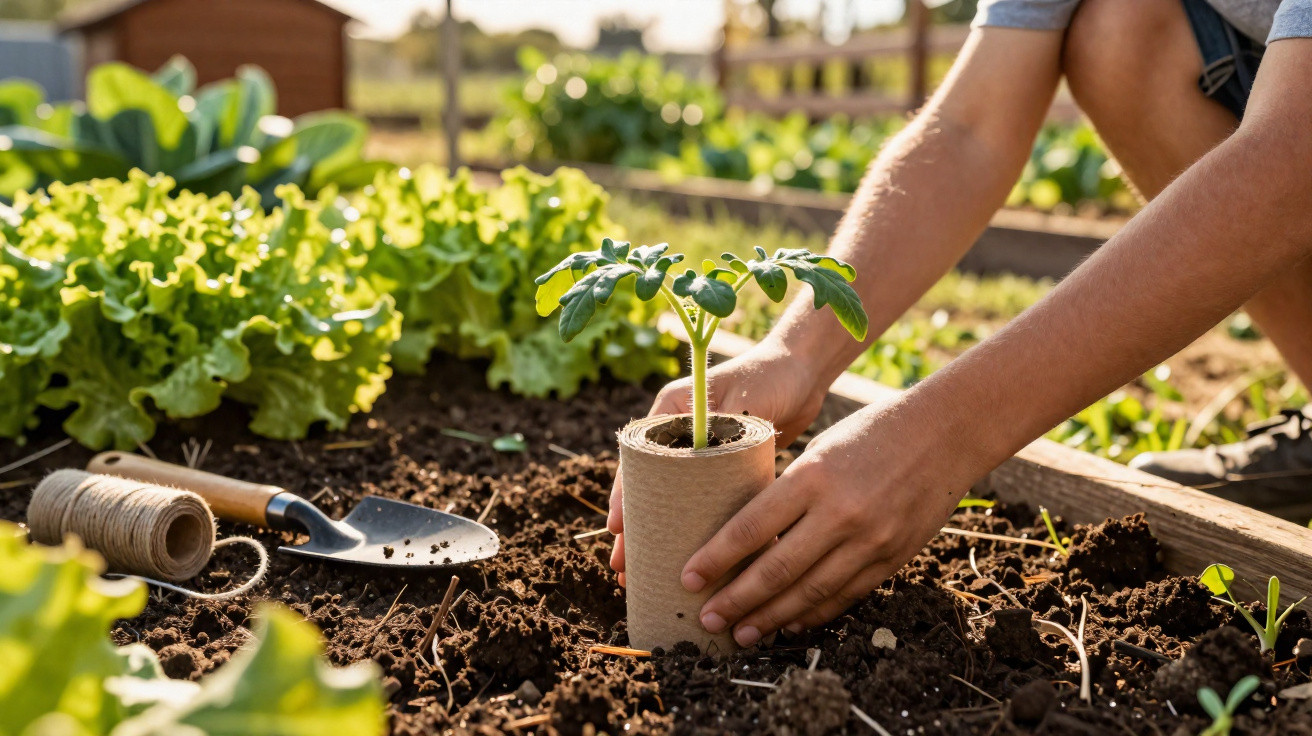
Pots can be expensive, specialist equipment often ends up unused, and your tomatoes may still struggle in the breeze.
Some gardeners have a secret with nothing to do with clever marketing. It comes from your bathroom bin. Once you give it a go, fragile growth can become far more resilient.
I was at the kitchen sink, my hands covered in soil, when a neighbour placed a paper bag on the worktop. It held a dozen clean, plain toilet paper rolls, which seemed like a punchline. I laughed, but she was serious.
We took them outside and quickly folded them into miniature pots, almost like origami. Before the kettle had finished boiling, a tray of tidy cardboard tubes filled with seed compost was ready. What is remarkable is how quickly the plants react.
A fortnight later, the basil was bushier, its stems more confident, and the soil remained nicely balanced inside its close-fitting brown sleeve. It was clearly homemade, yet full of life. It also felt as though I had at last discovered what had been missing.
It required nothing more than a toilet paper roll.
The simple tube that encourages vigorous growth
Starting a seedling in a toilet paper roll gives its roots a straight, sheltered passage from the outset. There is less light, less exposure to draughts and a soft wall for support. Rather than spreading sideways near the surface, the tube guides roots downwards, encouraging the plant to establish itself deeply.
What appears to be waste can become a small lifeline. The cardboard holds a modest reserve of moisture exactly where it is needed: neither waterlogged nor completely dry. Instead, it offers a consistent supply that stops tiny roots from giving up after only a few days.
One spring, I carried out an informal patio trial using two trays of lettuce. Both had the same compost, light and watering routine. By transplanting time, the seedlings grown in rolls had sturdier stems and an obvious early advantage. We have all seen a plant suddenly look “ready.” In this case, it happened sooner, with fuller and more settled growth.
There is a protective benefit as well. A cardboard collar can prevent cutworms from moving around a stem overnight. Bare seedlings can be shaken relentlessly by wind, while a roll reduces that movement much like a seatbelt. That small barrier can make the first days outdoors feel secure rather than hazardous.
There is no magic involved. Cardboard contains cellulose and lignin, so it can wick moisture while remaining breathable. In sunshine, it heats up quickly, raising the compost temperature by the few degrees that activate root enzymes. Roots grow downwards, meet air at the drainage holes and branch out instead of becoming constricted. Once planted in the ground for a few weeks, the roll softens and becomes part of the soil food web. A simple sleeve ultimately turns into compost.
How to use a toilet paper roll to boost growth
Press an empty roll flat to create a long oval crease. At one end, make four 1-inch cuts, then fold the sections over as you would the base of a small box and press them into place. Position the pot upright, loosely add a light seed-starting compost, then water it enough to settle the contents without making them sink.
Sow two seeds, cover them with a light pinch of fine compost or vermiculite, and arrange the pots closely together in a tray. Add labels. Transplant the entire pot when roots show through the base or when the second pair of leaves has opened. Cover the tube completely with soil so it cannot draw moisture away from the surface. Cut, fold, fill, water, and watch.
This is the point at which people often go wrong. Saturated cardboard encourages mould, so judge watering by touch rather than routine. Keep grow lights close enough to prevent leggy seedlings. Select rolls without glossy finishes or strong printing. If one splits, secure it with a strip of paper tape instead of firming the compost too tightly. It needs airflow. And, honestly, no one follows a flawless seedling schedule every week.
You can also use the tube as a garden collar around delicate transplants, protecting them from cutworms and preventing mulch from touching the stem. Push it 1 inch into the soil to keep weeds at bay. For climbing crops such as cucumbers, begin them in rolls and plant the complete unit into a warm bed to minimise transplant shock. The aim is a gentle start, because gentle starts produce stronger plants.
“I don’t buy starter pots anymore,” says Morgan, a market grower who plants 800 tomatoes each spring. “Cardboard tubes give me straighter roots and fewer losses. It’s weird until it works.”
Use this as a quick checklist before your next seed-sowing session:
- Select plain brown rolls without a plastic-looking sheen or heavy dyes.
- Cut, fold and dampen them first so the compost settles without becoming compacted.
- Keep trays in bright, gently warm conditions; lift a pot to assess its weight.
- Plant out the entire tube and bury it fully to avoid moisture wicking.
- Reuse halved rolls as bed collars to discourage cutworms.
Where this small toilet paper roll trick can take you
Once you notice stronger stems and deeper roots, it is easy to experiment further. Split a roll lengthways to create a slotted collar for peppers. Use two stacked rolls to provide extra depth for hungry tomatoes. On very hot days, insert a third of a roll into the soil as a funnel that delivers water directly to the root area. Small habit, major reward.
It can also change how you think about gardening. Inexpensive, low-waste materials make it feel like experimentation again. Children can fold the pots in five minutes. Neighbours may wonder why your basil resembles a tiny woodland. Share a tray, exchange seeds and pass on rolls. Your garden becomes less about the items you have bought and more about the ideas you have tested. The quickest growth may happen in the roots, or perhaps in your own confidence.
| Key point | Detail | Benefit for the reader |
|---|---|---|
| Roll as a pot | A folded base transforms a tube into a biodegradable starter cell | Stronger roots and simpler transplanting with less shock |
| Roll as a collar | Place it around stems and sink it 1 inch into the soil to stop cutworms and weeds | Better survival outside and a tidier stem base |
| Roll as a funnel | Half a tube channels water to the root zone on hot days | Deeper watering, fewer mildew problems and less waste |







Comments
No comments yet. Be the first to comment!
Leave a Comment