They gradually wear down your eyes, your patience and, eventually, your finances.
More people across Europe and the US now depend on prescription glasses each day than ever before. Even so, most clean them using whatever happens to be nearby: a T-shirt, a paper tissue or a little kitchen cleaner. It may seem fast and harmless, but it can quietly damage the lenses.
The hidden issue on your nose
Italian optical associations state that over 60% of adults wear prescription glasses or sunglasses with corrective lenses. Comparable numbers are seen in the UK and the US. More surprisingly, over half of these wearers clean their lenses in ways that cause harm.
A soiled lens may reduce visual sharpness by as much as 20%. The result is lower contrast, greater effort to focus and earlier eye fatigue while reading, driving or looking at a phone. However, the cleaning method itself, rather than the dirt, is often responsible for the greatest damage.
Every time you rub dry dust across a lens, you treat it like sandpaper on a polished surface, even if you can’t see the scratches yet.
Opticians caution that micro-scratches accumulate over time. Initially, you may simply notice extra glare after dark. Later, road lights begin to flare, screens appear more misty and headaches start earlier in the day. Many people attribute this to ageing or their prescription, when their cleaning habits are the true cause.
Everyday habits that quietly ruin lenses
Surveys of opticians in Italy and the UK identify the same three principal causes: unsuitable fabrics, aggressive household products and cleaning lenses while dry.
- Cotton T-shirts, scarves and towels: their fibres hold dust and pull it over the lens surface.
- Paper tissues and kitchen roll: the wood pulp acts as an extremely fine abrasive.
- Window cleaners and multi-purpose sprays: substances including ammonia and solvents can damage anti-reflective and anti-scratch coatings.
- Blowing on lenses before wiping them dry: particles remain on the lens and are rubbed in more firmly.
These habits seldom produce obvious scratches in one day. Instead, the damage develops bit by bit. Tiny grooves disperse light, lower contrast and compromise the thin protective layers that make modern lenses more comfortable to use.
Optometrists report more visual discomfort and earlier lens replacement among patients who use household cleaners or paper products on their glasses.
For households with children, or students spending their days in front of screens, this can also become costly. A pair of coated lenses may cost £80–£150 or more. Having to replace them one or two years earlier than necessary turns one minor poor habit into a repeated expense.
The professional three-step method for cleaning glasses
Optician associations throughout Europe now advocate a straightforward routine. It takes less than a minute, needs no expensive equipment and greatly reduces the likelihood of damage.
A step-by-step routine
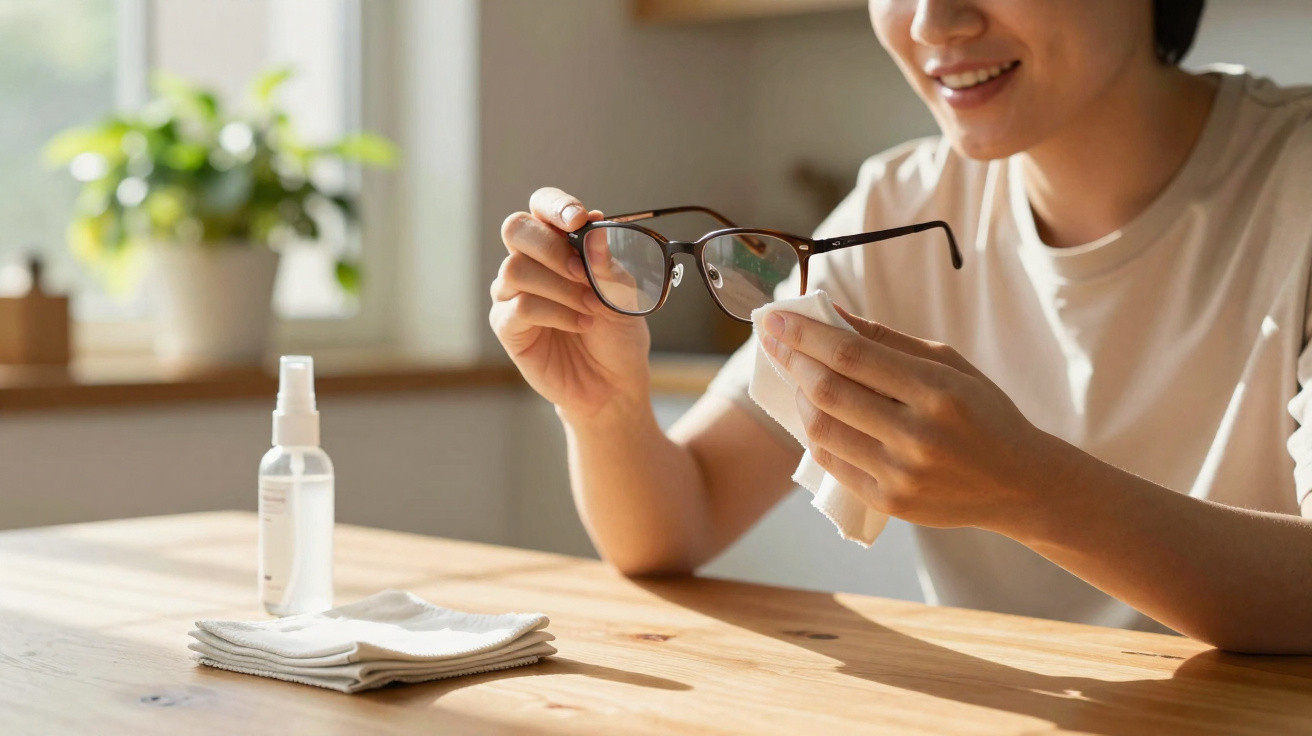
Professionals usually set out the method in three simple stages:
- Rinse first. Place your glasses under a gentle flow of lukewarm water. This removes dust, pollen and fine grit before the lenses are touched.
- Apply a drop of mild liquid soap. Choose a pH-neutral soap with no perfume or moisturising oils. Using your fingertips, gently work it over both sides of the lenses and the frame.
- Rinse again and dry with microfibre. Remove all soap completely, then dab and polish the glasses using a clean microfibre cloth kept specifically for this purpose.
Hot water should be avoided because it may distort certain plastic frames and put stress on lens coatings. If you are away from a sink, sprays and wipes made specifically for optical lenses are a safer option, provided their packaging displays recognised optical standards.
The trick is simple: always remove grit with water before rubbing, and only touch lenses with materials designed for them.
Materials that genuinely help
Modern coatings do not respond equally to every cloth and cleaner. Opticians generally advise keeping a compact kit containing three essential items.
| Material | Main benefit | Best use |
|---|---|---|
| Microfibre cloth | Soft, non-abrasive, antistatic | Daily polishing after rinsing |
| Mild liquid soap | Removes skin oils without residue | Weekly full wash at home |
| Lens-specific spray or wipes | Balanced formula, coating-safe | On-the-go cleaning outdoors or at work |
Microfibre merits particular attention. Its fibres are far finer than human hair and are designed to lift oils and dust rather than move them around. In contrast with cotton, microfibre is less likely to keep hard particles pressed against the lens. This construction reduces friction and scratching.
How poor cleaning habits strain your eyes
A worn lens does more than reduce clarity. Once the view becomes lightly streaked or hazy, your eyes adjust without you realising. They work harder to focus through the clearest areas, your neck changes position and the muscles around your eyes must do more work.
Optometrists associate badly maintained lenses with an increase in symptoms including:
- Eye fatigue appearing earlier when reading or using screens.
- Neck and shoulder tension caused by slight changes in posture.
- Greater glare sensitivity, particularly during night driving.
- More regular headaches among people already susceptible to migraines.
The consequences can be greater for children and teenagers with myopia. They are more likely to touch or drop their glasses, then quickly wipe them with the closest fabric. If this continues, their lenses may require replacement years before their prescription changes, creating repeated costs for the family budget.
The true cost of neglecting your glasses
Each careless wipe with a paper tissue can create a gradual, predictable cost. A mid-range pair of scratch-resistant lenses commonly costs about £100–£150. For a family of four, avoidable replacement cycles can amount to several hundred pounds over a few years.
Some lens manufacturers now connect extended warranties to adherence to their care guidance. Where inspections show scratches caused by chemical misuse or rough fabrics, the guarantee may be invalid. Put simply, using the wrong spray on a hectic Monday morning could quietly cancel protection you have paid for.
A one-minute cleaning ritual can delay lens replacement by years, cutting waste for both your wallet and the environment.
There is an environmental consideration too. Glasses discarded prematurely add more plastic, metal and chemical coatings to the waste stream. Extending a pair’s useful life from two years to five cuts this impact in a straightforward, measurable manner.
Small daily actions that prolong lens life
Maintaining glasses well does not call for costly products. It depends on a few consistent actions that create a form of “lens hygiene”.
- Rinse glasses under water before wiping them.
- Use a dedicated microfibre cloth only, and wash it regularly without fabric conditioner.
- Keep glasses in a hard case rather than leaving them on a table or in a bag pocket.
- Do not leave them in hot cars, beside radiators or on sunny window sills.
- Grip the frame by its bridge while cleaning, so the arms do not bend.
These routines are just as important as the original lens quality. A properly cared-for budget pair can perform better than an expensive pair mistreated every day. The distinction is evident not only in their appearance, but also in how your eyes feel after a long day.
Why regular optician check-ups still matter
Opticians advise having a professional check approximately every six to twelve months, even if your sight appears unchanged. At these appointments, they consider the physical condition of your lenses and frames as well as your prescription.
During a brief visit, they can tighten screws, realign the arms, thoroughly clean grease from hinges and identify early coating damage. Evidence from professional bodies indicates that people who attend these checks have a much lower likelihood of lenses failing early.
Professional maintenance turns your glasses from a disposable accessory into a long-term optical instrument.
For those who spend long hours using screens, drive for work or live with chronic eye conditions, appointments also provide an opportunity to adjust coatings or tints. A carefully selected anti-glare coating or blue-control filter performs at its best only when its surface remains clean and undamaged.
From a quick fix to a daily ritual: rethinking glasses
Most of us see glasses as something between a fashion accessory and a practical tool. We select frames for their style and lenses for their clarity, then expect them to withstand demanding daily life. Treating them as precision devices instead changes how we handle them.
A brief cleaning routine each morning can become as regular as brushing your teeth: rinse, soap, rinse, microfibre. It prepares you for clear sight throughout the day and prevents dust from becoming baked onto the surface. Parents who demonstrate this to children, and keep a small cleaning kit near study areas, often encounter fewer smeared or bent frames and fewer complaints of “not seeing the board”.
For anyone considering contact lenses or laser surgery to escape scratched, smeared glasses, learning this simple routine may alter the decision. Clean, comfortable lenses can bring back much of the visual comfort that many assume requires high-tech options. A small change in behaviour, repeated daily, can safeguard both your sight and the investment resting quietly on your nose.












Comments
No comments yet. Be the first to comment!
Leave a Comment