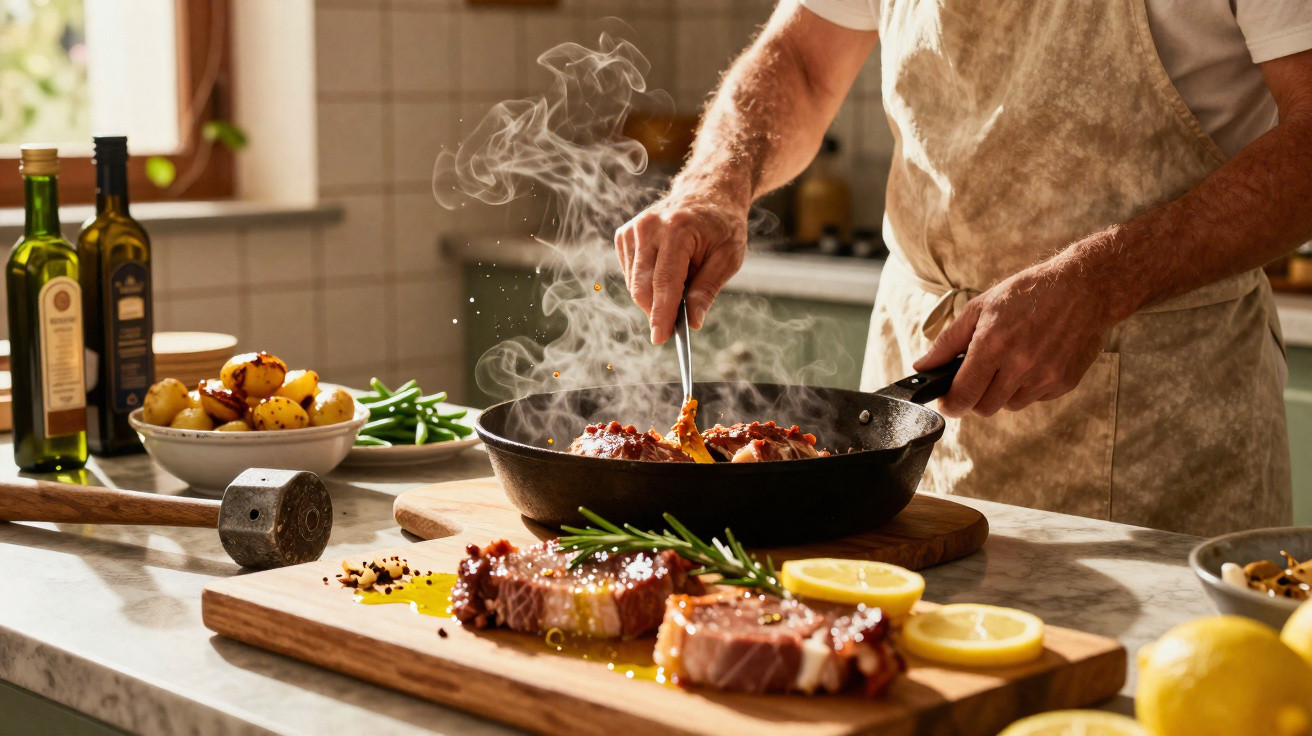
Across Italy, the unassuming pork chop has come to represent a modest rejection of hurried eating and impersonal convenience food. Families are turning back to the roasting tin, drawn not only by tradition but also by taste, affordability and a more relaxed approach to cooking.
Slow Italian pork returns in a fast-food decade
Industry data show that pork consumption in Italy exceeded 36 kilos per person in 2023, supported by a renewed enthusiasm for cooking at home. The pandemic years changed domestic kitchens: people spent longer at the hob and became more interested in whole cuts than in vacuum-packed portions.
That change has revived dishes formerly regarded as dated, including bone-in pork chops baked in the oven. The recipe needs about an hour and a half, which may seem demanding during the working week. Even so, many families now save it for Sundays, birthdays and occasions when several generations eat together.
Laid-back roasting at low to medium heat keeps up to 10 percentage points more moisture in the meat than fast pan-frying, tests show.
Studies from Italy’s zooprophylactic institutes indicate a consistent result. Pork fried rapidly in a pan may lose over a quarter of the moisture inside it. Prepared more slowly in the oven, the same cut remains more succulent, with moisture loss nearer 15%. Most diners do not discuss the figures, but they recognise the tenderness and the way the slices stay together rather than becoming fibrous.
From inexpensive cut to centrepiece
Butchers around the country are seeing stronger demand for bone-in loin, which is sometimes offered as family-sized racks instead of separate chops. Many smaller producers associate the development with worries over additives and lengthy supply chains. To shoppers, fresh meat marked with its farm of origin appears more trustworthy and easier to understand than industrially processed products.
Cost remains important. Pork is comparatively affordable beside beef and lamb, while the ingredients needed for a traditional Italian-style roasted chop are few. A standard roasting tray serving six people may contain:
| Ingredient | Typical quantity | Average cost (EUR) |
|---|---|---|
| Pork loin, bone-in | 1.5 kg | 12–14 |
| Garlic, marjoram | To taste | 0.50 |
| Pitted dried prunes | A small handful | 1.80 |
| Dry red wine | Half a glass | 0.70 |
| Optional: rosemary, cloves | Pinches | 0.40 |
What separates an ordinary chop from a memorable one is not the use of costly ingredients. The difference lies in patience, timing and several techniques drawn from professional kitchens.
The traditional route to tenderness without pounding
In many British and American homes, a tough pork chop is often met with a meat mallet. Traditional Italian cooking chooses the reverse approach: the chop is left whole, softened internally instead of being flattened from the outside.
Why the meat mallet is unnecessary
Gentle, moist cooking with uncomplicated aromatics slowly breaks down connective tissue while safeguarding the meat fibres. A mild marinade begins this work before the pork enters the oven. Rather than depending on force, the method relies on chemistry: restrained salting, the organic acids in wine and the natural sugars in fruit.
You do not need to beat pork chops thin. A two-hour rest in a light marinade, then an unhurried bake, yields a tender result.
Dried prunes, common in older regional recipe books, have a more important part to play than they are often given credit for. Their sweetness and acidity offset pork’s rich fat, while enabling the cook to use less salt. Public-health researchers observe that combinations of this sort can lower sodium consumption without reducing flavour, an important consideration while hypertension remains widespread in Europe and North America.
How Italian home cooks prepare pork chops step by step
Artisan cooks questioned by regional food associations regularly return to the same useful guidance. Without embellishment, their approach is as follows:
- Leave the chops to marinate for a minimum of two hours somewhere cool, using garlic, herbs, a little oil and very little salt.
- Allow the meat to come near room temperature before oven cooking, preventing a sudden temperature shock that can make the outside tough.
- Cook at a moderate temperature, giving the fat time to render gradually rather than seeking instant browning.
- Once the surface has taken on colour, lay lightly oiled baking paper over the tray, allowing the middle to cook without scorching the exterior.
- Add the red wine only towards the end, when the pork is nearly cooked, so that it turns into a shiny jus instead of immediately evaporating.
The finished dish is not the thin, crisp cutlet commonly linked with Milanese-style cooking. It is thicker and juicier, resembling a small roast more than a schnitzel. Accompanied by its cooking juices and tender prunes, it is served almost like a Sunday joint, carved into slices and shared at the table.
Shorter supply chains and changing shopping habits
The revived enthusiasm for pork chops forms part of a wider change in the way Italians, and increasingly Europeans elsewhere, purchase meat. Regional cooperatives are funding labels that promise clear traceability and no routine antibiotics. Emilia-Romagna, Veneto and Umbria, for example, promote collective marks for pigs raised to more demanding welfare requirements.
In the countryside, local butchers continue to hold a central role. Buyers frequently know the farm by name and arrange purchases around family meals. Chilled home delivery covers this need in urban areas. Online services now sell assorted boxes of regional pork cuts alongside recipe cards that bring back dishes such as prune-filled chops and slowly braised shoulder.
Pork chops have shifted from weeknight commodity to small weekend ritual, tying consumers more closely to named farms and regional labels.
Depending on season and provenance, quality loin generally retails for around 8 to 10 euros per kilo. This makes pork a form of “entry-level” roast: cheaper than beef, yet still suited to a celebratory meal.
Tradition, health concerns and the debate over meat
This revival exists within a complex food environment. Public initiatives encourage plant-based diets, cultivated-meat start-ups draw investment, and processed red meat is subject to increased scrutiny. Nevertheless, the traditional Italian-style chop endures, in part because it is far removed from ultra-processing and in part because it brings people together.
Nutrition experts note that carefully trimmed pork loin is still relatively lean, particularly when compared with heavily cured meats. Slow roasting also favours smaller servings, with vegetables and grains served alongside. Rather than occupying the entire plate, the meat becomes its focal point.
Environmental pressures are also prompting producers to make changes. Some cooperatives are trialling feed that reduces emissions per kilo of pork. Others focus on cutting waste, advising cooks to make stock from bones and use rendered fat to flavour pulses rather than discard either.
Practical lessons for home cooks abroad
For readers in the UK or US, the Italian method offers several useful principles that apply beyond this single dish:
- For roasting, select bone-in loin or rib chops that are at least 2.5 cm thick; thinner cuts dry out fast.
- Use dried fruit, including prunes or apricots, to lessen the need for generous salting.
- Let time do the work instead of force: choose a marinade and low-to-medium oven temperature rather than pounding the pork.
- Add powerful herbs such as rosemary and cloves only during the final stage of cooking, avoiding bitterness.
- Monitor the internal temperature; finishing at around 63–65°C and resting the meat helps prevent a dry, chalky texture.
For families aiming to rely less on processed meat, this type of pork dish can provide an intermediate choice. It uses fresh cuts, straightforward seasoning and a technique well suited to batch cooking. Any remaining chops can be pulled apart for sandwiches, grain bowls or soups, extending one tray over several meals.
The same ideas work with other proteins. Turkey thighs, chicken legs and even firm tofu respond well to a mild marinade, limited salt and a lengthy covered roast with herbs and fruit. For younger cooks raised on microwave meals, learning to prepare one tray of prune-roasted pork chops can be an initial move towards more assured, lower-waste home cooking.













Comments
No comments yet. Be the first to comment!
Leave a Comment