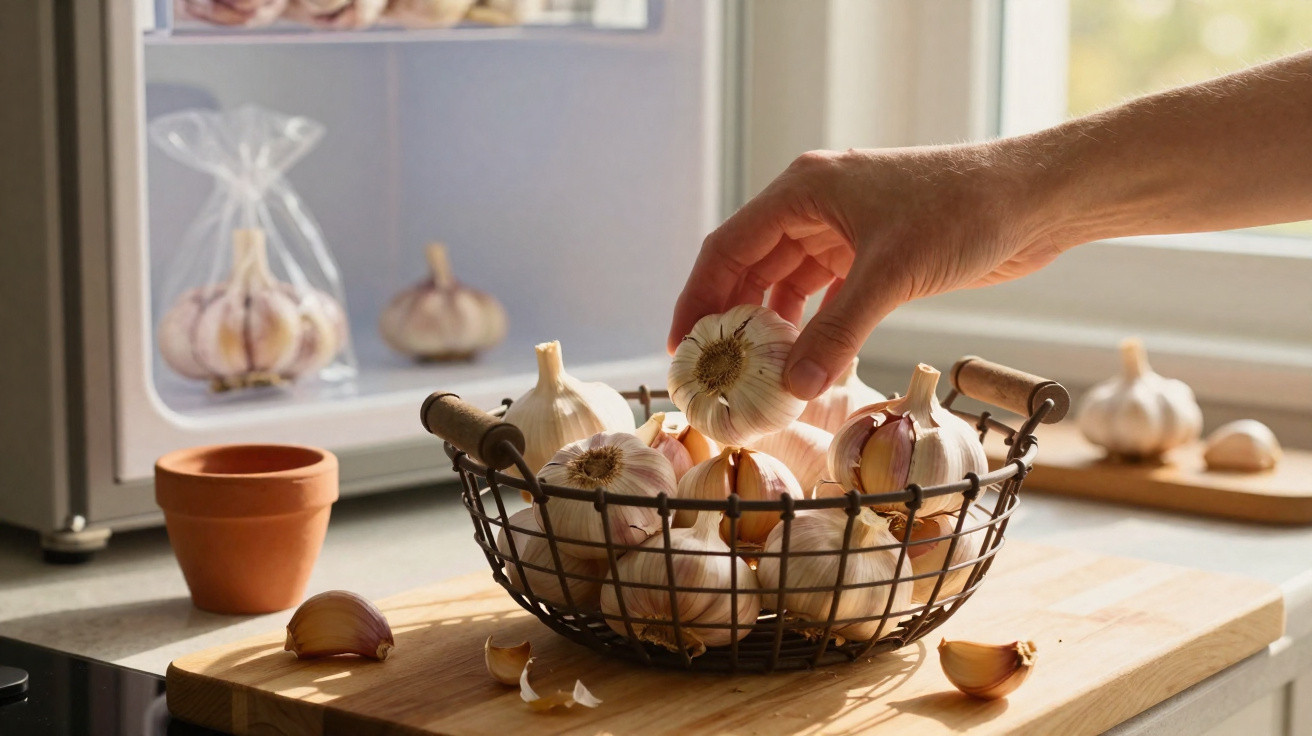
At first glance, garlic seems sturdy, almost indestructible. Yet in many kitchens it barely lasts more than a fortnight before it sprouts or ends up in the bin. Poor quality is rarely to blame; usually, it is a straightforward storage issue – particularly how the bulb is handled and where it is kept.
Why garlic goes off so quickly in many kitchens
Garlic is a living bulb that continues to breathe. This is precisely why it reacts badly to three factors: excess moisture, high temperatures and direct light. Storing it beside the cooker, on a windowsill or tightly sealed away speeds up its ageing considerably.
“Garlic likes it cool, dry and airy – anything else quite literally brings it to its knees.”
One key distinction is the difference between a whole bulb and cloves that have already been separated. The skin around an intact bulb acts as natural packaging, protecting the cloves inside from drying out, light and germs. Once the entire bulb has been broken apart, the cloves lose that protection. They may then shrivel, soften, sprout or begin to rot.
Professional chefs repeatedly point out that an undamaged bulb can retain its flavour for four to six months when stored well. In many homes, however, it is thrown into the food-waste bin after only two or three weeks – not because it “was poor”, but because it was handled incorrectly.
The most common garlic storage mistakes
The same pitfalls appear time and again in domestic kitchens. Once you know them, they are easy to avoid.
Mistake 1: Breaking up the entire bulb at once
Probably the most familiar mistake is buying a good-looking bulb, separating every clove in one go and placing them in a bowl. It may seem convenient, but it is disastrous for shelf life.
- Whole bulb: can remain flavoursome for several months.
- Separated cloves with their skin on: often keep for only around one week.
- Separated cloves that are already bruised: dry out within a few days.
A better approach is to detach only as many cloves as you genuinely need. Leave the rest untouched on the bulb.
Mistake 2: “Locking” garlic away in the fridge
Another widespread misconception is that garlic always belongs in the fridge. It then ends up in a tightly sealed plastic container or bag, supposedly to contain its smell.
This combination of cold and moisture is exactly the problem. Condensation develops inside a closed container, causing the cloves to soften, mould more quickly and lose their flavour.
“Cold moisture in a sealed container is poison for fresh garlic cloves.”
If the fridge is the only available option, store only complete bulbs there, either in a perforated bag or in an open, well-ventilated compartment. This allows moisture to escape.
Mistake 3: Keeping garlic in the wrong part of the kitchen
Many people instinctively put garlic where they reach for it most often: directly beside the cooker, on the windowsill or at the back of a cupboard above the oven. These areas become warm, and sometimes even hot. Combined with light and cooking vapours, this causes garlic to deteriorate rapidly.
The results are easy to spot: green shoots, soft patches and a wrinkled outer skin. Shoppers often assume the garlic “was already old”, when in fact the location alone has stressed it.
How garlic can genuinely stay fresh for months
By following a few simple principles when buying and storing garlic, you can use it for much longer – often throughout the entire autumn and winter season.
Choose the right garlic bulb when shopping
- Buy bulbs that feel firm and heavy – they are fresher and juicier.
- Avoid any with green shoots or dark spots.
- The outer skin should be dry, papery and undamaged.
The garlic’s potential storage life is therefore decided in part at the supermarket or market stall.
The best place to store garlic at home
Whole bulbs are best kept in a place that comes as close as possible to these conditions:
- A temperature of roughly 15 to 20°C.
- Dry and well ventilated, away from direct heat sources.
- A dark or at least shaded spot, such as a pantry or sheltered kitchen shelf.
Containers that allow air to circulate are ideal: a wire basket, a small wicker basket, a hanging net or plaited garlic braids. Sealed tubs and plastic bags are the worst choice for whole bulbs.
“Store whole bulbs in an airy, semi-dark place – and their flavour will remain stable for months.”
Handling individual and peeled garlic cloves
Sometimes individual cloves are left over after cooking, or more are peeled than needed. Different rules apply in these cases:
- Single clove with skin on: Can be kept at room temperature for a few days, but is best used soon.
- Peeled clove: Keep in a small, tightly closing container in the fridge and use within a few days.
- Cut clove: Place it with the cut side facing down and use it as soon as possible, as its flavour fades quickly.
Freezing, preserving and preparing garlic: what works and what is risky
Freezing garlic: convenient, with minor compromises
If you like to prepare ingredients in advance, garlic can also be frozen. Two methods work well:
- Freeze whole peeled cloves in a bag or container.
- Freeze chopped garlic in small portions, for example in an ice-cube tray.
It will keep in the freezer for around two to three months. Although the texture becomes slightly softer, the flavour remains perfectly suitable for soups, sauces and pan-fried dishes.
Garlic in oil: hygiene is essential
Jars of garlic in oil are popular for antipasti and marinades. What many people underestimate is that, in unfavourable conditions, this mixture can allow germs that cause botulism to multiply – a rare but very serious form of poisoning.
“Garlic in oil must be kept in the fridge consistently and used up quickly.”
For this reason, anyone preserving garlic in oil should make only small quantities, keep them refrigerated and use them within a few days, or no later than one week. For longer storage, professionally produced acidic preserves are the safer option.
Recognising and making the most of good garlic flavour
Fresh garlic that has been stored correctly is easy to identify: its cloves are plump, the skin rustles dryly, and there is no musty or strongly rotten smell. When cut, it releases a clean, intense aroma rather than a harsh chemical scent.
Those who cook frequently can benefit from a small storage strategy: keep a larger supply of whole bulbs in an airy place, while also having a tiny “working jar” of peeled cloves in the fridge. This keeps the main stock stable while making everyday cooking easier.
Proper storage has another benefit: throwing less away saves money and reduces food waste. With flavouring ingredients such as garlic, the waste may seem insignificant, but over several months it can add up noticeably.
It is also useful to assess your own needs honestly. If you use garlic only occasionally, buy fewer but high-quality bulbs and store them carefully. If you cook with it almost every day, you can use storage nets and maintain a high turnover. In both cases, the rule remains the same: do not break up the bulb unnecessarily early, avoid heat and allow air to circulate – then garlic can fully demonstrate its strength as a long-lasting kitchen staple.






Comments
No comments yet. Be the first to comment!
Leave a Comment