
A major consumer organisation has examined non-stick and stainless-steel frying pans for hidden harmful substances. Its findings suggest that careful purchasing can substantially reduce risks without costing a fortune. The key considerations are the material, the coating and a few straightforward cooking habits.
Why frying pans have become a health concern
The convenient non-stick performance of modern frying pans often relies on a group of substances that increasingly concerns specialists: PFAS, or per- and polyfluoroalkyl chemicals. These compounds make surfaces heat-resistant, grease-repellent and water-repellent, which makes them useful in coated pans, baking paper, fast-food packaging and outdoor clothing.
However, these same properties mean that PFAS barely break down in the environment. They enter water, soil and food, eventually reaching the human body. Measurements indicate that some of these substances can remain in the blood for years.
PFAS are regarded as “forever chemicals”: once released, they persist for an extremely long time in the environment and the body.
Studies have linked long-term exposure to PFAS with, among other things, a greater risk of diabetes, obesity, certain cancers and disruptions to the hormonal system. The immune system may also be affected, for example through weaker responses to vaccinations. Not every connection has been conclusively established, but the evidence is mounting.
Where PFAS can be found at home – and why frying pans are particularly critical
PFAS are not confined to frying pans. They can also be present in:
- some grease-resistant paper bags and pizza boxes
- waterproofing products for textiles and footwear
- specialist outdoor and performance materials
- certain cosmetics and polishes
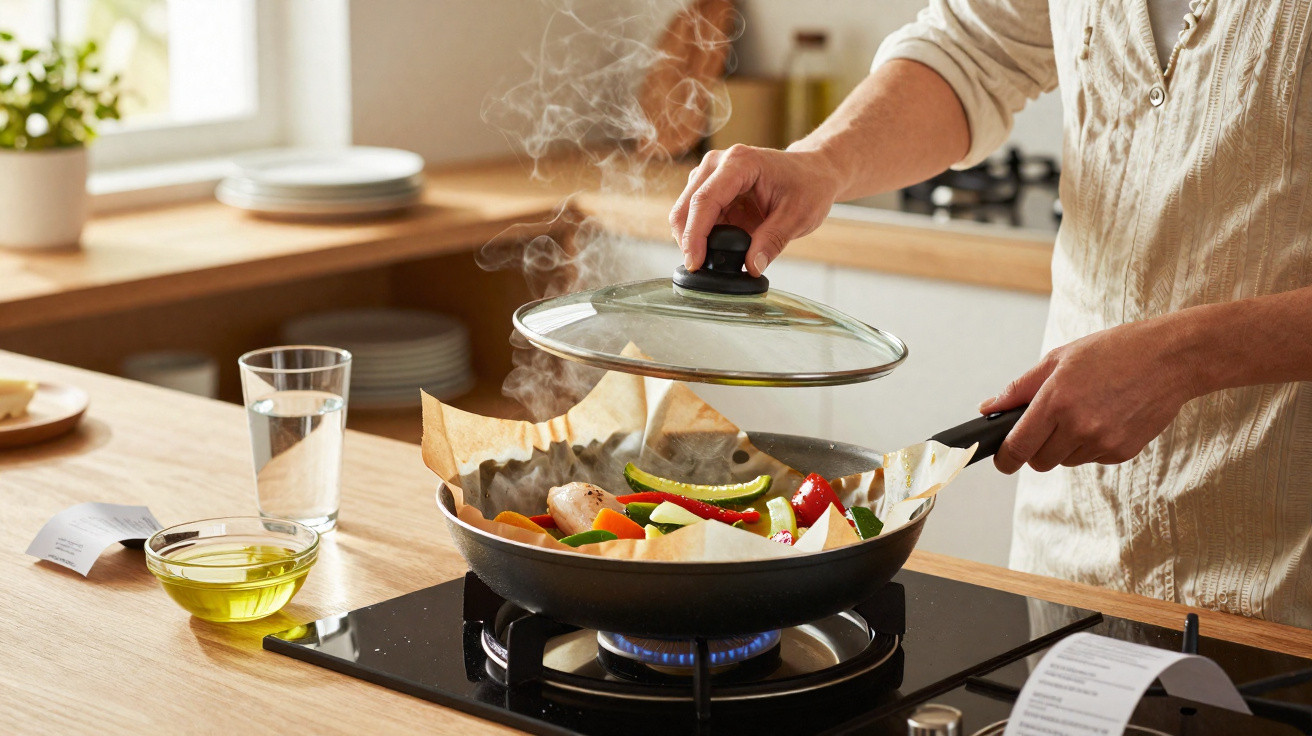
The issue is particularly serious with frying pans because they come into direct contact with food and are heated to high temperatures. Conventional non-stick coatings based on Teflon and related substances are especially concerning. If such a pan is overheated, components of the coating may be released or break down.
This is precisely what the investigation by 60 Millions de consommateurs set out to assess: its experts wanted to identify which pans are PFAS-free, or at least present significantly lower risks.
The test: which frying pans are considered comparatively safe?
The test covered 14 models in total: nine pans carrying a non-stick label and five uncoated stainless-steel pans. The assessment considered potential harmful substances, heat resistance, ease of use and durability, among other criteria.
Leading non-stick option: ceramic instead of Teflon
Among the coated pans, a model deliberately made without Teflon came out on top: the Green Chef Healthy Ceramic. It received a very good rating and uses a ceramic coating. As this option does not rely on conventional PFAS formulations, it is considered a better alternative for anyone who does not want to give up the convenience of a non-stick surface.
At around €39, the pan sits in the mid-price range. The test particularly highlighted:
- a PFAS-free ceramic coating
- effective non-stick performance when used correctly
- reasonable heat resistance
Top stainless-steel choice: a durable all-purpose frying pan
Within the stainless-steel category, the “Poêle tout inox” range by Mathon performed particularly well. It too achieved a very good overall rating. Stainless steel naturally provides a neutral surface without added non-stick chemicals.
Priced at roughly €49, it costs slightly more than the ceramic pan but stands out for its durability. With proper care, this type of stainless-steel frying pan can remain in use for many years. That is relevant from a health perspective because there is less wear and fewer potentially questionable coating residues involved.
| Model type | Example from the test | Price range | Notable feature |
|---|---|---|---|
| Ceramic non-stick frying pan | Green Chef Healthy Ceramic | approx. €39 | PFAS-free ceramic coating, good non-stick properties |
| Stainless-steel frying pan | “Poêle tout inox” range by Mathon | approx. €49 | very durable, neutral metal surface without non-stick chemicals |
How reliable is the “PFOA-free” label?
Many manufacturers promote their products with claims such as “PFOA-free”. PFOA is one individual PFAS compound that was used in non-stick coatings for a long time and is now largely banned in the EU. While the label sounds reassuring, its value is limited.
“PFOA-free” does not automatically mean “PFAS-free” – often, one problematic substance has simply been replaced by others from the same chemical group.
The testers’ criticism is that manufacturers frequently cite trade secrets while using newer substitute substances that also belong to the PFAS group. They have a similar chemical structure but have been studied less extensively. At present, nobody can say with certainty whether they are genuinely less risky in the long term.
For consumers, this means that marketing claims on packaging reveal little about the overall risk. Anyone wishing to avoid PFAS as far as possible should focus instead on the underlying choice of material, such as ceramic coating or stainless steel, rather than relying on a single reassuring phrase.
How to choose the healthiest possible frying pan
A few simple questions can help when choosing a pan in a shop or online:
- What is it made from? Plain stainless-steel pans, cast-iron pans and ceramic-coated pans are considered better choices for reducing PFAS exposure.
- How thick is the base? A solid base distributes heat more evenly, reducing the likelihood of overheating and therefore the risk of possible breakdown products.
- What does the small print say? Vague claims and marketing based solely on “PFOA-free” should be treated as warning signs. Clear material information appears more trustworthy.
Cast-iron pans were not covered in detail by this test, but nutrition experts have regarded them as a robust alternative for years. They require more care and are somewhat heavier, but gradually develop a natural patina that reduces sticking, entirely without fluorinated chemicals.
Cooking properly: how to reduce further risks
Even the best frying pan is of little use if it is used incorrectly day to day. A few habits can further limit exposure to unwanted substances.
- Avoid overheating: Do not leave pans empty on the highest heat setting. Medium to high heat is sufficient for most dishes.
- Replace damaged pans: If a non-stick coating begins to flake or has deep scratches, the pan should be discarded.
- Use wood or silicone utensils: Metal utensils scratch surfaces more quickly; gentler tools extend a pan’s working life.
- Clean correctly: Do not use steel wool on coated pans; use soft sponges and mild detergents instead.
Anyone using stainless steel or cast iron more often may need a little practice. With adequate preheating and the right cooking fat, meat, vegetables and even eggs can be prepared surprisingly well without a coating.
PFAS, PFOA, PTFE: what the abbreviations mean
For non-specialists, these terms can quickly look like a confusing string of letters. This brief overview puts them into context:
- PFAS: a broad group of thousands of different compounds, many of which are extremely persistent.
- PFOA: one particularly controversial PFAS compound, long used in Teflon manufacturing processes and now heavily regulated.
- PTFE: a polymer known through the brand name Teflon; it creates the non-stick effect and is sometimes manufactured or treated using PFAS.
Although not all of these substances are equally toxic, two points remain: they break down poorly, and their long-term effects are often unclear. Health authorities therefore advise reducing exposure as far as possible, particularly for products that come into contact with food.
What the test means for everyday cooking
The central message of the investigation is that safer frying pans do not have to be luxury products or make everyday cooking more difficult. Choosing ceramic coatings or high-quality stainless-steel models can already noticeably reduce the risk.
Complete freedom from problematic substances is scarcely possible in a modern industrial society. Yet consumers can set priorities: fewer disposable pans, more long-lasting models with transparent material information, and more mindful use of heat. That is where the opportunity lies to reduce daily exposure to “forever chemicals”, at least to some extent.








Comments
No comments yet. Be the first to comment!
Leave a Comment