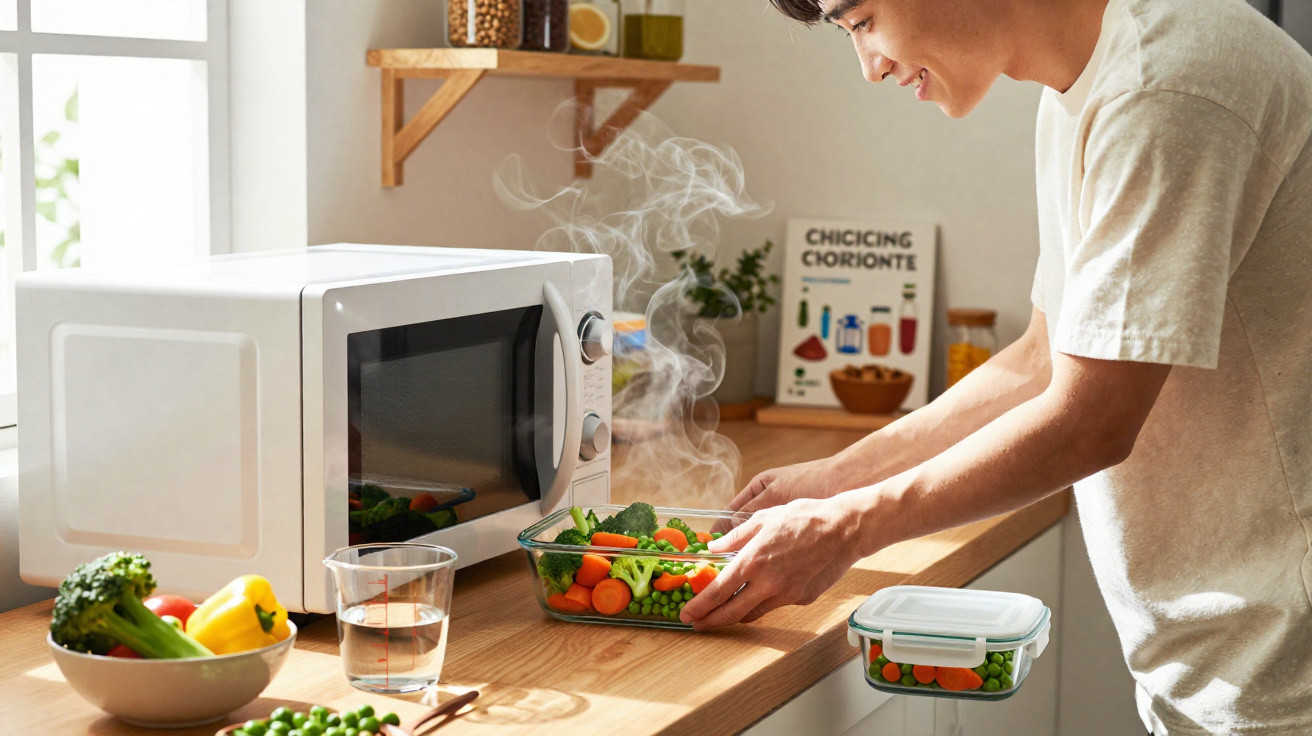
The microwave has a poor reputation: it is convenient, certainly, but is often said to be disastrous for vitamins and nutrients. Parents avoid using one for children’s meals, while fitness enthusiasts swear by the hob or steamer. Nutrition specialists and international authorities have examined the issue more closely, with findings that may surprise many people.
What research really shows about the microwave
For years, nutrition scientists have compared cooking methods including boiling, steaming, oven cooking and microwave cooking. Their attention has focused particularly on delicate nutrients such as vitamin C and folate (vitamin B9) - precisely the compounds that concern health-conscious consumers.
When it comes to nutrient retention, the key factors are heat, cooking time and the amount of water used - not the microwave itself.
Studies show that some heat-sensitive vitamins are always lost, whether food is cooked in a saucepan, an oven or a microwave. In some experiments, as much as two thirds of the original vitamin content disappeared with every cooking method, regardless of the appliance used.
The detail is where things become interesting: when methods are compared directly, the microwave often performs surprisingly well. One assessment of vitamin C retention in vegetables, for example, found:
- Pressure steaming: around 72% of vitamin C retained
- Microwave cooking: around 65% of vitamin C retained
- Boiling in plenty of water: around 59% of vitamin C retained
Broccoli is a well-known example. When boiled in water, it loses more than 30% of its vitamin C content. When cooked in a microwave for a comparable length of time, studies put the losses at roughly 16%.
Professional reviews covering several studies therefore reach a clear conclusion: on average, conventional cooking and microwave cooking do not show dramatic differences in nutrient retention. In certain cases, the microwave even preserves slightly more, including some B vitamins and a proportion of vitamin C.
How the microwave works - and what it does not do
Even so, fears about “irradiated food” persist. Looking at the technology makes clear why this concern has no basis.
A microwave oven uses electromagnetic waves at a particular frequency. These mainly cause water molecules in food to vibrate. That motion generates heat, warming the food from the inside out.
Microwave radiation in household appliances is non-ionising and does not make food radioactive.
The radiation does not carry enough energy to alter DNA or ionise atoms. This makes it fundamentally different from X-rays or radioactive radiation. As soon as the appliance is switched off, the waves stop; no “residual radiation” remains in the food.
The World Health Organization and national authorities consider microwave use safe provided that the appliance is undamaged, its door closes correctly and its operating instructions are followed.
What actually damages nutrients
For vitamins and similar nutrients, the most important factors are:
- Temperature: The higher it is, the greater the breakdown.
- Time: Gentle but prolonged simmering costs more vitamins.
- Water: Many water-soluble vitamins and minerals leach into cooking water.
This is exactly where the microwave can have an advantage. It heats food quickly and often needs little additional water. That saves time and can limit nutrient losses. Minerals such as potassium, magnesium and iron are generally quite heat-stable; they are mainly lost when the cooking water is discarded. This effect is considerably less pronounced in a microwave.
Proteins and fibre are affected by microwave heat in much the same way as they are by boiling or baking. Protein structures are denatured, but this happens with every cooking method and is usually helpful for digestibility.
How to use the microwave while protecting nutrients
Anyone wanting to make the most of a microwave’s strengths can achieve a great deal with a few straightforward measures.
Choosing the right containers
Expert bodies clearly recommend particular materials:
- Glass – heat-resistant, neutral and easy to clean
- Ceramic – suitable provided it has no metallic decoration
- Tested, labelled plastic – only when it is explicitly marked as microwave-safe
Not every plastic container is suitable for repeated microwave use. When heated, plasticisers or other substances may be released. Health authorities monitor these risks and advise against using unlabelled plastic tubs for heating food.
Managing cooking times and water quantities
For vegetables, a very restrained approach is advisable:
- Add only a small amount of water to the container - one or two tablespoons are often enough.
- Cover the container with a lid or microwave cover so that steam remains inside.
- Cut vegetables into pieces of roughly equal size to ensure even cooking.
- Cook in short intervals, checking in between whether the vegetables are already tender but still firm.
Once vegetables are tender but not yet mushy, many vitamin losses stop.
The longer a meal remains in the microwave, the more its vitamin content falls. Particularly with small portions, many people significantly overestimate the time required.
Reheating: how often is still acceptable?
Nutrient retention also matters when food is reheated. Each additional microwave cycle removes another share of the vitamins that remain. Nutrition experts therefore recommend:
- Cook a dish fully only once.
- When reheating, warm only the amount that will actually be eaten.
- Chill leftovers as quickly as possible and do not leave them at room temperature for hours.
For food safety, one further step is worthwhile: after heating, leave the food to stand briefly, stir it and check that it is sufficiently hot in the middle as well. This helps prevent “cold spots” where germs could survive.
When the microwave is useful - and when it is not
The microwave is particularly suitable for:
- Vegetables with short cooking times, such as broccoli, carrots, peas and peppers
- Leftover rice and pasta, which become fluffy again with a little water
- Prepared stews and soups
- Porridge or semolina pudding that needs gentle heating
It is less suitable for breaded foods that need to stay crisp, or for very large cuts of meat. In these cases, an oven, frying pan or grill often produces better flavour and texture - and nutrient retention is usually less important than consistency.
Everyday context: risks, benefits and misunderstandings
One widespread misconception is: “Microwaves destroy all vitamins, so it is better to eat food cold.” That is not correct. Although raw food is often rich in vitamins, cooking makes many vegetables properly digestible in the first place. Some compounds, including certain carotenoids in carrots or tomatoes, can even be absorbed more effectively from heated vegetables.
Another misunderstanding is: “Microwave radiation remains in food and puts strain on the body.” Technically, this claim cannot be supported. The radiation disappears when the appliance stops. What remains in the food is simply heat - just as it is after cooking in a saucepan.
Those wishing to minimise health risks should focus instead on these points:
- Inspect the appliance regularly, keep the door seal clean and take damage seriously.
- Do not use metal objects in the microwave.
- Do not heat food in thin, flexible plastic packaging unless it has been approved for that purpose.
For people short of time, families with plenty of leftovers or single people who rarely cook, a microwave can be a useful part of a reasonably healthy diet - provided the contents of the plate are right: vegetables, pulses, wholegrains and moderate amounts of fat.
Anyone who develops a feel for cooking times and uses water, containers and portions thoughtfully is not using the microwave as a “vitamin graveyard”, but as a practical tool that is more likely to protect nutrients than destroy them. The critical issue is therefore less the appliance itself than how it is used.







Comments
No comments yet. Be the first to comment!
Leave a Comment