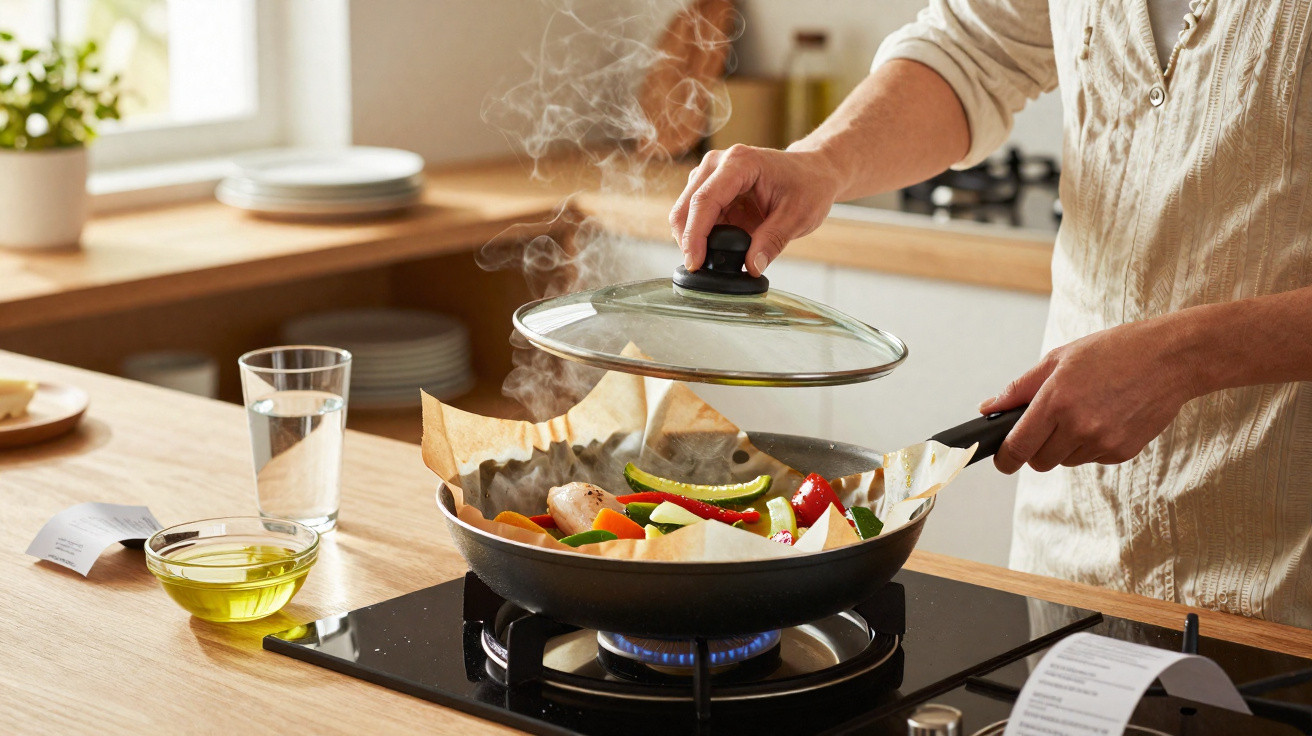
For years, gentle cooking without water or fat seemed like the preserve of high-end kitchens, complete with heavy cast-iron pots and specialist lids. Then came an evening when I had only a few spring vegetables, a plain stainless-steel casserole and a dose of curiosity. The result was crisp, flavoursome vegetables cooked without a single extra drop of water or any oil – relying entirely on the food’s own moisture.
Cooking without water: why the pot is not the crucial factor
The real surprise lies not in the pot’s material, but in a physical principle we all encounter in everyday life, usually without giving it any thought. Every vegetable, every fish and even fruit consists largely of water. This internal moisture takes over the job usually performed by tap water or stock during cooking.
“The food cooks in its own evaporation – a closed cycle of steam, condensation and gentle heat.”
As vegetables heat up in the pot, their water starts to evaporate. When the lid fits tightly, the steam remains inside. It rises, meets the slightly cooler lid, condenses into tiny droplets and falls back onto the food. This continuous process of evaporation and return creates gentle, even cooking.
Temperature is the key. Rather than using fierce heat, this approach works at a moderate temperature of around 60 to 80 degrees. That is sufficient to soften cell structures and release flavours while retaining texture. Vegetables stay tender with a bite instead of breaking down in water. Their colour looks brighter and their natural flavour becomes more pronounced.
How the method works with almost any ordinary cooking pot
The good news is that anyone with a well-equipped kitchen does not need to buy a specialist pot. Its construction matters far more than any prestige label.
- A heavy base: A thick base spreads heat evenly and prevents localised scorching.
- A well-fitting lid: It should have as little movement as possible, so that steam stays in the pot.
- A hob with precise control: It is especially important to be able to set low heat levels accurately.
In many homes, the lid is the biggest issue. It rattles, allows steam to escape at the sides and therefore disrupts the essential steam cycle. This is where a simple yet effective solution comes in: a damp tea towel.
The tea-towel trick for an almost airtight lid
If the lid does not fit perfectly, place a thoroughly wrung-out, slightly damp tea towel between the pot and the lid. The cloth fills the small gaps, absorbs escaping steam and releases the moisture again. This creates a type of seal that keeps most of the steam within the system.
A few points are important here:
- Dampen the towel only lightly, then wring it out firmly.
- Fold it so that no part hangs near a flame.
- Position the ends upwards or towards the centre of the pot where possible.
With this straightforward measure, an everyday casserole becomes a surprisingly efficient steam-cooking vessel – without added water or fat.
Foods that are especially suitable
This cooking method is particularly effective in spring. Many vegetables naturally contain plenty of water, offer plenty of flavour and still hold their shape well.
Especially suitable are:
- carrots and young carrots
- leeks
- cabbage, such as pointed cabbage or shredded Savoy cabbage
- endive and other bitter salad leaves
- asparagus, both green and white, cut into pieces
- courgettes, fennel and broccoli florets
Fruit and fish also work surprisingly well. Apple slices, pear quarters or plums can be cooked quickly into a kind of compote without any added liquid. Fish fillets remain remarkably succulent when you are patient and keep the heat genuinely moderate.
Practical example: spring vegetables without water and fat
A simple basic recipe demonstrates just how little is needed. For a side dish serving two to three people:
- 600 g carrots
- 2 leeks
- 1 onion
- 1 pinch of salt
- pepper to taste
- fresh herbs, such as parsley or chives
Step-by-step instructions
- Clean the vegetables and cut them into evenly sized pieces: slice or baton the carrots, cut the leeks into rings and finely dice the onion.
- Put everything into the pot and add a light seasoning of salt. If you prefer extra reassurance on your first attempt, add one tablespoon of water or vegetable stock, although it is usually unnecessary.
- Put on the lid and, if required, seal it with a damp tea towel.
- Set the hob to a medium heat until you can hear activity in the pot and the first signs of condensation appear on the lid.
- Once enough steam has formed, reduce the heat substantially to a low setting.
- From this point, do not keep lifting the lid. Cooking time depends on the size of the pieces, but 15 to 25 minutes is often enough.
- At the end, lift the lid briefly, check the vegetables, season with pepper and fold through the fresh herbs – done.
The usual mistakes are easy to spot. If barely any steam is rising, the heat is too low or the pieces are exceptionally dry. If there is a faint smell of burning, the setting was too high or the lid was not sufficiently well sealed.
Common issues and how to overcome them
Most mishaps with this method can be traced back to three causes.
| Problem | Possible cause | Solution |
|---|---|---|
| Vegetables scorch on the base | Heat too high, lid not sealed, base too thin | Turn down the heat earlier, use a pot with a heavier base, seal the lid |
| Vegetables remain too firm | Pieces too large, cooking time too short, lid lifted too often | Cut smaller, cook for longer, keep the lid closed consistently |
| Flavour seems flat | Too little seasoning, herbs added too early | Season with salt in moderation, add flavours at the end |
“The three guiding principles of this cooking method: a tight seal, low heat and patience.”
Why this cooking method preserves so much flavour
With conventional boiling in water, flavours, minerals and colour compounds leach from the vegetables into the cooking water. Everyone knows the result: colourful liquid and pale vegetables. When no extra water is used, these substances largely remain in the food. The steam condenses and runs back down, not washing away flavours but distributing them throughout the pot.
There are health-related benefits too. People using this method can often manage with considerably less fat. That does not mean fat should be demonised – a drizzle of good olive oil or a little butter added directly to the plate can enhance the flavour particularly well, because the vegetables are already intensely flavoursome.
Everyday tips for cooking without water and fat
A few simple habits help make the method reliable in the rush of daily life:
- Cut vegetables to a similar size so that everything cooks at the same time.
- It is better to reduce the heat slightly earlier and wait longer than to turn it up too high.
- Start with small quantities until you know your hob and pot well.
- Stir in herbs and finely chopped garlic only at the end, so they do not turn bitter.
It is also interesting to combine this technique with traditional frying: briefly brown vegetables or fish in a frying pan first, then finish cooking them with this steam-and-natural-juices method. This brings together roasted flavours and a gentle texture.
Once you have mastered the technique, it can make planning whole weeks of meals more relaxed: prepared vegetables go straight into the pot in the evening, the hob runs quietly on a low setting, and there is time for other things in the meantime. The finished plate shows just how much flavour is already present in the ingredients when they are not subjected to water and excessive heat.









Comments
No comments yet. Be the first to comment!
Leave a Comment