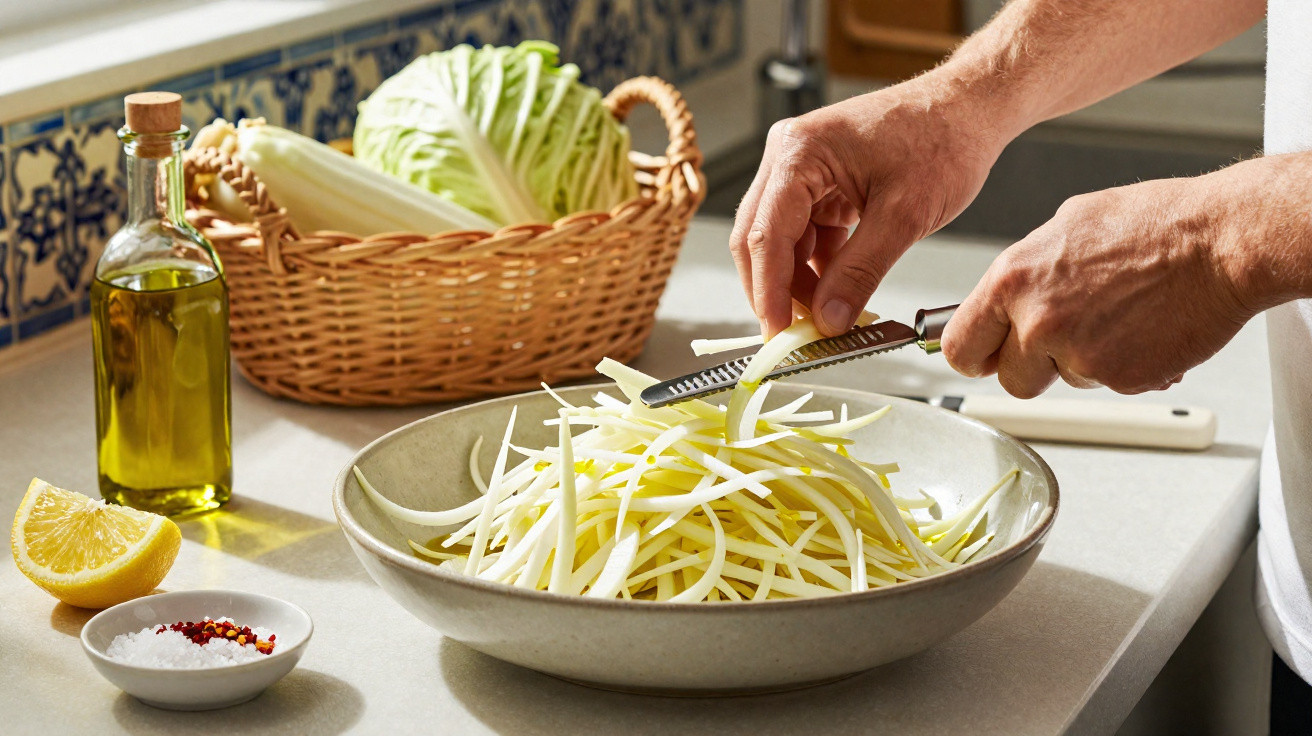
Across homes in Italy, the unassuming white radish – more commonly called daikon – is beginning to displace traditional cabbage salad, appearing in school canteens, quick weekday bowls and even on “healthy trend” shopping lists.
From Japan to everyday plates: why white radish is having a moment
Daikon has been an everyday ingredient across much of Asia for years, whether grated over grilled fish, cooked slowly in soups or pickled to serve with rice. This long, chalk-white root is now becoming a low-key favourite in Italian fruit and vegetable aisles. Figures from farming organisations indicate sales rose by around one-third in only a few months, an unusual increase for such a basic vegetable.
Its popularity stems from both flavour and practicality. Eaten raw, daikon has a crisp, fresh bite, starting mildly sweet before finishing with a subtle peppery flavour. In raw salads, it feels lighter than cabbage and pairs easily with staples already found in many refrigerators: carrots, cucumber, lemon and a little honey.
Daikon offers salad-level freshness with soup-worthy nutrition: low calories, solid vitamin C, and plenty of ways to cook it.
That adaptability is valuable for busy families. One root can be shredded into a slaw, roasted alongside chicken or added to a miso-style broth. Many households now treat it as a reliable side dish when they want a lighter meal that still feels substantial beside fish or meat.
Fast prep, short ingredient list: how the new “not-coleslaw” works
The recipe bringing daikon to wider attention in Italy is a straightforward raw salad of grated white radish, carrots and cucumber, brought together by a lemon-and-honey dressing flavoured with toasted seeds. It is ready in less than 15 minutes, travels well in a lunch box and stays crisp in the refrigerator for several hours.
Core ingredients for a four-person bowl
- 1 medium white radish / daikon (around 220 g)
- 3 medium carrots
- 1 green cucumber, skin on if thin
- 2 tablespoons vegetable oil
- 1/2 teaspoon cumin seeds
- 1/3 teaspoon whole mustard seeds
- 4 tablespoons lemon juice
- 2 teaspoons runny honey
- Salt and black pepper to taste
The preparation uses a familiar technique from Indian home cooking: whole spices are briefly toasted in hot oil, then the oil is allowed to cool before it becomes the base for the dressing.
How the method comes together
- Warm the aromatics: Heat the oil in a small pan, add the cumin and mustard seeds, and leave them until they begin to crackle. Remove from the heat and cool the oil so that it will not soften the vegetables.
- Prep the vegetables: Grate the daikon and carrots coarsely. Dice the cucumber into small pieces to introduce a contrasting texture. Keep the cucumber peel if it is thin and unwaxed.
- Dress just before serving: Put the grated vegetables and cucumber in a large bowl. Mix the lemon juice and honey into the cooled spiced oil, season with salt and pepper, and toss everything through the salad.
Eaten immediately, the salad is fresh-tasting and crunchy. After 30 minutes in the fridge, it becomes a little softer as the flavours combine, a version many children in fact prefer. In either form, it differs sharply from rich, occasionally sulphurous coleslaw.
The shift is less about fashion and more about practicality: same cutting board, similar effort, a lighter result on the plate.
Inside the root: vitamins, minerals and the calorie question
Health bodies categorise daikon as a low-energy vegetable with notably high vitamin C levels. At roughly 14 kcal per 100 grams, it sits at the leaner end of the scale, while that same serving provides about one-quarter of an adult’s daily vitamin C requirement, alongside smaller quantities of folate, potassium and magnesium.
| Nutrient | Amount (per 100 g) | Approx. share of daily intake* |
|---|---|---|
| Vitamin C | 27 mg | 25% |
| Folate (B9) | 28 µg | 7% |
| Potassium | 230 mg | 5% |
| Magnesium | 16 mg | 4% |
| Total energy | 14 kcal | – |
*Values based on an average healthy adult reference intake.
Nutritionists monitoring vegetable consumption emphasise that daikon adds to dietary variety rather than “replaces” cabbage. The two vegetables are in the same botanical family and both contain protective plant compounds. Their main differences lie in texture, water content and the way people feel after consuming a generous serving.
The anti-inflammatory debate: helpful, or just hype?
Research groups in Japan have examined daikon’s antioxidant properties, drawing attention to sulphur-containing compounds comparable with those found in broccoli and kale. These substances contribute to the body’s defences against oxidative stress and may affect inflammatory pathways associated with heart disease and metabolic disorders.
Some dietitians value it as an additional choice, particularly for people who find brassicas such as cabbage or Brussels sprouts difficult to eat. Others urge more restraint.
Daikon carries potentially useful plant chemicals, but no single root turns a heavy diet into a healthy one.
Two particular issues are raised frequently. Firstly, very large amounts of raw daikon may aggravate sensitive stomachs or reflux, especially alongside other raw cruciferous vegetables. Secondly, as a member of the radish and cabbage family, it contains goitrogenic compounds which, in theory, could interact with thyroid medication when consumed in large quantities every day.
Endocrinologists generally say that people receiving thyroid treatment do not have to cut daikon out completely, although they should consult their clinician and keep raw portions moderate. Cooking the root by simmering, roasting or stir-frying lowers these compounds and, for many people, improves digestibility.
From wellness trend to shopping basket: how retailers are reacting
The growing interest in daikon forms part of a wider change in shopping habits. Consumers – especially younger adults and parents of school-age children – are increasingly choosing fresh ingredients that seem “functional” rather than heavily processed. This has prompted supermarkets to expand beyond the familiar carrot-cabbage-lettuce selection.
Italian retailers have introduced dedicated areas for these vegetables, commonly placing daikon beside kale, purple carrots and heritage beetroot. Its price is generally mid-range: lower than specialist imported fruit but a little higher than ordinary white cabbage. Organic or pre-packed daikon may cost almost twice as much as loose, conventionally grown roots from municipal markets.
Cities with strong supply networks, including Milan and Bologna, now offer daikon not just through shops but in institutional catering as well. School canteens are using thin strips of the root in mixed salads instead of boiled cabbage, which many children refuse. Pilot guidance issued by health authorities already includes daikon among the appropriate raw autumn vegetables for balanced menus.
Where to find it, and how to keep the nutrients
Supply remains strongly shaped by both region and season. In rural areas, roots are often sourced directly from small-scale growers and may arrive in mixed vegetable boxes. Mainstream supermarkets bridge shortages in colder months with controlled-condition imports from East Asia, usually Japan or South Korea.
Growers state that a whole, uncut daikon can retain its crispness and nutritional value for around a week in the fridge when kept between 4 °C and 8 °C. Managing moisture is essential: wrap the root in kitchen paper, put it in a perforated bag, and store it away from ethylene-producing fruits such as apples, which hasten ageing.
Once cut, cover any exposed surface with slightly damp paper and refrigerate tightly wrapped to slow dehydration.
When the outer layer becomes rubbery, the inner section can still be used in soups and stews. Removing the first few millimetres of peel will often reveal crisp flesh below. Freezing raw daikon at home is less successful because it can turn spongy; briefly blanching it first produces a better texture for later stir-fries.
Beyond salad: practical ways to swap daikon for cabbage
Families accustomed to conventional coleslaw and braised cabbage need not completely rethink their recipes to use daikon. A handful of focused substitutions can make the change easier.
- Light slaw: Substitute grated daikon for half of the shredded cabbage and retain the usual dressing. This makes the texture juicier and the taste milder.
- Roasted tray dinners: Slice daikon into thick batons and roast it with carrots and onions beneath chicken pieces. It absorbs the cooking juices while remaining firmer than potatoes.
- Broth booster: Put chunks of daikon into chicken stock or vegetable soup to add sweetness without adding fat.
- Quick pickles: Combine thin slices with salt, sugar and vinegar for several hours. They work particularly well with oily fish or substantial sandwiches.
These changes affect more than flavour alone. Compared with creamy coleslaw, salad made with daikon will often contain less fat, especially if the dressing is based on oil and lemon rather than mayonnaise. This can be relevant for people managing weight, blood lipids or sluggishness after meals.
What this trend signals for home cooking
Daikon’s gradual rise reveals much about the way households now approach food. Cost and convenience continue to shape choices, yet diners are also seeking ingredients that can be used across several meals and respond to health concerns without seeming medicinal.
For parents, a root vegetable suitable raw in lunch boxes, grated over rice bowls and roasted for dinner eases meal planning. For older adults, a mild, crisp vegetable that contributes vitamin C without causing the bloating associated with some brassicas can offer a useful compromise. Even modest changes – replacing one cabbage salad each week with a daikon version – can improve overall vegetable variety.
Food educators identify another advantage: daikon provides a simple opportunity to discuss plant families, seasons and texture with children. Sampling the same root raw, pickled and cooked side by side can turn an ordinary dinner into a subtle sensory exercise, helping younger eaters connect changes in flavour to cooking techniques rather than merely “liking” or “disliking” a vegetable.













Comments
No comments yet. Be the first to comment!
Leave a Comment