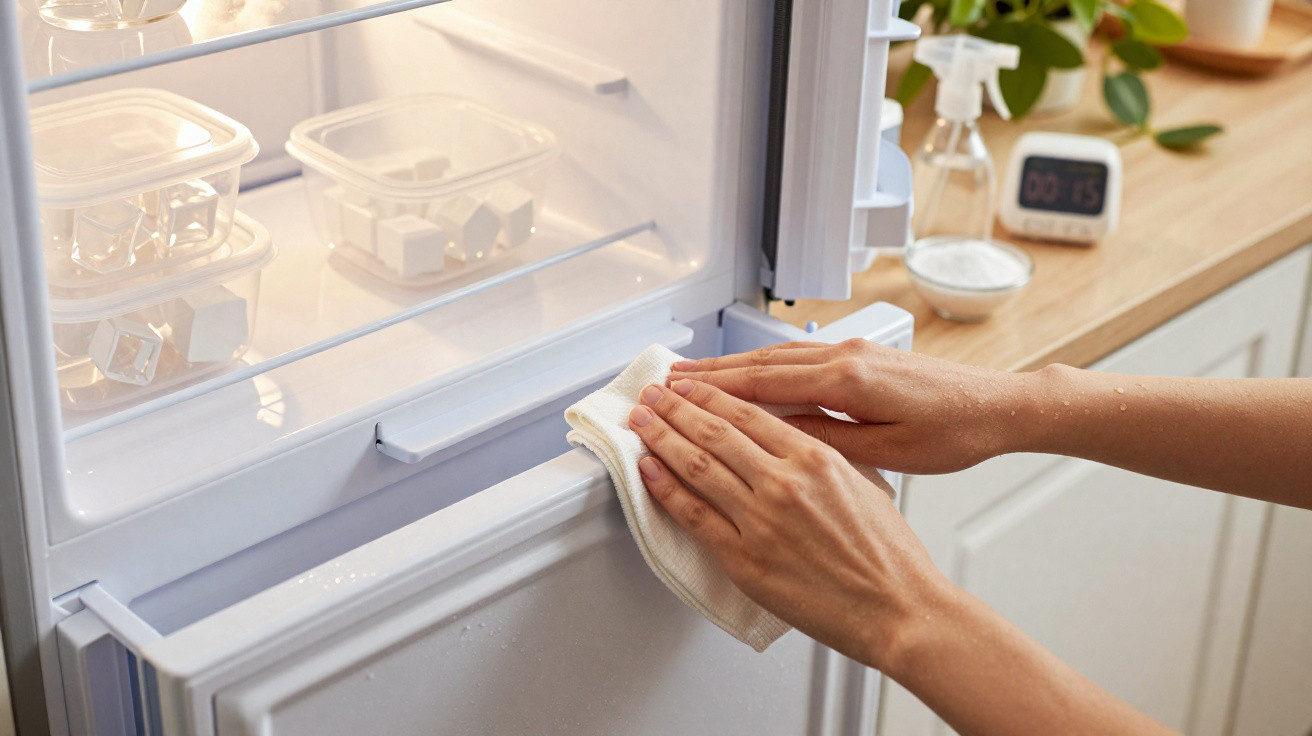
Long enough for a breath of warm kitchen air to enter, drift around the frozen peas and leftover lasagne, and silently begin an issue you may not spot for weeks.
Initially, it all seems normal. There is a light coating of frost at the back and a faint white film over the ice-cream tub. Before long, though, the drawers become difficult to slide. The peas turn into a single solid lump. A bag of berries fuses to the wall as though it has taken out a long-term tenancy.
You promise yourself you will “defrost it this weekend”. Then the weekend turns into next month. Food vanishes into an icy mist, only to be rediscovered freezer-burned and forgotten. Your electricity bill edges upwards. The frustrating truth is that much of this clutter began with one small, unquestioned habit.
That is where one simple adjustment helps: a change that can halt ice before it has a chance to build up.
How ice gradually ruins your freezer
You open the door, take out an item and shut it again. It appears harmless, but each opening lets a rush of humid air enter and settle on the coldest available surfaces. That moisture freezes in layers, building up like unseen snowfall behind the plastic drawers.
Eventually, the white coating presses in on everything. Shelves stick, the door seal becomes less effective, and the motor has to work harder to maintain the cold. Food around the edges gradually loses its appeal. You don’t wake up one morning with a disaster - it creeps in when you’re busy living your life.
There is also the mental burden. You open the freezer intending to make a quick meal and are confronted by disorder, ice and unidentified tubs from last autumn. Your shoulders tighten slightly. This is the overlooked problem: a freezer should require little effort, not become a quiet source of stress.
Imagine a small family kitchen on a Tuesday evening. Children’s homework covers the table, pasta is boiling and someone calls out, “Where’s the garlic bread?” A parent opens the freezer, searches through it and scrapes at frost with a spoon before eventually finding the bread - covered in ice crystals and partly freezer-burned. They shove the drawer closed, promising to “sort the freezer” someday.
Most of us have had the experience of binning a frozen block that was once perfectly good food. The guilt may be understated, but it is real: money, plans and time have all gone to waste. Various consumer surveys suggest that households discard hundreds of pounds’ worth of food every year, with damaged or overlooked frozen food making a quiet contribution.
Now picture the reverse. It is the same chaotic Tuesday, but when the freezer opens there is no solid wall of ice. Packs slide out easily and you can read what is inside. Within three seconds, you find what you need and close the door with a gentle click. It is nothing spectacular, simply a small daily moment of relief.
The science behind it is straightforward. Warm air contains moisture, and when that air meets the cold plates, coils or walls inside a freezer, the water vapour becomes frost. The longer and more frequently the door is left open, the more damp air enters. As humidity builds inside, so does the layer of ice.
Ice also creates an insulating barrier between the cold coils and the compartment holding your food. The motor must operate for longer to achieve the same temperature, causing greater wear, increased energy use and less consistent cooling for your food. In time, food that is not kept reliably cold develops the grey, dry marks known as freezer burn.
The real fight, then, is against the small exchange at the door: humid kitchen air enters while dry, freezing air escapes. The solution is not an epic cleaning session involving bowls of hot water and an afternoon spent crouching down. It is about discreetly preventing frost from taking hold in the first place.
The small freezer habit that prevents ice forming
The habit is simple: approach freezer use as a “grab-and-close” task, deciding what you need before opening the door.
Pause in front of the freezer and take three seconds to think: “I need the peas and the chicken.” Then open it, reach directly for those items and close the door. Do not linger, slowly browse or leave the door hanging open while choosing between pizza and a stir-fry. This can reduce opening time from 20–30 seconds to just 4–5 seconds.
This small routine restricts the amount of humid air entering the freezer each day. Less internal humidity means less frost, fewer icy walls and food that remains in better condition for longer. It is not glamorous, and it is unlikely to go viral on TikTok. However, consistently shorter openings equal dramatically less ice buildup over a few months.
This is often where people stumble: they assume they must do it perfectly. They follow the “grab-and-close” routine for a week, then spend one hectic Sunday staring into the freezer with the door open and conclude that they have failed.
Let’s be honest: nobody really manages that every single day.
Life is busy. On certain days, you might open the freezer ten times in an hour. What matters is the average rather than the exception. Reducing your normal door-open time by even a third on most days can make a major difference to frost. Be gentle with yourself: aim to do better than before, rather than trying to operate like a perfect robot.
Overfilling the freezer is another frequent mistake. A suitably full freezer does run more efficiently, but bags crammed against the vents or rear wall prevent cold air from circulating correctly. The result is colder hotspots, pockets of frost and uneven temperatures that affect some foods more severely than others.
“The best freezer habit isn’t a big cleaning day - it’s the invisible seconds you save every time you open the door,” says a home energy consultant I spoke with. “Those seconds, over weeks, are the difference between a clean freezer and an icy cave.”
A few minor changes can make the habit easier to maintain:
- Store everyday items at the front so there is no need to search.
- Keep similar foods together: vegetables in one basket, meat in another and bread in one place.
- Put a simple list or note on the door, allowing your mind to choose before your hand reaches in.
- Clean the door seal once a month so it closes firmly every time.
- Leave a little room around the rear wall and vents for air to circulate.
This is not about making your kitchen look like a showroom. It is about reducing the gap between “I’m hungry” and “I can find what I need without creating a snowstorm”.
Less ice, less waste and less mental clutter
When you adopt this small freezer habit, the earliest difference is not visual but practical. Drawers move freely rather than grinding against frost. You no longer need to chip away at solid ice with a butter knife. Frozen berries pour out instead of dropping as one frozen mass.
You will also lose fewer items to the white abyss. Without frost covering every surface, labels, dates and colours remain visible. You are more likely to use the food already in your freezer instead of buying another bag “just in case”. Over several months, that is real money remaining in your pocket rather than ending up in the bin.
There is a subtler benefit too. Each small bit of household friction removed creates mental space for something else. There is less sighing in front of the freezer and fewer guilty thoughts about “wasting food again”. The home feels marginally kinder, and you may only realise its value when that irritation has disappeared.
| Key point | Detail | Benefit for the reader |
|---|---|---|
| Limit door-open time | Decide what you need before opening; keep the door open for 5–10 seconds maximum | Greatly reduces humid air entering and frost forming |
| Organise for quick access | Keep regular foods at the front and group items by category | Less searching, less time with the door open and greater day-to-day calm |
| Maintain it without spending hours | Clean the seal, allow air to circulate and defrost before ice becomes thick | Extends the freezer’s life and prevents food waste |










Comments
No comments yet. Be the first to comment!
Leave a Comment