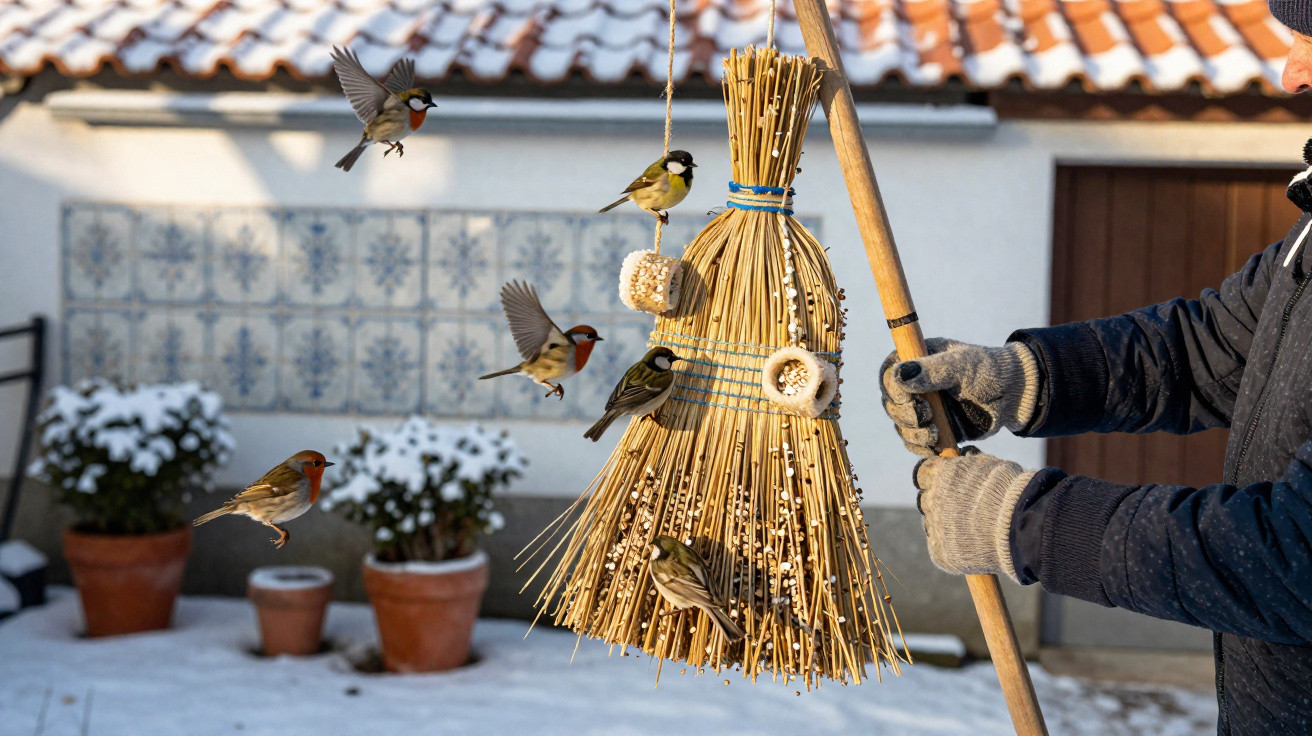
Across Europe and North America, garden birds are increasingly dealing with longer, more severe cold spells alongside the loss of natural habitat. Although plenty of people put out feeders or sprinkle seed, an unexpected item tucked away in the shed could offer more practical support than a plastic accessory: a neglected old broom.
When a forgotten broom becomes a lifeline for birds in the cold
On an icy January morning, a broom standing beside a fence or propped near a vegetable bed can quickly become a runway for birds searching for food. Blue tits, robins, finches and sparrows can use its coarse handle and tangled bristles for both perching and protection, particularly when snow has covered their usual hedges and bushes.
Small birds use up energy reserves remarkably quickly in cold weather. To maintain a steady body temperature, they need to feed almost continuously. Seeds, insects and berries become inaccessible beneath snow and ice, while high winds remove many of the last places available for cover.
In winter, a safe, raised feeding point can mean the difference between survival and exhaustion for small garden birds.
A broom can provide much more than somewhere to put food. Its uneven, three-dimensional form combines multiple useful features: places to perch, sheltered gaps away from wind gusts, and small spaces that can keep food above the snow. This combination becomes especially valuable when the surrounding landscape is flat, exposed and unwelcoming.
How to make an old broom into a winter bird station
A simple approach is quietly catching on among wildlife-friendly gardeners: use the broom as a hanging or upright support rather than throwing it away. No specialist equipment, expensive add-ons or practical expertise is required.
Step 1: select and place the broom
- Choose a broom with firm natural or plastic bristles that are largely still in place.
- Stand it in a weighty plant pot, insert it into the ground, or secure it within a hedge.
- Position it away from busy routes to limit disturbance, while keeping it visible from a window if you would like to observe visiting birds.
- Where possible, site it beside a shrub or tree, allowing birds to escape predators quickly.
Another option is to suspend the broom horizontally from a branch, fastening both ends of the handle with wire or string. This creates an extended, brush-covered perching area, with the downward-facing bristles forming a thatched canopy where food may be placed.
Step 2: add suitable food for winter birds
The handle and bristles work much like a natural “pegboard” for DIY bird food. You could fasten or tuck in:
- Fat balls, suet blocks, or homemade mixtures of lard and seed.
- Fine slices of apple, pear halves, or bunches of unsweetened dried grapes.
- Sunflower seeds, oat flakes, and crushed unsalted peanuts, either in mesh or pressed between the bristles.
Avoid processed, spicy and salty foods. Bread has limited nutritional value and expands in birds' stomachs, so it should be given only in very small quantities or not at all.
A broom keeps food above the ground, away from damp soil and many rodents, while remaining easy for small birds to grip and peck.
Step 3: consider hygiene and safety
While the broom itself is useful, the conditions around it are equally important. Aim to:
- Keep the broom at least 1.5 metres above ground level to discourage cats.
- Provide clear escape options, including dense bushes, a hedge or nearby branches.
- Replace or clean fat balls every one to two weeks to prevent mould.
- Regularly remove droppings and wet food from the bristles.
Brief, regular feeding visits are safer than prolonged, anxious pauses on a slippery and exposed feeder. A broom's numerous small perches naturally promote these short visits.
Why an old broom can outperform many elaborate feeders
Compared with a shop-bought feeder, a broom may initially appear rather basic. Yet many attractive platform and tube feeders have identical shortcomings: they are smooth, exposed, and often placed too near windows or open lawns. Birds may have to cling awkwardly or eat in clear view of predators.
The thick brush of an old broom, on the other hand, functions like a miniature shrub. It interrupts the wind, retains small pockets of marginally warmer air, and lets birds push farther into the bristles when the wind strengthens.
| Feature | Typical plastic feeder | Old broom station |
|---|---|---|
| Perches | Few, fixed bars | Dozens of flexible bristles and handle grips |
| Shelter from wind | Mostly exposed | Dense bristles create windbreak |
| Predator cover | Open sightlines | Birds can hide among fibres and near nearby shrubs |
| Cost and materials | New plastic, metal parts | Repurposed item, no new resources |
Its irregular outline can also make ambushes more difficult for hawks and cats. Rather than sitting on a clearly visible perch, birds can disappear into the bristles or shoot towards adjacent cover within a moment.
Back-garden stories: when birds discover the broom
Wildlife forums and community gardens, from France to the UK, are beginning to report a familiar winter pattern. A person props up an old yard broom “just for a try”, weaves a few suet balls through the bristles and waits. A blue tit may arrive within a few days, followed by a robin and then a modest gathering of sparrows.
What begins as a recycling trick often turns into a daily ritual: refilling the broom, checking who visits, and comparing notes with neighbours.
The idea particularly appeals to children. Topping up the broom is an easy activity they can do independently: pressing sunflower seeds into the fibres, hanging up half an apple, and noticing which species chooses each food. Retired gardeners often begin recording their visitors, creating informal logs of local winter biodiversity.
Such moments become more than simple birdwatching. They help people reconnect with the colder part of the year, when many would otherwise remain indoors. The broom becomes a small, living weather indicator: busy on freezing mornings and calmer during short thaws, when insects begin to emerge again.
From broom to wider winter support: reusing existing tools
The old-broom idea raises a broader possibility: how many neglected tools might also serve as wildlife supports? Most sheds contain several objects which, with a few small alterations, could assist birds, insects and small mammals.
- Old rakes can serve as upright supports for honeysuckle or ivy, eventually creating cover for nesting.
- Damaged shovel handles can raise small bird boxes or seed trays above snow level.
- Metal buckets, laid on their sides and partly filled with dry leaves, can provide shelter for insects or hedgehogs.
This sort of reuse reduces waste and lessens the need to purchase new plastic accessories each season. It can also make garden maintenance feel less like a buying exercise and more like a creative project.
What birds receive – and what gardens gain in return
Giving birds food and shelter during severe weather does more than reduce hardship for individual animals. Once spring arrives, many small species become highly effective pest controllers. Tits eat caterpillars, robins seek out beetle larvae, and finches consume thousands of weed seeds.
Helping birds through the leanest months increases the chance that they will breed successfully nearby. This may reduce reliance on pesticides, particularly in orchards and vegetable gardens, where fruit buds need defending from hungry insects.
A broom loaded with winter food can translate into fewer aphids, fewer caterpillars and healthier plants a few months later.
This type of “service” can be easy to miss because its effects appear slowly. However, long-term research in Europe and North America has identified clear associations between diverse bird populations and reduced pest damage in gardens, orchards and even urban parks.
Going further: small changes that improve survival chances
After setting up a broom station, a few additional measures can make outdoor areas much more welcoming to birds without requiring major effort. Leaving one section of the garden untidy, with fallen leaves, old stems and seed heads, provides places for winter feeding and roosting. A shallow dish of unfrozen water gives birds somewhere to drink and care for their feathers, which provide better insulation when they are clean.
For an approximate sense of the difference this can make, consider that one blue tit may need to consume up to a third of its body weight in food during a freezing day. When a small flock visits your broom over a week, the added calories can start to seem meaningful rather than merely symbolic.
There are still important limits. Supplementary feeding should not wholly take the place of natural foraging, while food needs to remain fresh enough to prevent disease outbreaks. Moving brooms and feeders between locations, keeping them clean and offering a varied diet can all help. During difficult winters, modest actions taken across many balconies and gardens can collectively form a genuine safety net for local bird populations.











Comments
No comments yet. Be the first to comment!
Leave a Comment