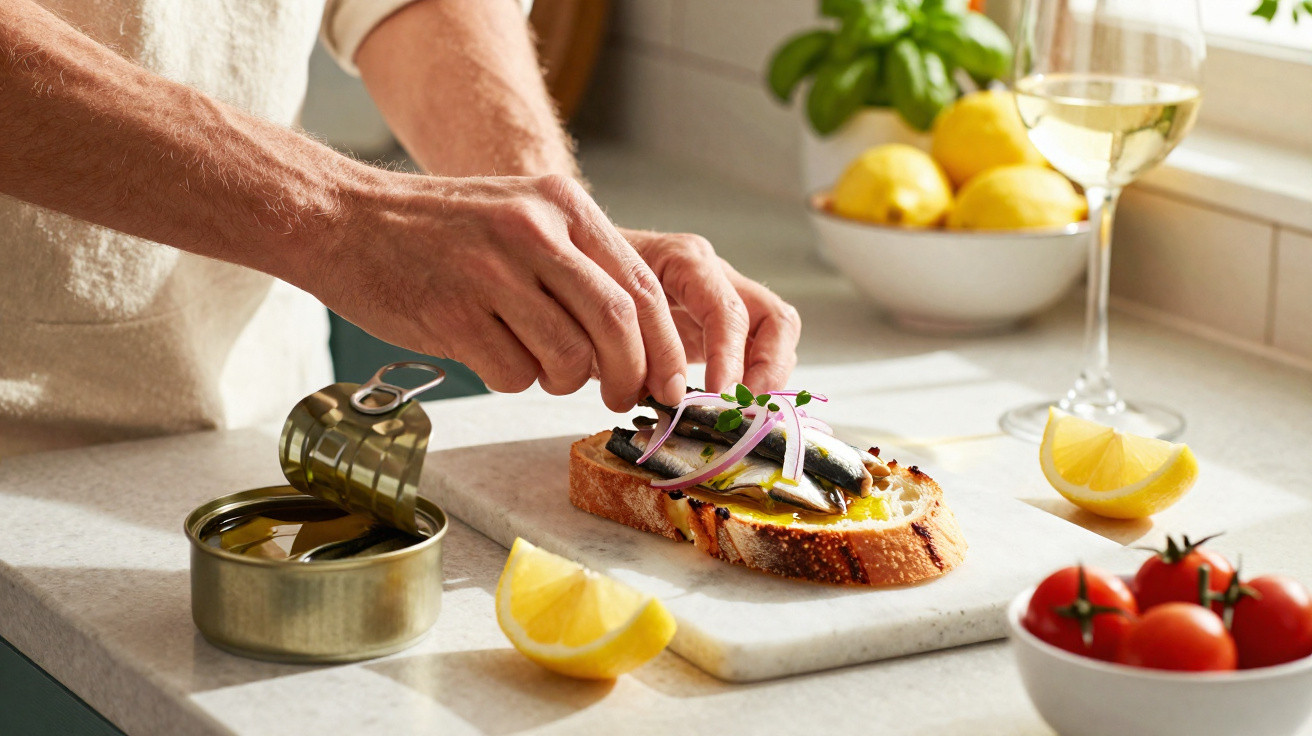
When the weekend is drawing to a close and your energy has run out, an unassuming tin of sardines can start to seem like a perfectly plausible dinner.
Late on a Sunday, hunger has its own character: you crave something savoury and soothing, yet have no desire whatsoever to create a pile of washing-up. Usually, a sardine tin suggests little more than a sad piece of toast. But Éric Frechon, the three-Michelin-starred French chef known for keeping his home cooking uncomplicated, has renewed online interest by demonstrating a modest upgrade. His approach turns a tin into a warm, seemingly cooked meal, with barely any actual cooking required.
The viral sardine tin moment
Frechon recently posted a brief video on his social channels which quickly appealed to both low-effort cooks and food-focused TikTok viewers. His proposition is simple: leave the sardines in their tin, make a speedy tomato-and-pepper mixture, and put it all on toasted country bread. It has the distinct feel of “Sunday night, minimal effort, but still a proper treat”.
This is not about restaurant-style plating. It’s about taking a cheap pantry staple and giving it five minutes of care so it eats like an actual meal.
It is easy to understand why it has caught on. Sardine tins are inexpensive, keep for ages and wait unobtrusively in the back of the cupboard for a train-strike evening or a fridge with nothing left in it. Even so, plenty of people have no ideas for using them beyond “on crackers”. Frechon’s suggestion arrives at a fitting moment: food costs are still high, more people are preparing meals at home, and social media responds well to a “trash-to-treasure” transformation.
Éric Frechon’s French take on sardines on toast
At the heart of Frechon’s recipe is a pared-back Mediterranean-style stew of tomatoes, garlic, spring onion, pepper and basil, quickly softened in olive oil. From a cold pan to serving, it takes roughly 15 minutes, with gentle simmering rather than hands-on work accounting for most of that time.
Core ingredients for one plate
Frechon’s original recipe relies on affordable, straightforward ingredients that are already in many kitchens:
- 1 small can of sardines in oil
- A handful of cocktail or plum tomatoes
- 1 large clove of garlic
- 1 small pepper, any colour, seeded
- A few spring onions or scallions
- A small handful of cherry tomatoes
- A few basil leaves
- 1–2 thick slices of rustic bread (sourdough or country loaf)
- Olive oil, salt, black pepper
The point is not precision. The point is: tomato for freshness, pepper for sweetness, herbs for fragrance, and good bread for structure.
How the method actually works
The rapid tomato mixture is what makes the result seem like a proper dish rather than just a snack. Frechon blanches the cocktail tomatoes, peels them, takes out the seeds and chops the flesh finely. This produces a yielding, nearly jam-like consistency, rather than wet, chunky pieces. He gently cooks garlic and the white part of the spring onion in olive oil, before allowing the chopped tomato to reduce into a quick sauce with only salt and pepper for seasoning.
Meanwhile, finely diced pepper is added for a little crunch and a gentle sweetness that cuts through the sardines’ richness. Sliced basil and quartered cherry tomatoes go in only at the end, keeping their freshness and brightness. The finished mixture sits somewhere between a light vegetable ragù and a bruschetta topping.
The sardines need almost no treatment at all. Either gently heat the tin in a bowl of hot water or allow the warm vegetables to heat the fish. Frechon prefers to return the sardines to their tin, placed over the tomato mixture; alternatively, many home cooks spoon the mixture onto toast and arrange the fillets over it.
Getting the bread right: golden, not burnt
Bread is more important to this recipe than it may first appear. The slice must be strong enough to absorb the tomato juices and sardine oil without falling apart. A soft supermarket sandwich loaf will droop, whereas a substantial piece of sourdough, pain de campagne or a country-style loaf holds everything well.
Frechon favours a method associated with classic French kitchens: grilling the bread in the oven instead of using a toaster. Put the slices on the middle shelf beneath a preheated grill for around five minutes, turning them once if necessary.
Good toast should crackle lightly when you press it, while the centre stays a little tender so it can drink in the juices without turning to cardboard.
This technique creates a more evenly golden surface, particularly with thick bread, while avoiding a familiar toaster issue: burnt edges and a pale middle. Rubbing the hot toast lightly with garlic adds flavour, and a small drizzle of olive oil before adding the tomato mixture and sardines does the same.
Why sardines suddenly look modern again
Sardines were once more likely to feature in student-joke punchlines than to signal canny eating. That perception is changing, with chefs such as Frechon helping to drive the shift. Sardines are gaining attention for several reasons:
- They are much cheaper than fresh fish fillets.
- They are naturally rich in omega‑3 fats.
- They cope particularly well with canning and can often develop more flavour over time.
- Small, quickly growing fish such as sardines put less strain on marine ecosystems than many large predators.
Nutritionists also note that canned sardines contain soft bones which can be eaten, providing additional calcium. That can be particularly relevant for people who eat little dairy. In practical weekday terms, tinned fish also removes the pressure of having to cook fresh meat or fish that night or throw it away.
Turning Frechon’s idea into your own weeknight formula
Rather than presenting a fixed recipe, Frechon illustrates a framework: oily fish, cooked vegetables and good bread. Once that basic format is understood, ingredients can be changed according to the season or what is available in the cupboard.
| Element | Frechon’s version | Easy variations |
|---|---|---|
| Fish | Canned sardines in oil | Mackerel fillets, anchovies, smoked trout |
| Vegetable base | Tomatoes, pepper, spring onion, basil | Roasted peppers, canned tomatoes, olives, capers |
| Carb | Toasted country bread | Polenta slices, baked potatoes, grilled flatbread |
For extra sharpness, add a squeeze of lemon; use a pinch of chilli flakes for heat; or stir a spoonful of mustard into the tomato base for a Northern European variation. The approach remains unchanged: soften the aromatics, add the vegetables, season them, then place the fish on top to finish.
Small risks and simple wins with canned fish cooking
Sardines’ powerful flavour can concern some people. Two simple measures soften that intensity: pair them with something naturally sweet, such as the softly cooked tomatoes and peppers in Frechon’s version, and add acidity. Even a teaspoon of red wine vinegar mixed into the pan before serving can brighten the entire dish.
Salt content is another commonly mentioned consideration. A lot of tinned fish is already generously seasoned, so tasting before adding salt prevents an overly salty meal, especially if olives, capers or salted butter are also involved. Plain sardines packed in water or light oil offer greater control for anyone concerned about health reasons.
The real advantage of this kind of recipe lies in control: you manage the fat, the seasoning, the bread size, and you know exactly what went into the pan.
The more significant benefit is less obvious: confidence. Seeing a chef willingly make dinner from a tin and a handful of tomatoes reduces the pressure to produce a flawless, “proper” meal. In turn, that may encourage more people to cook rather than order food, improvise rather than choose ultra-processed snacks, and view cupboard staples as ingredients rather than emergency provisions.
Frechon’s sardine toast is a small idea, yet it encourages a valuable habit: building a mental collection of quick, assembled meals that feel thoughtful, even if they begin with a dusty tin at the rear of the cupboard. On busy nights, low-energy Sundays or for a solo lunch with a book, this habit can quietly alter both how we cook and how often we do it.








Comments
No comments yet. Be the first to comment!
Leave a Comment