Active time: 50 minutes
Total time: 2 hours 15 minutes
Serves: 8
Why it passed the test
- A sweet-hot chogochujang sauce clings evenly to the noodles, giving them a bold finish.
- Cooking the noodles only to al dente, then rinsing them thoroughly, leaves them bouncy and stops them sticking.
- Adapt the dish with any selection of proteins, fresh vegetables and additions.
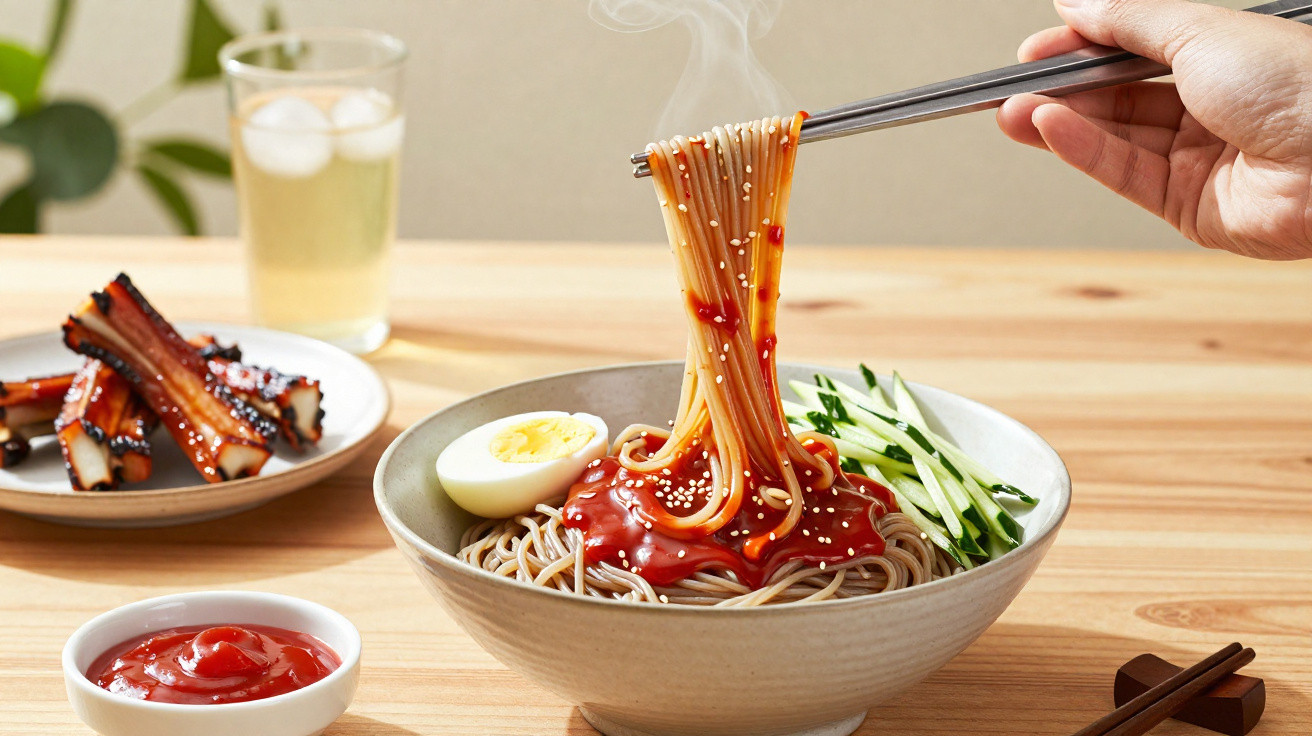
Bibimguksu translates literally as “mixed noodles”. This well-loved Korean chilled noodle dish combines springy wheat noodles with a hot, sharp sauce based on gochujang. Ji Hye Kim, chef-owner of Miss Kim in Ann Arbor, Michigan, and a 2021 F&W Best New Chef, centres her version on the sweet spice of chogochujang. Its flavour relies on balance: smoky gochujang (Korean fermented chilli paste), sugar, soy sauce for savouriness, toasted sesame oil for a nutty note and rice vinegar for mild acidity.
For the protein, Kim rubs flanken-cut short ribs with soju, which quickly tenderises the meat, before marinating them in a garlicky sesame-soy mixture lightly sweetened with sugar. Cooked on a griddle pan, the ribs become smoky, charred and gently caramelised around the edges.
Cook the noodles following the packet instructions, with one essential rinsing technique from Kim to keep them elastic and separate: “When you run the noodles under cold water, it helps to use your hands to agitate and massage the noodles gently to ensure that the noodles stop cooking and firm up slightly under cold water.” Drain them thoroughly, then lightly squeeze away any remaining water so the noodles can absorb as much chogochujang as possible.
Think of bibimguksu as a bowl you can tailor to your taste. Kim uses soft baby spinach and kale, crunchy cucumber and radish cut into thin sticks, peppery microgreens and a little kimchi for its funky sharpness. A fried egg makes a richer topping. Use whichever greens and crisp vegetables you have available, replace the flanken ribs with any protein or leftover meat, or make the dish vegetarian.
What is chogochujang?
Chogochujang, also spelt “cho-gochujang”, is a Korean sauce prepared by combining gochujang, a Korean fermented red chilli paste, with vinegar and a sweetener. Garlic, sesame and other seasonings are often added too. Here, the gochujang is mixed with rice vinegar and caster sugar, though distilled white vinegar or other vinegars and sweeteners can be used instead. It is frequently served as a dipping sauce or dressing; in this recipe, it coats the noodles.
A note on rinsing noodles for bibimguksu
Rinsing the noodles well under cold water matters for two reasons. Firstly, it halts the cooking process. As when blanched vegetables are plunged into iced water, the cold rinse prevents the noodles cooking further and becoming too soft. Secondly, it stops them clumping together. Recipe developer Ji Hye Kim advises gently massaging and agitating the noodles with your hands before coating them in the sauce.
Notes from the Food & Wine Test Kitchen
- Start tasting the noodles for doneness 1 to 2 minutes before the time stated on the packet.
- Replace the somyeon with any long noodle you prefer, including sōmen, vermicelli or soba.
- Use a very large bowl to toss all the components together.
This recipe was developed by Ji Hye Kim; the text was written by Andee Gosnell.
Ingredients
Short ribs
- 680 to 910 g boneless flanken-cut short ribs, cut 1 cm thick
- 30 ml soju
- 90 ml soy sauce
- 60 ml chopped spring onions (about 4 small spring onions)
- 45 ml dark brown sugar
- 45 ml caster sugar
- 45 ml toasted sesame oil
- 30 ml minced garlic (about 6 garlic cloves)
- 30 ml sesame seeds
- 5 ml black pepper
- Oil, for greasing
Chogochujang
- 45 ml chopped spring onions (about 3 small spring onions)
- 45 ml toasted sesame oil
- 45 ml soy sauce
- 45 ml caster sugar
- 22.5 ml gochujang
- 20 ml rice vinegar
- 15 ml gochugaru
- 12.5 ml minced garlic (about 2 garlic cloves)
- 1.25 ml black pepper
Bibimguksu
- 340 g somyeon or Japanese sōmen noodles
- 22.5 ml toasted sesame oil
- 57 g crisp vegetables, such as radishes and cucumbers, cut into matchsticks and half-moons (about 120 ml)
- 57 g leafy green vegetables, such as baby spinach and tatsoi (about 240 ml, very firmly packed)
- 57 g shop-bought kimchi (about 60 ml)
- 57 g whole microgreens (about 480 ml)
- Toasted sesame seeds and fried egg, to garnish
Method
Prepare the short ribs: Put the ribs in a large bowl. Pour over the soju and massage it into the meat until evenly dispersed. Leave uncovered at room temperature for 10 minutes.
In a medium bowl, whisk together the soy sauce, spring onions, dark brown sugar, caster sugar, sesame oil, garlic, sesame seeds and pepper. Tip this over the short ribs and massage until the meat is evenly covered. Cover and refrigerate for 30 minutes.
Heat an oiled griddle pan over a medium-high heat. Cook the meat in batches, turning once halfway through, until browned, charred and cooked to your preferred doneness, 2 to 4 minutes in total. Rest for 5 minutes, then cut into pieces of about 7.5 cm. Set aside.
Make the chogochujang: In a medium bowl, whisk the spring onions, sesame oil, soy sauce, sugar, gochujang, vinegar, gochugaru, garlic and pepper until fully combined. Set aside.
Make the bibimguksu: Bring a large saucepan of water to the boil over a medium-high heat. Add the noodles and cook until al dente, checking them for doneness 1 to 2 minutes before the packet instructions suggest. Tip the noodles into a colander, rinse under cold water and massage until completely cool. Drain thoroughly. Drizzle with the sesame oil and about 30 ml of the reserved chogochujang, then toss to coat.
Transfer the cooked noodles to a very large bowl. Layer the crisp vegetables, leafy greens, kimchi and microgreens over them, then mound the short ribs in the centre. Spoon 60 ml chogochujang over the top, finish with toasted sesame seeds and a fried egg, and use chopsticks to mix everything together. Add further chogochujang to taste and serve with extra alongside.
Make ahead
Keep the chogochujang in an airtight container in the refrigerator for up to one week.
Cut the radishes and cucumbers into matchsticks and refrigerate them in separate airtight containers for up to one day.
Originally appeared in Food & Wine magazine, March 2026
Reviews
5 out of 5
1 Ratings
- 5 star: 1
- 4 star: 0
- 3 star: 0
- 2 star: 0
- 1 star: 0
MagentaPeas5601 - 5 star
02/25/2026
“At once simple yet also layered in flavor. It’s refreshing and so satisfying. Love the present but pleasant heat.”
Helpful (0)









Comments
No comments yet. Be the first to comment!
Leave a Comment