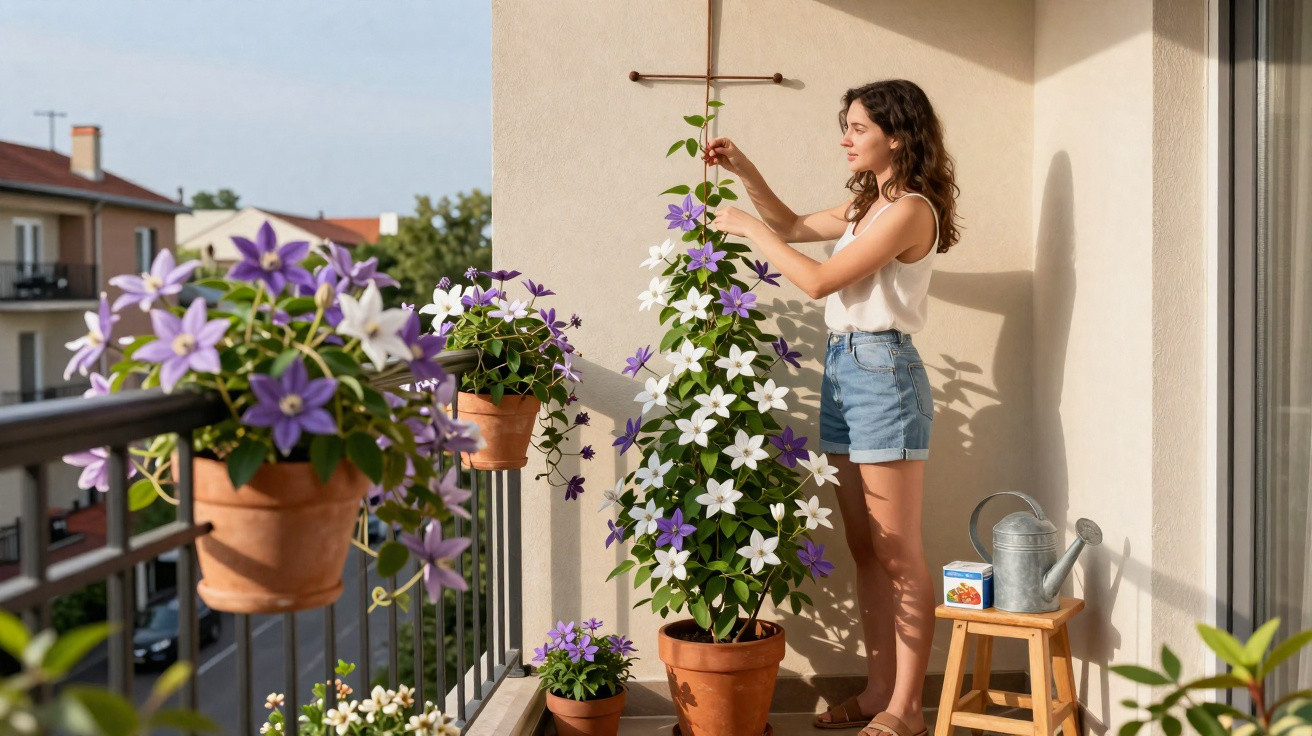
A modest climbing plant can turn even the narrowest balcony into a vertical wall of flowers.
Anyone with only a tiny back yard, a slim city balcony or a miniature garden will know the issue: pots get in the way, planters occupy the last available surface, and large shrubs are simply unrealistic. Yet thoughtful planning can achieve far more than many people expect – particularly when you design upwards rather than outwards. This is exactly where compact Clematis varieties come into their own.
Why mini Clematis are a game-changer for narrow balconies
Over recent years, short-growing and especially compact Clematis, often sold as dwarf or mini Clematis, have become an insider favourite for urban gardens. They climb while requiring very little ground space, changing bare walls, narrow fences and railings into colourful flowering displays.
“Rather than shooting up to 5 to 6 metres, these varieties often remain at 1 to 2 metres – ideal for any flat with a balcony.”
Their main benefit is that growth is almost entirely vertical. They create a slim flowering column or screen while taking up scarcely any room at ground level. One larger container placed in a corner can visually “clad” an entire wall – with blooms instead of concrete.
Flowers from the pot edge to the top
Many traditional Clematis look bare near the base because they only start flowering higher up. In a confined space, this can be particularly noticeable: abundance above, exposed stems below. Compact varieties have been bred specifically to prevent this.
Typical characteristics of these mini Clematis include:
- flower buds forming immediately above the soil
- continuous blooms from the edge of the pot to the tips of the upper shoots
- flowers that are often just as impressive in size as those on larger varieties
Popular varieties available from retailers – whose names may differ slightly between nurseries – offer a wide range of colours: vivid pink for dark walls, white with a pink centre for bright courtyards, or delicate blue and white shades that visually “cool” heat and intense light.
Vertical rather than overcrowded: making the most of mini Clematis
On narrow balconies, strips of patio beside the house or very small urban courtyards, every square decimetre of floor space matters. A well-considered layout uses the full height available while keeping the footprint to a minimum.
“A single mini Clematis in a large pot visually replaces several planters without blocking the space for moving around.”
Places where these plants work especially well
- at the rear of a patio, directly against a wall
- in a balcony corner, trained up a trellis
- as a slim privacy screen along a railing
- in a small courtyard, growing on a decorative metal frame
As the plants do not spread outwards, there is still room in front of them for a small table, chairs or a sun lounger. The balcony feels lush without appearing crammed with pots – a common mistake in micro-gardens.
Pot size, compost and position: getting mini Clematis started properly
When Clematis fail, the problem is often the container rather than the plant itself. Pots that are too small dry out quickly, while waterlogging can rot the roots. A few straightforward principles help avoid both issues.
Which pot is suitable?
Clematis are climbing plants with a strong root system. Even mini varieties need sufficient volume if they are to live permanently in a container.
- at least 40–45 cm in both height and diameter
- several drainage holes in the base
- a thick drainage layer of expanded clay, gravel or coarse chippings
Add a high-quality container compost above this, ideally one that is slightly loamy yet free-draining. A slow-release fertiliser for flowering plants can be mixed in at the same time.
Position: sun for the top, shade for the roots
Clematis traditionally prefer “their heads in the sun and their feet in the shade”. This is quite easy to arrange on a balcony:
- keep the upper part of the plant in sun or partial shade
- avoid placing the pot in fierce midday sun where possible
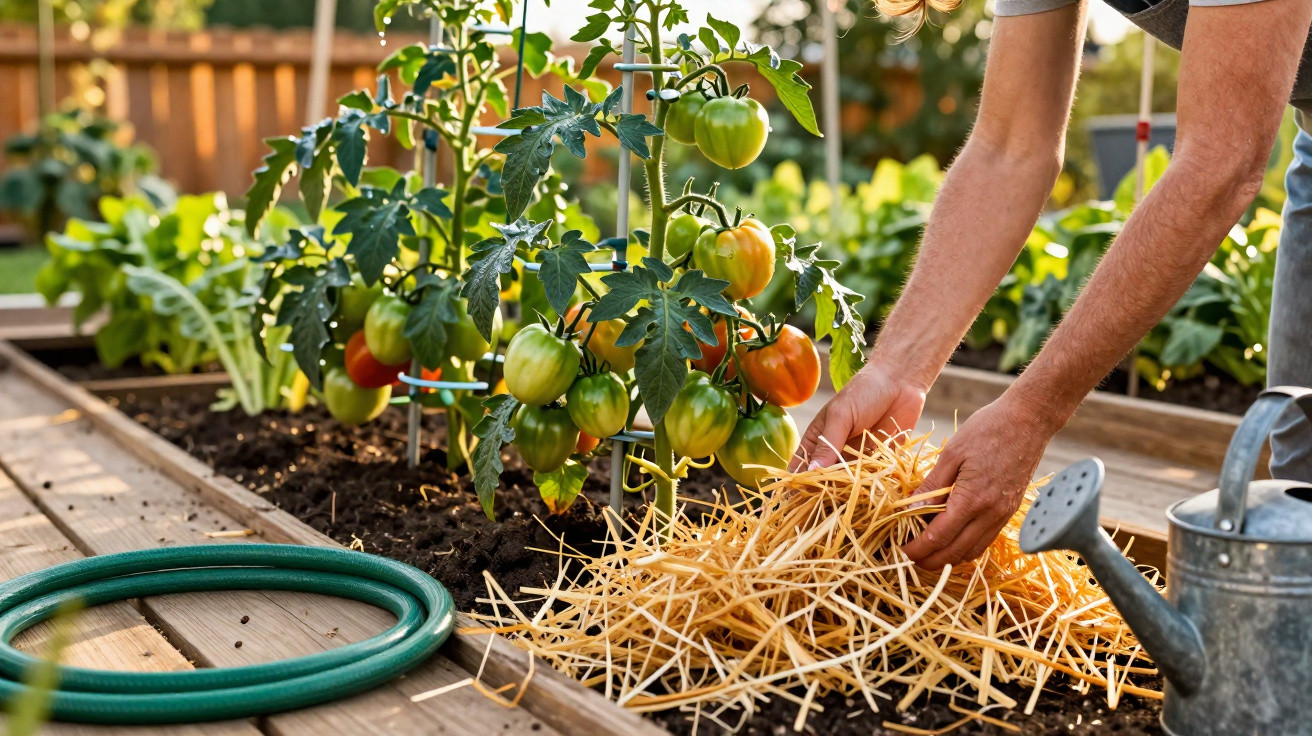
- shade the root area with low companion plants or mulch
Low-growing cushion perennials, compact geraniums or trailing plants in the same container provide shade for the root ball while also disguising the pot.
Cascades and hanging baskets: mini Clematis used differently
Not every compact Clematis needs to grow strictly upwards. Some varieties develop shorter, softer shoots that are ideal for hanging baskets and window boxes. Their growth is more bushy, with flowers that hang down like little bells.
“For extremely narrow window ledges, these trailing Clematis are a genuine alternative to traditional geraniums.”
Hanging baskets also make use of areas that would otherwise stay empty: beneath an overhanging roof, at the side of a balcony or on wall hooks in a courtyard. The plant uses no floor space and adds colour at eye level.
| Location | Recommended Clematis form |
|---|---|
| narrow balcony with railing | compact, upright climbing varieties on a trellis |
| window ledge or parapet | bushy, semi-trailing mini varieties in a window box |
| covered patio | Clematis in a hanging basket, combined with trailing seasonal flowers |
| small courtyard | Clematis in a container with a freestanding metal arch or frame |
Everyday care: watering, feeding and pruning
Despite their delicate appearance, mini Clematis are not among the more demanding balcony plants. Following a few basic rules will reward you with a long flowering period.
Water carefully rather than keeping them constantly wet
These plants prefer consistent moisture, but not “wet feet”.
- test the compost with a finger before watering: only water when the top layer has dried
- on very hot days, water a little less in the morning and evening rather than too much at once
- empty saucers after thorough watering so that no water is left standing
During extended hot spells of around 27 degrees or more, foliage may turn yellowish. Although this can look worrying, it is often only a resting phase. Do not “water it to death” at this point; instead, keep the compost moderately moist.
Feeding for the fullest possible flowering
The plant requires nutrients for plentiful blooms, especially potassium. Many gardeners simply use tomato feed, which is highly suitable.
- begin feeding as soon as the first buds can be seen
- apply liquid feed in the watering water every 1–2 weeks
- stop feeding when the first flowers are close to opening
The mild “stress” created by stopping the nutrient supply encourages the Clematis to produce even more buds.
Pruning without fear
Many amateur gardeners are apprehensive about pruning Clematis, but compact varieties are generally uncomplicated. When grown in containers, it is often enough to cut the shoots back firmly in late winter or early spring, to around 30 to 50 centimetres depending on the variety.
Remove old, dead shoots completely. This keeps the plant vigorous, improves branching and ensures it remains visually manageable in tight spaces.
Creating harmonious planting schemes with mini Clematis
For a small balcony to feel not only green but balanced too, it is worth giving some thought to colour combinations and shapes. Climbing flowers against a plain wall immediately create the effect of a living picture.
- strong pink varieties against grey or anthracite-coloured façades
- white flowers in front of brickwork or dark timber
- blue-violet varieties combined with silvery foliage, such as silverleaf or lavender
Clematis also pair well with herbs in pots: thyme, oregano and basil bring scent at the base, while climbing stars flower above – a charming blend of productive and ornamental gardening in the smallest of spaces.
Anyone with children or regular visitors benefits from this clear arrangement: pots stay around the edge, climbers make use of the height, and the centre remains free. In this way, even a mini balcony can become a proper garden – with one plant group that effortlessly turns a concrete wall into a flowering wall.







Comments
No comments yet. Be the first to comment!
Leave a Comment