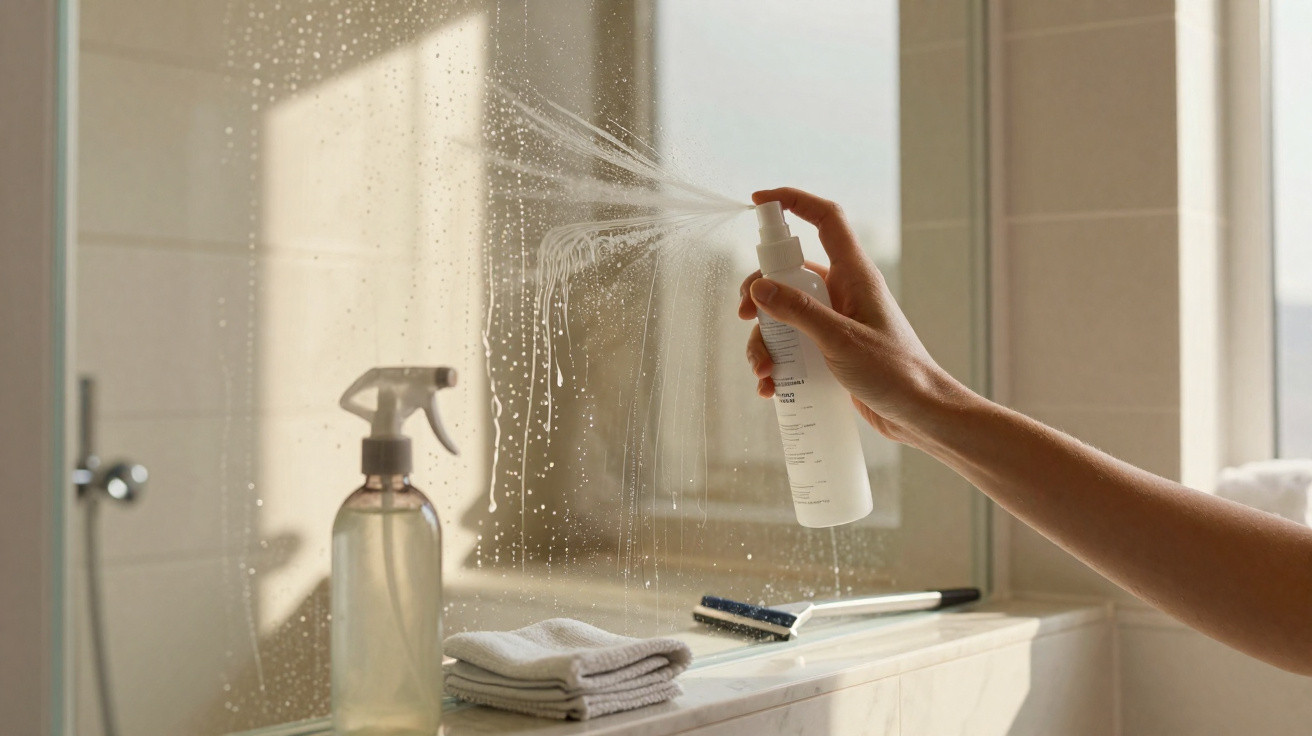
A sparkling shower can feel like an everyday luxury, but hard water and soap residue quickly leave glass looking milky. Hotels do not remove it by magic every morning. Instead, they use a simple method that encourages water to slide away, keeping the glass nearly invisible for weeks. It is neither a gadget nor a miracle, but something that may already be hiding in plain sight at home.
A supervisor once took a small unlabelled bottle from a cleaning caddy and applied it to the shower glass with a soft cloth, as carefully as a watchmaker lubricating a mechanism. She was not cleaning the glass. She was preparing its surface.
We have all seen a shower screen look perfectly acceptable while wet, only for it to dry cloudy. Within minutes, she had finished, switched on the tap and watched water run off in tidy beads, as though the glass had been waxed. There were no streaks and no chalky film. The answer was not a cleaning product at all.
The five-star trick explained
The understated reality is that luxury hotels do not battle limescale every day; they prevent it from attaching to the glass in the first place. They apply a hydrophobic coating, similar to one used for a car windscreen or a specialist bathroom sealant. The key is a coating rather than a cleaner. Water forms beads and rolls away, carrying minerals with it. This means less residue, less scrubbing and a shower that can look freshly fitted for weeks.
At one Knightsbridge property, a head housekeeper showed me a process requiring less than ten minutes for each suite: clean and dry the glass, add a few drops of dishwasher rinse aid or professional-grade glass repellent to a microfibre cloth, then buff until the finish disappears. That is all it takes. In a city where over half of homes contend with hard water, it is an understated lifesaver. The treatment can extend the gap between thorough cleans from days to weeks. Realistically, nobody wants to do that every day.
The science behind it is pleasingly straightforward. Hydrophobic molecules reduce the surface energy of the glass, preventing water from spreading into a clinging sheet that dries to a chalky finish. Droplets instead gather and run off, leaving minerals with less opportunity to settle. It works much like rain on a waxed car bonnet. Rinse aids contain non-ionic surfactants, while car-style repellents use silicones that create a longer-lasting bond. Both are safe for glass. However, keep them away from floors and natural stone, where they may create a skating-rink effect or cause staining.
How to keep shower glass clear for weeks at home
Do the full job once, then enjoy the easier upkeep. First, thoroughly clean the glass with a limescale remover or warm white vinegar and a soft pad. Rinse it, then dry it until it squeaks, including every edge and corner. Next comes the important part: spray a small amount of dishwasher rinse aid diluted 1:1 with water, or choose a silicone-based rain repellent or bathroom glass sealant. Apply it in overlapping strokes using a microfibre cloth, then buff the glass until clear. Dry the glass before applying the coating. When using a professional sealant, allow the curing time stated on its label. One application can provide weeks of protection.
Upkeep is minimal. After showering, a quick rinse with cool water can help, as can a fast pass with a squeegee whenever you remember. If you miss it, the coating will still reduce build-up considerably. Typical errors include applying too much product, using an abrasive sponge or allowing the solution to run onto the tiles and shower tray. Use a light touch. Keep windows open during application. If your bathroom includes natural stone, cover it with a towel before starting. A little caution avoids unpleasant slippery surprises.
Housekeepers describe the technique almost as though it were a secret handshake. The effort is done once, while the benefit arrives every morning. A modest habit that brings a five-star finish into the home.
“We don’t chase shine, we set it up,” a London head housekeeper told me. “Treat the glass like a windscreen and the shower cleans itself.”
- Microfibre cloths (two: one for application and one for buffing)
- Dishwasher rinse aid or a rain repellent/glass sealant
- A spray bottle for the 1:1 rinse-aid dilution
- A small squeegee for quick passes after showering
- Nitrile gloves and a towel to protect stone and floors
Keep the routine simple and the glass clear
Once you have watched water bead and glide away from the screen, it is difficult to return to the old way. The shower feels more peaceful, and the glass no longer steals light from the room. You will settle into your own routine: apply a coat every three to six weeks, depending on the water and how often the shower is used, and add quick rinses when time permits. If a hectic week gets in the way, the coating still provides protection. Tell a friend who loathes scrubbing, or pass it on to the person who keeps the household running. Keep it away from the floor. The hotel trick is not secret because it is costly; it is secret because it is so straightforward.
| Key point | Detail | Benefit for the reader |
|---|---|---|
| Hydrophobic coating | Use dishwasher rinse aid, rain repellent or a dedicated glass sealant on clean, dry glass | Weeks of transparent glass with very little maintenance |
| Preparation matters | Deep-clean and completely dry the glass before coating; buff to a clear, invisible finish | A stronger bond, longer-lasting results and fewer streaks |
| Safety and scope | Avoid floors and natural stone; ventilate the room; test a small area first | Benefits without slips, stains or unexpected problems |













Comments
No comments yet. Be the first to comment!
Leave a Comment