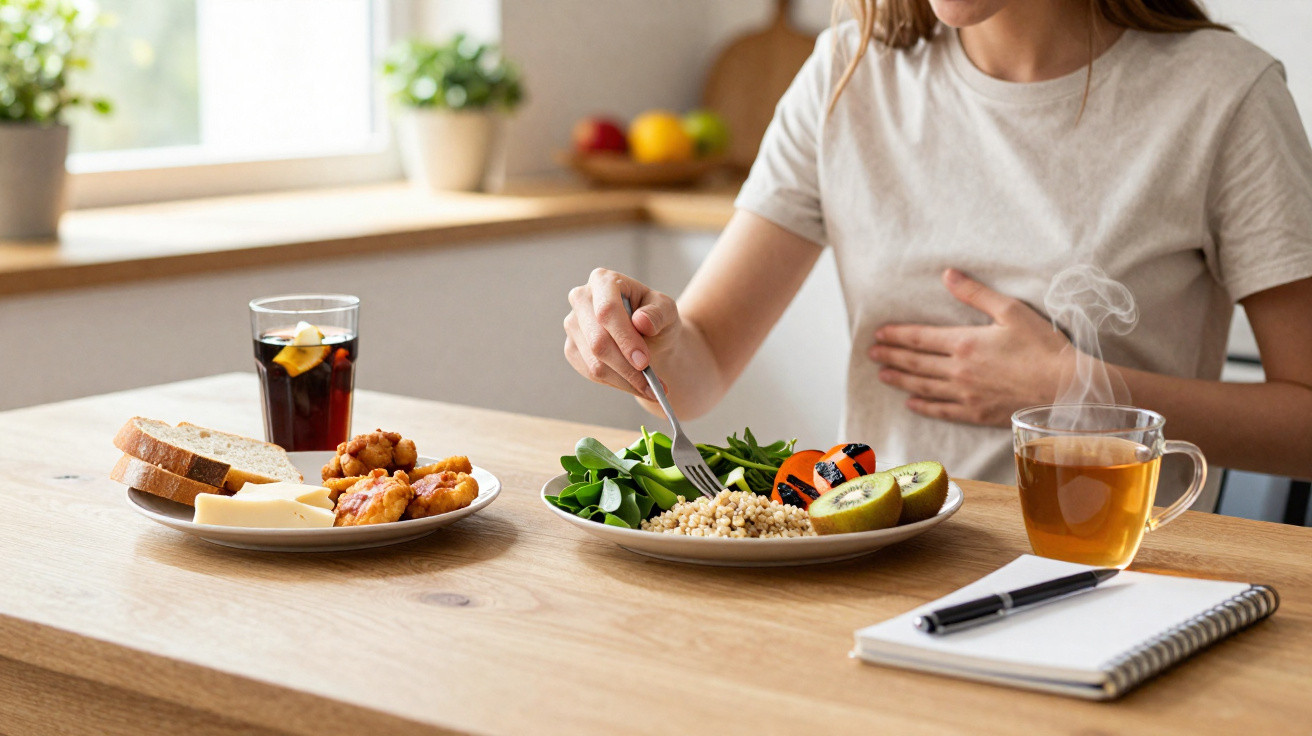
You might point the finger at stress, the bread basket or the coffee that is never really “just one.” Yet some everyday foods that seem “healthy” can act very differently once they arrive in your gut. The signs can be subtle, the connection easy to miss, and the discomfort can feel far from accidental.
After lunch, I saw a colleague lean back from her desk with one hand at her waistband, wearing the half-smile people use when they would rather not reveal they are uncomfortable. Her meal had been a “light” salad, a slice of bread and flavoured sparkling water. Within fifteen minutes, she was undoing her jeans beneath the desk. My jeans were having a panic attack.
She was not the only one. I had experienced it after yoghurt on Monday, garlic pasta on Tuesday and a “sugar-free” mint on the train. Different foods, identical outcome. It seemed confusing until the pattern became clear: the trigger may be sitting in plain sight.
Five everyday culprits that puff up your belly
The familiar suspects include onions and garlic, dairy milk and creamy yoghurt, soft wheat breads, sparkling drinks, and hidden sweeteners in “sugar-free” snacks. These foods may be perfectly fine for many people, but they can trigger a response in sensitive guts.
Consider Maya, 32, who was convinced that salad “hated” her. The salad itself was not the issue: diced onion, a garlic-heavy dressing and the fizzy can alongside it were doing the real work. She changed the dressing, left out the onion and chose still water; within a week, her 3 p.m. bloat had disappeared. Research indicates that many people with irritable bowels feel better when they briefly cut back on high-FODMAP foods before reintroducing them strategically. The pattern can still be noticeable even without a diagnosis.
The reasoning is straightforward. Onions, garlic and wheat breads contain fructans, carbohydrates that ferment rapidly in the gut. Dairy may add lactose to the mix, while carbonation introduces actual gas. Sugar alcohols such as sorbitol and xylitol also pull water into the intestines and ferment. None of these ingredients is inherently “bad”; your gut microbes are simply keen. Gas and water create pressure, and that pressure feels like bloating.
How to test, tweak, and feel lighter
Treat this as a 10-day trial rather than a lifelong rule. Make a simple two-column note on your phone: “What I ate” and “How I felt 1–3 hours later.” Replace onions with the green tops of spring onions, garlic with infused oil, regular milk with lactose-free milk, wheat toast with genuine sourdough, and fizzy cans with still citrus water. Small changes can bring the same enjoyment with less swelling.
Try each suspected food on its own once, so you can identify your personal trigger. You can also adjust portions: choose half a bagel rather than a jumbo one, have a small cappuccino if milk is non-negotiable, or chew one sugar-free gum instead of five. We have all had the experience of a “healthy choice” sitting like a brick. Be gentle with the pattern rather than critical of yourself. Let’s be honest: no one really does that every day.
When you find relief, retain what helps and reintroduce foods on calmer days. Bloating is often about dose and combinations, rather than a moral verdict. Notice the “too much, too fast” signal and answer it kindly.
“Your gut isn’t dramatic; it’s data-driven. Change one variable at a time and it will tell you what it likes.” - a registered dietitian once told me
- Replace chopped onion with chives or the green tops of spring onions.
- Choose garlic-infused olive oil rather than raw garlic for dressings.
- Opt for lactose-free milk or hard cheeses instead of soft, creamy varieties.
- Select genuine sourdough or eat smaller portions of wheat bread.
- Swap fizzy cans for still water with lemon or cucumber.
What else might be going on
Bloating is seldom about virtue; it is about variables. Eating quickly means swallowing more air, while gum and straws add air too. Tight waistbands can hold gas where it is trying to move. Stress can slow gut motility, leaving your salad stuck in a traffic jam. Dry meals may linger for longer, whereas a glass of water or herbal tea alongside can help food move more smoothly instead of grinding along.
If dairy, breads or onion-heavy meals seem to form a pattern, you are not condemned to plain rice. You are creating a map. Have a favourite suspected food on a day off, chew more slowly and stop at “enough” before you are full. Your gut takes notes, and you can interpret them without making food a thesis. Relief is often only one swap-and one calmer meal-away.
The aim is not a “perfect gut.” It is to feel at home in your body after eating. Tell a friend who has been undoing jeans under café tables what you notice. Small experiments, modest wins and a plate that still resembles dinner: that is the quiet revolution.
| Key point | Detail | Why it matters to the reader |
|---|---|---|
| Hidden fermenters | Onions, garlic, wheat breads, lactose, carbonation, sugar alcohols | Identify the subtle triggers behind midday bloating |
| Test, don’t guess | 10-day swaps with a simple food–symptom note | Gain clarity more quickly without a restrictive diet |
| Small levers | Portion, pace, hydration and smart swaps | Feel lighter without giving up favourite foods |










Comments
No comments yet. Be the first to comment!
Leave a Comment