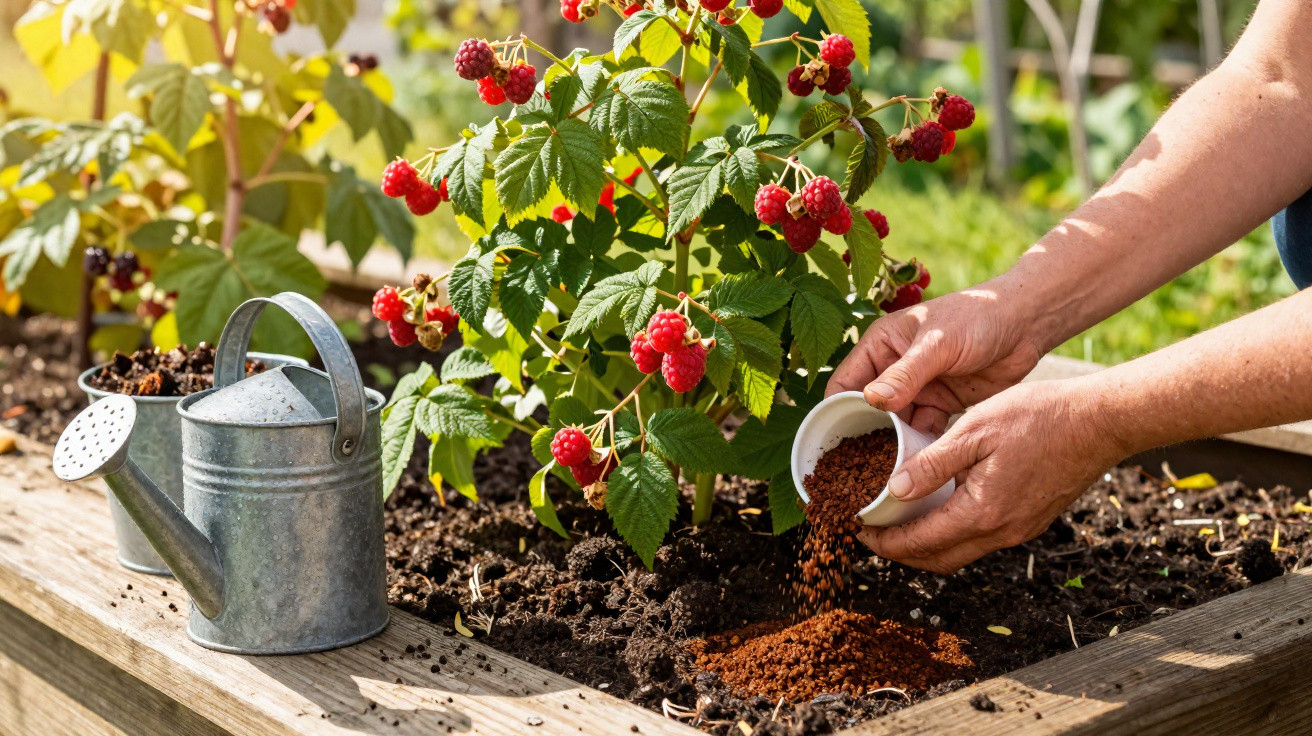
Anyone who has sampled ripe, sun-warmed raspberries straight from the cane will want to repeat the experience every year – ideally filling large bowls rather than picking a few small handfuls. Yet the abundant walls of berries seen in professional gardens are not simply down to luck: they often rely on a remarkably straightforward, almost ingenious technique involving a cup and an everyday kitchen leftover.
Why many raspberry canes fail to reach their full potential
Raspberries are considered fairly easy to grow, but they rarely produce record harvests without some care. Many plants are rooted in soil that is too heavy, receive insufficient nutrients or repeatedly dry out during summer. The result is a disappointing crop of small fruits.
Raspberries thrive with:
- slightly acidic, loose soil
- soil that remains evenly moist without becoming waterlogged
- a good nutrient supply, particularly in spring
- a sheltered, bright position away from harsh midday sun
Even following these principles reasonably well can deliver a respectable harvest. Those who also use the coffee trick wisely often notice a clear improvement in both the number and size of the berries.
The cup method: turning coffee grounds into a raspberry boost
At its heart, this approach gives the canes regular, small and targeted portions of nutrients straight to their roots, measured using a cup. The main ingredient is something many households already have in the kitchen every morning: fresh coffee grounds.
“The contents of your coffee filters can become a natural specialist fertiliser that supports growth, roots and soil life around the raspberry cane.”
Coffee grounds contain, among other things:
- nitrogen – for strong, deep-green foliage and shoots
- potassium – to support flower and fruit development
- phosphorus and trace elements – to strengthen roots and plant structure
They also add organic matter to the soil. Soil micro-organisms gradually break it down, turning it into fertiliser available to plants – a process from which raspberries benefit greatly.
Step by step: using the coffee trick properly
1. Prepare the coffee grounds – do not tip them onto the soil while wet
Fresh, damp coffee grounds clump together, may go mouldy and can consequently cause more problems than benefits. A brief preparation stage is better:
- Remove the grounds from the filter and spread them across a plate or baking tray.
- Leave them to air-dry for one or two days, loosening them occasionally.
- Store them in a tub or an old jar with a lid.
Once you have collected a cupful, it is time to use it in the garden.
2. Keep to a cupful per raspberry cane
The cup acts as a useful measuring tool, helping to prevent overdoing it. Applying too many coffee grounds at once can make the soil overly acidic or cause a crust to form on its surface.
“For each mature raspberry cane, around one normal coffee cup of dried coffee grounds is enough in spring – preferably divided into two portions.”
Apply the first portion as soon as the canes are visibly producing new growth in spring. Add the second four to six weeks later.
3. Position the coffee grounds correctly
To help the roots gain the greatest benefit, proceed as follows:
- Gently loosen the soil around the cane without digging deeply.
- Spread the coffee grounds thinly across the root area rather than pressing them against the stem.
- Cover them with a little garden soil or ready-made mulch, such as bark mulch, leaves or straw.
- Water thoroughly once after application.
This covering helps the soil retain moisture, creates better conditions for micro-organisms and allows the coffee grounds to be incorporated gradually instead of remaining on the surface.
Why raspberries respond so well to this care
In spring, raspberry canes put substantial energy into producing new shoots and forming flower buds. This is precisely when they need plentiful nutrients and a stable soil structure. The coffee trick supports several needs at the same time:
- Stronger roots: The nutrients encourage robust, finely branched root systems.
- Improved water retention: The soil holds moisture more effectively, which is especially valuable in dry spells.
- More active soil: Organic material stimulates soil organisms that provide long-term benefits for the canes.
- Slight acidification: Many raspberry varieties prefer a mildly acidic pH, which is where coffee grounds can be particularly useful.
There is also a welcome side benefit: the smell of coffee and the texture of the grounds can deter some slugs and ants to a degree. It is not complete protection, but it is often a useful extra benefit.
Common mistakes when using coffee grounds in the garden
Because coffee grounds are so convenient, it is easy to apply them too generously. That can quickly backfire. Common pitfalls include:
- Applying excessive amounts at once: The soil may become “sealed”, causing water to run off and fine roots to suffer.
- Leaving damp coffee grounds on the surface: This can lead to mould and unpleasant odours.
- Using coffee grounds as the only fertiliser: Raspberries need balanced nutrition, not coffee alone.
- Unsuitable soil conditions: Very acidic soil should not be made even more acidic.
If you are unsure, add coffee grounds to the compost first. There, they combine with other materials before later reaching the bed in a more tolerable quantity.
Combining coffee grounds intelligently: mulch, compost and water
The cup method works especially well when paired with other simple measures. Three combinations are particularly suitable for raspberries:
Coffee grounds and compost
Place part of the dried coffee grounds directly around the cane and add the rest to the compost heap. There, they act as an activator, speeding up decomposition before eventually returning to the raspberry bed as mature compost. This gradually builds up the nutrient reserve.
Coffee grounds and a mulch layer
A thin layer of coffee grounds beneath mulch made from leaves, grass clippings or straw nourishes the surface while also protecting it against drying out. This can keep the roots remarkably well supplied, particularly on hot days.
Coffee grounds and rainwater
Gardeners with many canes can add a small portion of coffee grounds to a watering can of rainwater, leave it briefly to steep, then distribute the mixture around the root zone. Nutrient levels remain low, while the plants receive repeated small inputs.
For balconies and containers: does the trick work in a pot too?
Raspberries grown in pots and containers are no longer unusual, especially on urban balconies. The cup method can also be used here, though in considerably smaller amounts.
“In containers, one to two heaped tablespoons of dried coffee grounds per plant per season is usually sufficient, worked lightly into the surface.”
As compost in containers loses nutrients faster and has less buffering capacity, combining this method with an organic liquid fertiliser is worthwhile. This maintains balance without pushing the pH too far towards acidity.
Risks, limitations – and other plants suited to the coffee trick
For gardeners with very hard tap water or largely neutral soil, coffee grounds offer a sensible middle ground for raspberries. However, use them sparingly in extremely acidic, woodland-garden-style soils to avoid reaching levels at which plants respond by becoming weakened.
It is also worth considering plants with similar preferences. In moderate amounts, the following often respond positively:
- blueberries and lingonberries
- redcurrants
- rhododendrons and hydrangeas
- strawberries, in very thin applications
Sensitive herbs such as lavender, along with Mediterranean plants that favour poor, relatively lime-rich soil, are less keen on regular portions of coffee. For these plants, coffee grounds are better kept in the compost.
So, gardeners who do more for their raspberries in spring than simply prune and water them – serving carefully measured small doses of coffee fertiliser with a cup – can create the basis for noticeably fuller bowls in summer, without expensive specialist fertiliser from the garden centre.












Comments
No comments yet. Be the first to comment!
Leave a Comment