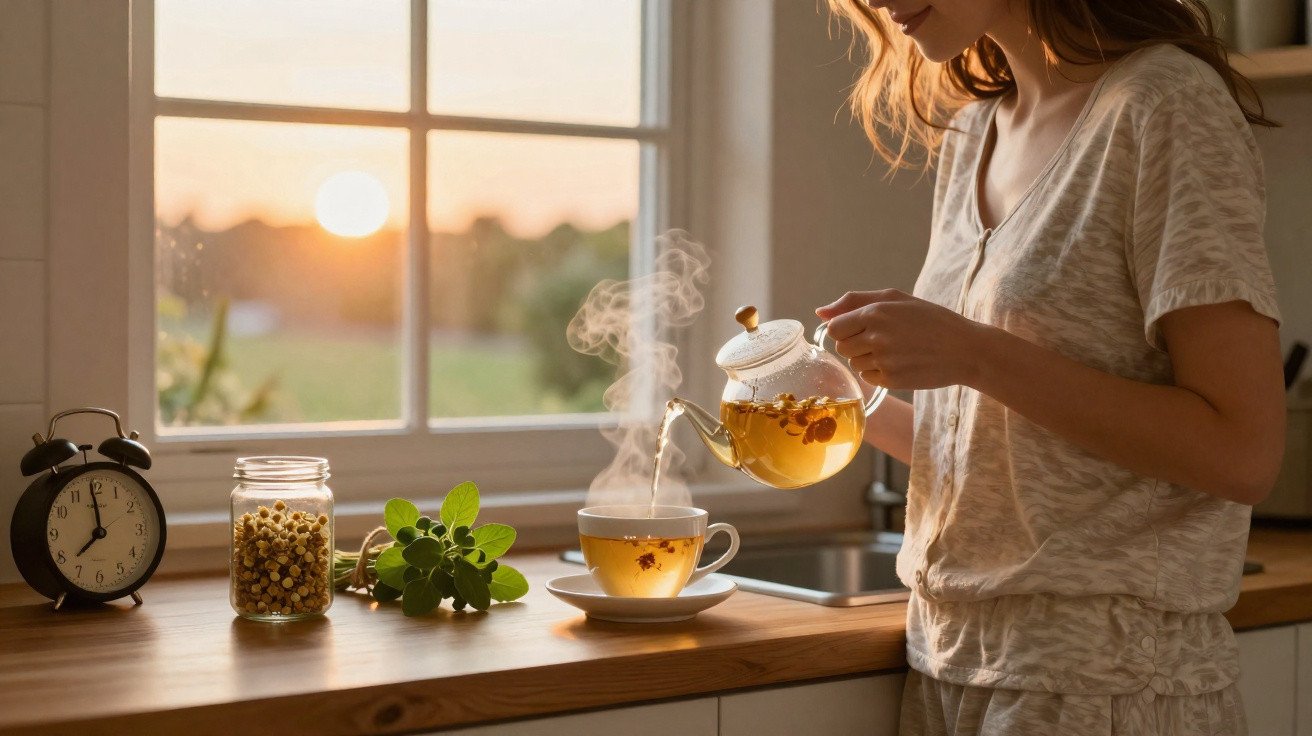
As daylight mellows and dinner approaches, an herbalist describes how an uncomplicated cup of chamomile and lemon balm before sunset may guide cortisol towards its normal rhythm - and why the hour is every bit as important as the blend.
Steam rose from a weighty mug, with vivid green specks of lemon balm drifting alongside pale chamomile heads while the kettle fell quiet. As the colour of the sky shifted, she spoke in a low voice, tapping the rim with her fingers as though marking the day’s slower pace.
Beyond the window, the street remained noisy, but the kitchen seemed to slow with the tea. “Our bodies know what sunset means,” she said, nodding toward the window, “but we drown the signal with noise, light, and hurry.” The secret, she said, isn’t just the herbs - it’s the timing.
She pushed the mug across to me with the smile of a co-conspirator. It tasted of meadow air and lemon peel. Before the sun goes down.
Why a pre-sunset cup changes the story your body tells itself
Stress hormones do not simply surge; they move along a daily curve. Cortisol is meant to rise in the morning to set you in motion, then gradually fall as evening nears, making room for sounder rest and more even moods. Mara’s argument was straightforward: having a soothing cup during that natural fall, before sunset, helps reinforce the curve instead of levelling it out.
She called it “tucking the day in.” The warmth on your tongue, the volatile oils in the vapour and a ritual that engages the parasympathetic brake all play a part. When we drink as the sky darkens, our senses mirror the transition outdoors, and the HPA axis - the body system that controls cortisol’s rhythm - receives that cue.
We all know the feeling when the day will not switch off. Your inbox demands attention, the kitchen light feels harsh and your shoulders still carry the afternoon like armour. A tea before sunset breaks that pattern with a modest, credible signal you can repeat: a reliable prompt that quietly says, “Downshift now.”
What actually does the work inside the cup
Chamomile contains apigenin, a plant compound that binds to GABA-A receptors - the same area targeted by some calming medicines - and encourages the nervous system to relax its edges. Lemon balm contributes rosmarinic acid, which slows GABA breakdown and supports a steadier mood when pressure builds. Combined, they do not send you to sleep; they turn down the background noise.
Small studies support what many people say they experience: reduced perceived stress, more stable heart rate variability and a gentler transition into sleep. One study reported that lemon balm could relieve stress-related restlessness within an hour, while longer-term chamomile use has been associated with lower anxiety scores and better sleep quality. This is not magic. It is a series of small prompts that can accumulate when used at the appropriate time of day.
Timing adds another layer to biology already at work. As natural light fades, melatonin waits in the wings and cortisol ought to decline; warm tea boosts vagal tone, the body’s “calm-and-connect” signal, while fragrance activates learnt associations with safety. Pair those cues with dusk, and the stress story often ends differently. Not erased. Rewritten.
How to brew chamomile and lemon balm so your evening actually listens
Mara’s approach depends on a few small details. For each 250 ml of hot water, use 1 teaspoon of dried chamomile flowers and 1 teaspoon of dried lemon balm leaves. Bring the water just off the boil, pour it over the herbs and cover the cup for 6 to 8 minutes to keep the aromatic compounds from escaping. Begin making it 60 to 90 minutes before local sunset, then drink it with attention.
While it infuses, lower the lamps slightly. Breathe in the steam before taking a sip; that is part of the remedy. If you prefer it sweeter, use half a teaspoon of honey rather than a large amount of sugar. Realistically, nobody manages that every day. Perfection is not the aim; the value lies in a repeated signal that your body can learn to trust.
Avoid adding this tea to a caffeine habit. Do not hurry through it at 11 p.m. and label it self-care. It is intended as your prompt to unwind. If your evenings are hectic, leave the jar beside the kettle as a visual cue and, for the first week, set a discreet phone reminder linked to sunset.
“The herbs aren’t a sedative button,” Mara told me. “They’re a rhythm prompt. You’re lending your body a hint at the right time.”
- Recipe shorthand: 1 tsp chamomile + 1 tsp lemon balm + 250 ml hot water + lid + 6–8 minutes.
- Best window: begin 60–90 minutes before sunset and finish your cup as the sky changes colour.
- Light matters: reduce screen and lamp brightness while drinking, even by 20%.
- Keep it gentle: use a small spoonful of honey if necessary; avoid sugar spikes.
- Consistency matters more than quantity: 1 cup on most evenings is preferable to 3 cups on one occasion.
A gentler way to meet the evening
If the day were music, cortisol would set its tempo. Many of us attempt to finish a frantic song with one dramatic final note - a late workout, a heavy meal or the glow of a screen - then expect the nervous system to comply. Tea before sunset is more like lifting off the pedal four bars sooner, allowing the final chord to settle clearly.
On some evenings, you will miss the window. During some weeks, you will forget to use the lid. Even so, the ritual leaves an impression on the body: a memory of gentleness. When the moment returns, your senses remember the runway. It is not a cure, but a habit with a time, a flavour and a story that your body recognises as safe.
| Key point | Detail | Benefit for the reader |
|---|---|---|
| Timing before sunset | Drink 60–90 minutes before sunset to match the natural cortisol decline. | It makes it more likely that your body receives the “evening” signal and settles. |
| Herbal synergy | Chamomile’s apigenin and lemon balm’s rosmarinic acid support GABA pathways. | This can provide calm without grogginess, helping soften the day’s rough edges. |
| Ritual cues | Cover the cup, inhale the steam, dim the lights and slow each sip. | Layered sensory signals reinforce the habit, helping it take hold. |








Comments
No comments yet. Be the first to comment!
Leave a Comment