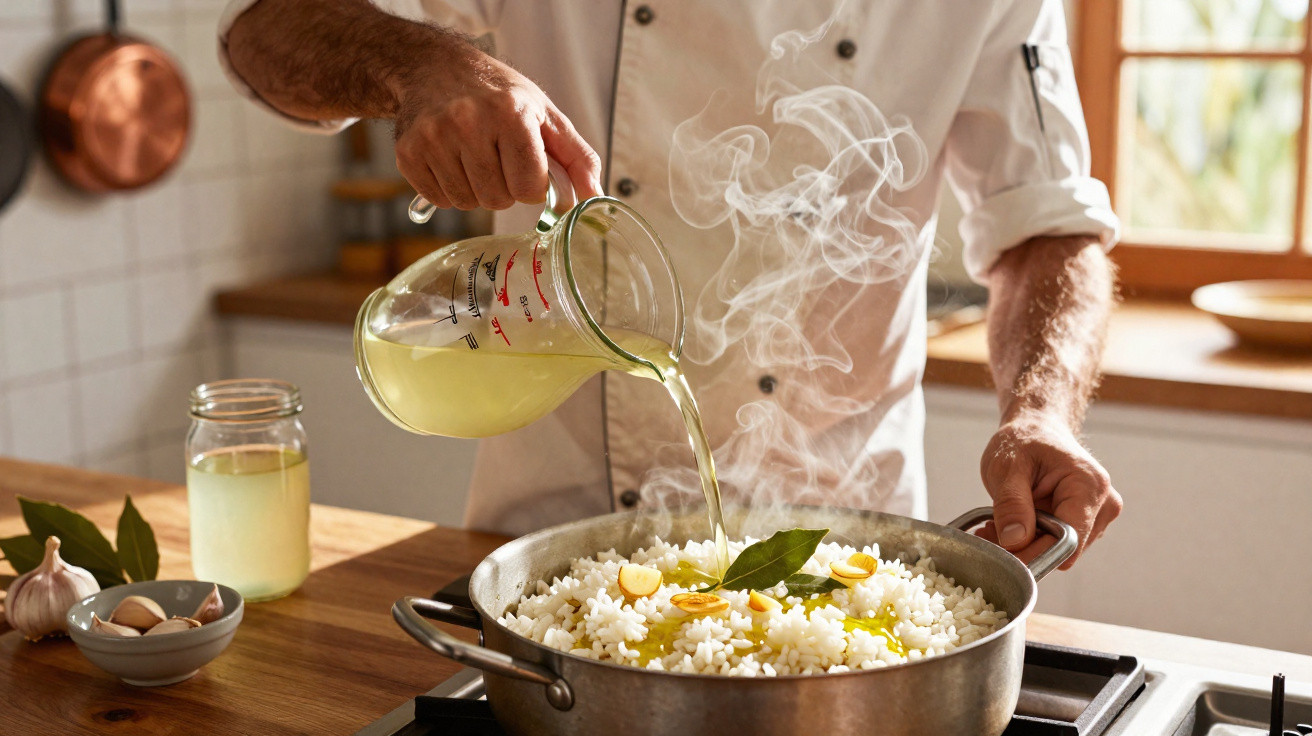
If your white rice always tastes rather bland, the issue may lie with the most basic element of the method: the water. Chef Juanjo López has shared a straightforward technique that completely changes this everyday dish, and it begins before the rice even goes into the pan.
How water lets your rice down
Plain water brings no flavour of its own. Used as the sole cooking liquid, it simply hydrates the grains without adding aroma or taste to the dish. That is why white rice cooked this way often ends up neutral and lacking depth, requiring plenty of seasoning at the table to make up for what was missing during cooking.
In professional kitchens, aromatic ingredients are introduced from the very start so the grains take on flavour as they cook. Chef Juanjo López maintains that three components make all the difference: garlic, bay leaves and good stock. Together, they create a flavour base that reaches every grain, producing rice with real character-the sort people try and immediately ask about the secret behind it.
- 3 garlic cloves: sauté them before adding the rice to release a gentle, enveloping aroma into the grains.
- 2 bay leaves: add them with the liquid so they impart their woody fragrance throughout the cooking time.
- Hot stock: use it instead of water to ensure every grain cooks in a flavour-filled liquid.
- Low heat after boiling: this promotes even cooking, separate grains and prevents the base of the pan from catching.
- ⏱ A 5-minute rest: leave the pan covered before serving, allowing the rice to finish cooking in the steam.
Garlic and bay leaves: flavour built from the start
The garlic goes in first. When it is gently sautéed in olive oil or another cooking oil before the white rice is added, it releases aromatic compounds that become subtly integrated into the dish. Three cloves are enough to scent the entire pan without overpowering it-the balance that distinguishes rice with character from rice that simply tastes strongly of raw garlic.
Bay leaves work gradually: the longer the rice cooks, the more of their mild, slightly woody aroma they release into the liquid. Two leaves provide the aromatic background that changes the finished result. They are removed once cooking is complete, but their flavour remains absorbed by every grain. They are inexpensive, easy to find and have a surprisingly strong effect on everyday cooking technique.
The change that transforms white rice: why stock matters
Stock is the ingredient with the greatest influence on the finished dish. Whether it is vegetable, chicken or a well-seasoned homemade stock, it means every grain of white rice cooks in a liquid full of flavour-the complete opposite of what happens with plain water. Chef Juanjo López points out that you do not need an elaborate stock to achieve this effect.
Which stock should you use in the recipe?
Any good-quality stock will make a difference
Chef Juanjo López explains that even a stock cube diluted to the correct strength can transform the result. The key is to use the liquid hot rather than cold, so the cooking process is not interrupted and the grains stay separate.
For those who prefer a homemade option, stock made from vegetable trimmings, salt and aromatic herbs makes an excellent base. It can be prepared in a larger batch and frozen in portions, ready to improve any meal during the week with minimal effort.
Getting the stock quantity right is essential: too little liquid leaves the rice undercooked in the centre, while too much produces soggy grains. Follow the recommended amount for the particular type of white rice being used, and keep the heat low once it has boiled; these are two details that make a substantial difference to the cooking.
The rice you will want to make today
The appeal of this cooking technique taught by chef Juanjo López lies in how simple it is. There is no need for expensive ingredients or professional equipment: garlic, bay leaves and good stock are within reach in any kitchen. The difference comes from recognising that flavour is developed while the rice cooks, rather than afterwards, once the dish is already on the plate.
Using this method for an everyday lunch is an accessible way to elevate an accompaniment as familiar as white rice. When the grains emerge separate, fragrant and full of flavour, the whole meal feels more impressive, even when the remaining ingredients are modest. This is precisely the kind of knowledge chefs keep close, and which can transform the kitchen routine when they share it.
Other preparation details professionals never overlook
Alongside replacing water with stock, professional cooks follow other practices when making white rice: rinsing the grains before cooking removes excess starch and helps keep them separate; avoiding stirring after the liquid has been added prevents too much starch from being released, which would make the grains soggy. Combined with the garlic and bay leaves technique, these small measures improve the dish without making it any more complicated.
White rice is one of the foundations of Brazilian cooking, appearing at almost every lunch and dinner across the country. With chef Juanjo López’s technique-using garlic, bay leaves and stock instead of water-this familiar dish takes on a new depth of flavour. Paying attention to details while cooking is, after all, at the heart of every good recipe, and mastering rice is the first step towards making everyday cooking truly special.
Did you like this tip? Share it with someone else who enjoys finding more flavourful ways to prepare everyday classics.











Comments
No comments yet. Be the first to comment!
Leave a Comment