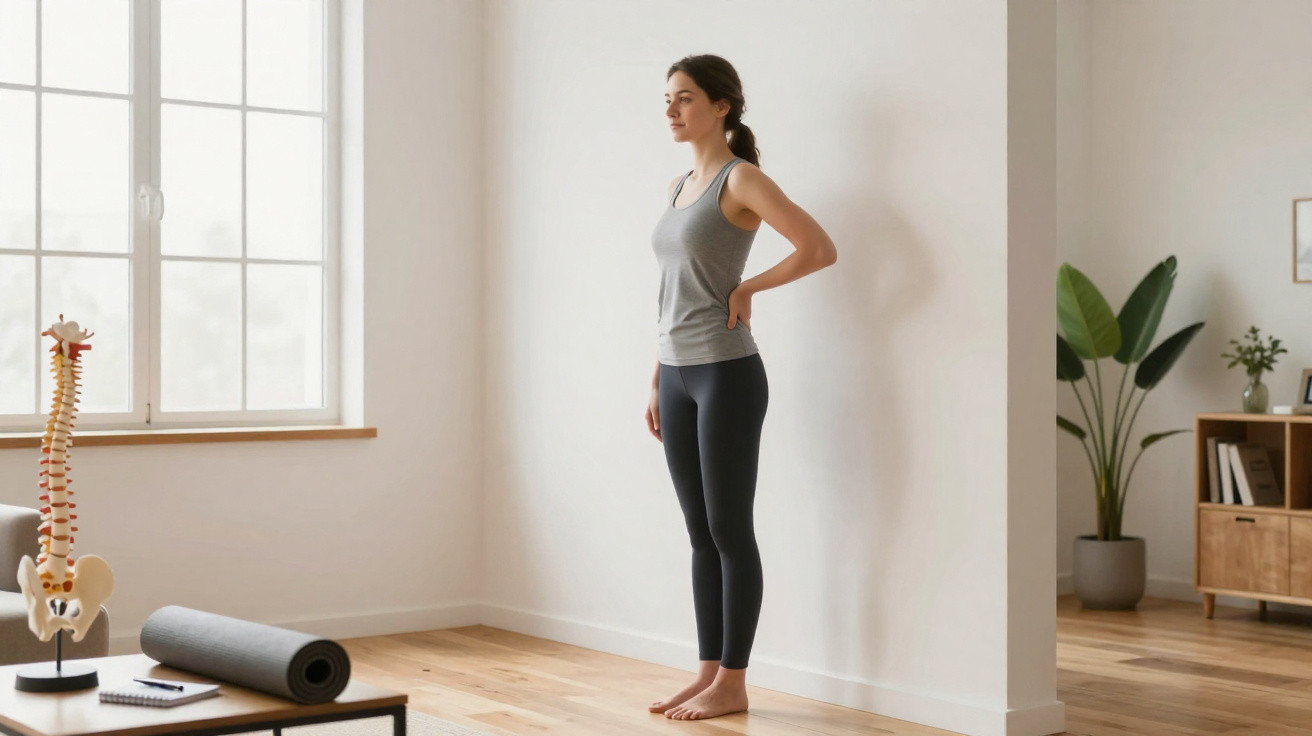
The wall test is a quick check that can help identify potential changes in body alignment. Taking only a few seconds and requiring no equipment, it allows you to see whether the head, shoulders and spine are positioned in balance. As many people spend hours at a computer or looking at their mobile phone, this test has become more prominent as a practical way to assess posture and spot signs that may need attention.
How can you perform the wall test correctly?
To do the test, stand with your back against a wall and keep your feet slightly apart. Your buttocks, shoulder blades and the back of your head should rest against the surface without excessive effort.
The aim is to establish whether your body can stay naturally aligned. It is also important to check the gap between your lower back and the wall: it should be small and comfortable, without being excessive.
Which signs suggest that posture is appropriate?
Certain results indicate that body alignment is close to ideal. However, to ensure this balance is maintained during everyday activities, it is worth monitoring small postural adjustments. In the video below, the @OsteopatiaSP profile provides a highly visual demonstration of the precise difference between correct and incorrect posture in simple daily habits:
What can the wall test reveal about health?
The wall test may highlight habits that affect posture over time. Regular use of mobile phones and computers can encourage the head to move forwards and the shoulders to round.
Warning signs include the head not reaching the wall naturally or having to force the shoulders backwards. The main signs include:
When should you seek professional help?
If the test causes discomfort, pain or major difficulty in maintaining alignment, it is advisable to seek specialist guidance. A professional can assess the cause of the issue and recommend suitable strategies for each situation.
In addition, recurring pain in the neck, shoulders or lower back should not be overlooked. The test is an initial point of reference, but a full assessment is the best way to understand your body’s needs and prevent future complications.

















Comments
No comments yet. Be the first to comment!
Leave a Comment