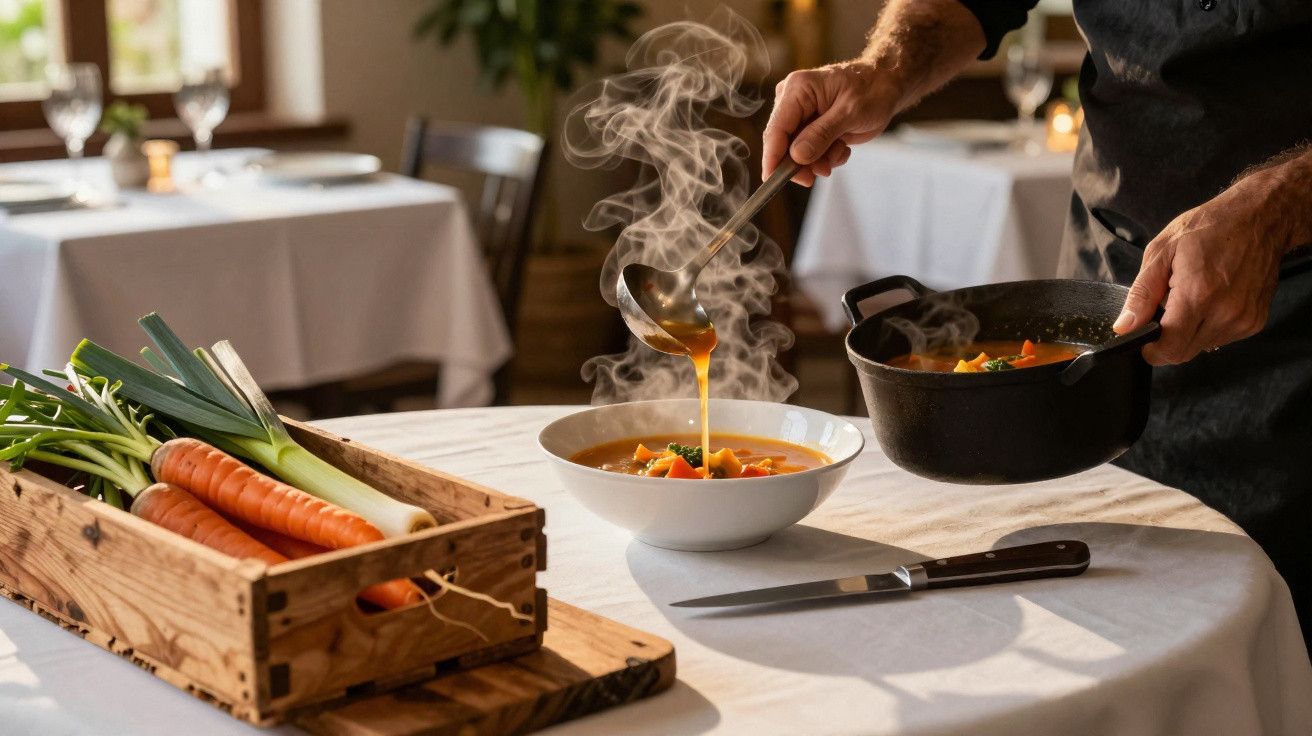
The waiter sets down a broad white bowl with the solemnity normally given to caviar or well-aged Wagyu. What is inside? A gentle jumble of carrots, cabbage, leeks and potatoes floating in a cloudy broth. Its aroma recalls a kitchen with steamed-up windows and one fridge quietly humming. Near the open kitchen, somebody murmurs, “Is this… vegetable soup?” before laughing at the €24 price on the menu.
The chef emerges to say that it originated on his grandmother’s farm, where it was spooned into chipped enamel bowls after long days in the fields. This evening, it arrives with a trickle of green oil and a crisp shard of toasted sourdough. The dining room becomes unexpectedly hushed as everyone reaches for their spoons.
Something modest and ancient is returning, right at the heart of contemporary fine dining.
From field to white tablecloth: the quiet return of peasant soup
On a wet Tuesday in Paris, at a restaurant whose tables disappear in less than ten minutes, the most talked-about dish is neither truffle pasta nor dry-aged beef. It is “Potage des Jardins, 1974” – an unassuming vegetable soup served in heavy porcelain, with steam curling upwards like a recollection. Chairs seem to edge nearer as diners lower themselves over their bowls. Phones appear, not to capture the main course but this murky beige-green liquid, which looks remarkably like the kind of thing your grandmother made you eat as a child.
There is something wonderfully odd about watching executives in sharply tailored suits scrape clean a bowl containing little more than potatoes, onions and cabbage.
Consider a modest farmhouse soup from northern Spain. For generations, caldo de verduras was eaten by farm labourers at daybreak: potatoes, ageing cabbage and perhaps an overlooked carrot, all slowly cooked over wood because meat was beyond their means. Its “recipe” was dictated by whatever had made it through the week.
Last year, a San Sebastián chef discreetly added his take on it to a €95 tasting menu. There was no foam, smoke or showmanship. He simply roasted the vegetables, simmered them and strained them into a velvety broth, finishing it with a single crunchy kale leaf. Within a few months, the unpretentious soup had become the restaurant’s most photographed Instagram dish. Diners started asking who had grown the cabbages. A few even travelled out to the fields where the original was served from metal pots at sunrise.
Why has a dish once associated with hardship rather than luxury made such a sudden comeback? Fatigue is part of the explanation. After years of edible clouds and microgreen towers, diners want food their bodies recognise. Rising food prices, along with the uncomfortable awareness that we throw too much away, also play a role. Vegetable soup is waste’s opposite: it transforms the crooked carrot, wilting leek and half-used onion into an evening meal.
Chefs are drawn by that feeling too. They speak of “honesty on the plate” and dishes that matter beyond looking good in a photograph. Vegetable soup, formerly written off as bland food for getting by, now represents that kind of honesty.
The chef’s secret: turning scraps into gold
Beyond the swinging kitchen doors, the transformation generally begins with something very functional: a “scrap box”. Every capable fine-dining kitchen keeps one. Carrot peelings, leek tops, parsley stalks and celery leaves are placed there rather than thrown in the bin. Once service is over, the trimmings are washed, gently roasted on large trays until sweet and nutty, then added to a pan of cold water. The heat stays low, the lid remains partly ajar, and time takes care of the rest.
That foundational stock becomes the heart of today’s “farmers’ soup” – smoky, layered and nothing like the thin version many of us remember from childhood.
At a Michelin-starred Copenhagen restaurant, the team began weighing its food waste every evening. Initially, the results were stark: kilograms of entirely usable stalks, leaves and peelings were being discarded. A sous-chef proposed making them all into one changing soup each day. There was no elaborate menu explanation, only “Today’s Potage” placed before guests at the beginning of their meal.
It proved popular. Diners began asking what the soup contained, which field had produced the parsnip and why the broth was slightly different every time. Team members who had once dreaded the waste report now treat it as a creative challenge. Without being given a sustainability lecture, guests can taste the contrast between careless and considerate cooking in every spoonful. That is this soup’s understated strength.
At home, the situation is often rather different. You notice the drooping vegetables in the fridge, feel a pang of guilt and put them in a pan with water and a stock cube. It turns out… all right, but hardly memorable. Honestly, nobody manages this every day.
What chefs offer is a lesson in another tempo: onions sweated slowly until translucent and sweet; root vegetables roasted before they meet water; seasoning added in stages rather than all at the end. They create flavour as trust is built – gradually and attentively. The recipe isn’t really written down on paper; it’s written into the way they move in the kitchen.
Bringing “restaurant soup” into a small everyday kitchen
You do not need copper pans or a walk-in refrigerator to make vegetable soup that approaches restaurant quality. Begin with three or four vegetables instead of clearing out the entire salad drawer in one go. Choose potato, leek and carrot, for example; or onion, celery and fennel. Pick ingredients with similar cooking times and flavours that work together. Cut them into roughly equal pieces so they cook at the same rate.
Next, make time for the stage rushed through on hectic evenings: sweating the base. Add a generous pour of olive oil, keep the heat low and give onions or leeks at least ten minutes in the pan before adding anything else. That is where the hidden sweetness develops.
The next secret is to be patient with the texture. Do not submerge the vegetables. Barely cover them with water or light stock, bring everything to a gentle simmer and leave it alone. Avoid a fierce boil; you want only a quiet tremble. If you have a blender, wait until the vegetables are fully tender, then blend only part of the pan. Leaving some pieces whole makes it feel like a proper meal rather than baby food.
If you have ever felt a little apologetic about putting “just soup” on the table for dinner, you are not the only one. We have all had that moment of saying sorry while placing the bowl down. Instead, toast a slice of good bread, rub it with garlic, grate a little cheese over it and let it float on the soup. It immediately feels purposeful, almost like something from a bistro.
One major mistake is trying to rescue a dull soup with cream. Restaurants seldom depend on dairy to create depth. They use prolonged cooking, roasted notes and a few bright final additions – lemon juice, vinegar or fresh herbs. Taste as you cook, add salt in small pinches and allow the pan another five minutes before declaring it “wrong”.
“Farmers’ soup was never about being poor,” a young Lyon chef told me. “It was about being clever. About not wasting the work of the soil.” His menu lists a “Peasant Potage” made with yesterday’s trimmings. It sells out most nights.
- Roast before you simmer – Coat carrots, onions and root vegetables with oil and salt, roast them until browned, then transfer them to the pan.
- Use a “fridge bowl” – Set aside a small container for clean peelings and stalks, then make stock from it once a week.
- Finish like a pro – Stir in a squeeze of lemon, chopped herbs or a spoonful of pesto right at the end.
- Experiment with toppings – Seeds, croutons, grated hard cheese or a dollop of yoghurt can completely alter the character of the dish.
- Embrace repetition – No two batches will taste precisely alike, and that is part of its appeal.
Why this bowl reaches deeper than an elaborate main course
When such a simple dish appears on a luxury menu, something shifts. Diners begin to recall their own kitchens, their grandparents’ large pans and cold evenings ending with hot bowls balanced on their knees. A €30 plate of foam rarely has that effect. Vegetable soup speaks to a shared appetite beyond taste: the desire to feel cared for.
For chefs, it is also a subtle act of resistance: against food waste, endless novelty and the belief that luxury must always equal abundance. For home cooks, it allows them to stop pursuing perfection and start pursuing comfort: a pan quietly bubbling on the back hob as everything else in life rushes past.
That is why the muddy-looking bowl on a crisp white tablecloth feels both unusual and completely fitting. It belongs to another pace of life – one we miss in secret, and one we can restore on any ordinary weeknight with a knife, a pan and the vegetables already in the kitchen.
| Key point | Detail | Value for the reader |
|---|---|---|
| Scraps as flavour gold | Using peelings, stalks and tired vegetables to create a deep, slowly cooked broth | Transforms waste into a comforting, restaurant-style dish at almost no additional cost |
| Straightforward chef techniques | Sweating aromatics, roasting vegetables and seasoning gradually | Elevates everyday soup from “filler” to the centrepiece of a meal |
| Emotional connection | Soup as a connection to family history, rural living and a slower kitchen rhythm | Helps cooking feel meaningful rather than merely practical, making it easier to maintain |
FAQ:
- Question 1 Why are high-end restaurants suddenly serving simple vegetable soup?
- Question 2 Can I get a rich flavour without adding cream or butter?
- Question 3 What vegetables work best for a “peasant-style” soup?
- Question 4 How long can I keep homemade vegetable soup in the fridge or freezer?
- Question 5 How do I serve vegetable soup so it feels like a real meal, not a sad starter?

















Comments
No comments yet. Be the first to comment!
Leave a Comment