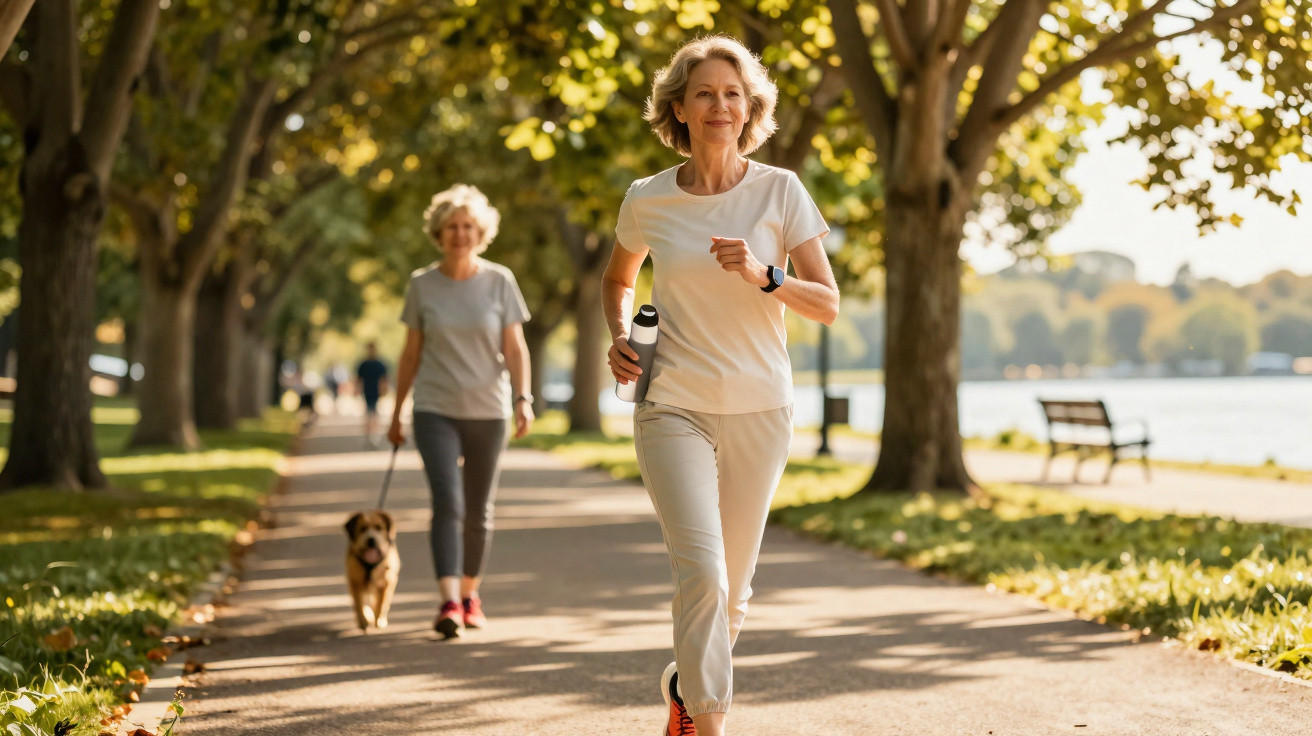
It is just after eight, and the pavement still gleams with rain from the night before. The first customers pause outside the bakery, some with dogs, others carrying bags of bread rolls, but one person stands out: a grey-haired woman in a red rain jacket, striding purposefully past them all. No headphones, no visible fitness tracker – just alert eyes and a quietly determined gait. This is clearly not a token walk “round the block”; it is her ritual. Every day. For years.
We all know that moment when someone walks past and we wonder: what does that person do differently from me?
For people over 60, the answer is surprisingly often simple: they walk. They take short routes, longer walks, and repeat them time after time. While gyms sell memberships, these walkers are quietly building something far more valuable: a solid foundation.
The unspoken question remains: how much strength can an ordinary walk really hold?
Why daily steps over 60 matter more than they once did
Anyone over 60 may recognise the slightly unsettling feeling: the stairs in your own home have not become steeper – yet they seem to have. A shopping basket that once barely registered now pulls at your arm. The body starts renegotiating what counts as “easy” and what feels “strenuous”.
That is precisely where a daily walk comes in: as a small act of resistance. It is not spectacular or Instagram-worthy; it is simply, quietly ordinary. Perhaps that is its greatest advantage. A walk can fit between breakfast and a phone call with a granddaughter, or between a medical appointment and the evening news. There is no need to change at a gym, no performance pressure and no “personal best”. There are only steps: repeated, every day. Each walk quietly adds another line to your own fitness story.
German geriatric medicine has some sober figures to support this: people over 60 who are active for 20 to 30 minutes every day significantly reduce their risk of cardiovascular disease, falls and diabetes. A Finnish study found that older adults who walked regularly were able to live independently for an average of three to five years longer.
That may sound abstract until you see it in real life. Take Mr L., 72, who had to start again from scratch after a minor stroke. First, he managed ten minutes in the garden; then he reached the corner; later, he walked around the block. A year on, he takes 7,000 steps a day. Not perfectly, and not every day, but he can carry his shopping bag upstairs himself again. To him, it feels like the Olympics. His doctor put it bluntly: “Your shoes are your best medicine at the moment.”
From a physiological perspective, walking is a versatile tool. Every regular outing keeps the heart working without overloading it. Joints remain lubricated, while the muscles in the thighs and buttocks help stabilise the hips and knees, and the sense of balance receives continual tiny prompts.
As we age, muscle mass declines, reaction times lengthen and balance becomes more vulnerable. Daily steps act as daily practice for the body’s “basic functions”: standing upright, catching yourself and staying balanced. The brain benefits too – walking means processing sights, sounds and smells. Many people notice that ideas and clear thoughts seem to come “naturally” while they walk.
Let us be honest: nobody truly manages it every single day. But those who try gain more than any fitness watch can measure.
How walking over 60 becomes a sustainable fitness routine
The key is to think about the word “walk” differently. See it less as a leisurely stroll and more as a personal micro-workout. A realistic starting point after 60 is refreshingly modest: 10 to 15 minutes once a day, at a pace where you can still talk but can no longer sing.
Your own front door is an excellent place to begin. Start with the familiar short route you have known for years. Then add a second option: a pavement with a gentle incline or a park with slightly uneven ground. This allows the body to adapt to varied stimuli without becoming overwhelmed. Those who prefer structure can choose set times – for example, “after lunch, I will go for a walk”. This small commitment to yourself is often more powerful than the most expensive training plan.
Many people over 60 do not stop because they lack motivation, but because their expectations are too high. They assume it must immediately count as “proper exercise”: 10,000 steps, a sports watch and a perfect heart-rate zone. Then frustration follows when a rainy day, a medical appointment or simple tiredness breaks the streak.
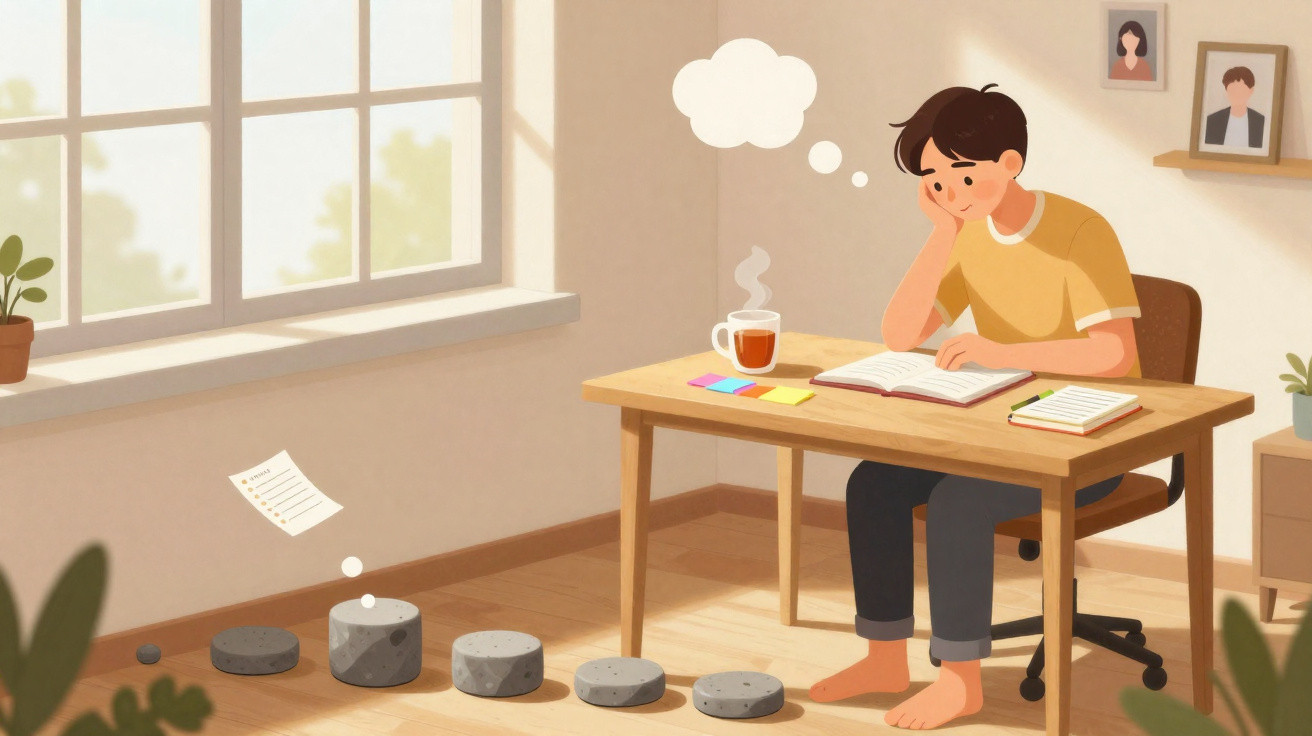
A more relaxed approach is to regard walks as deposits in an “everyday strength” account rather than as a performance test. On difficult days, 8 minutes outside the front door are enough. On good days, the longer route through the park can be just right. The real problem comes when pain feels so daunting that you stop altogether. Often, adjusting your pace is more helpful than giving up completely. And nobody has to walk alone. Going with a neighbour, grandchild or walking group can make getting started much easier, especially at first.
A sentence often heard in rehabilitation clinics comes from an older patient:
“If I save my walking for later, I lose it. If I spend it, it comes back.”
That idea of “spending” can be planned surprisingly concretely. Useful approaches include:
- Establishing a regular “everyday route”: to the bakery, the post office or once around the block – always the same route as a foundation.
- Adding a slightly brisker interval now and then: walk energetically for two lampposts, then normally for two.
- Setting aside one weekly “long walk” day, with 5–10 minutes more than usual.
- Having a “Plan B” for bad weather: walking up and down the hallway at home, or walking in a shopping centre or railway station.
- Doing a short stretching routine afterwards: calves, thighs and shoulders – just two minutes, no more.
In this way, an occasional walk becomes a routine that quietly protects muscle strength, trains the heart and builds confidence.
What daily walking means for independence, mood and the future
When you regularly observe people over 60 who get about largely on foot, something striking becomes apparent: it is not only about fitness, but about posture – literally and figuratively. Their backs stay upright for longer, and their gaze does not remain fixed on the ground. Many begin to experience their local area afresh, noticing routes, shops and faces that would simply have passed by from a car or bus.
Walks quickly become small personal spaces of freedom: away from screens, out of the house and into a place where the body briefly takes the lead. For some, it is the only point in the day when they consciously feel their own strength. Meanwhile, in the background, the thing medical statistics call “maintaining independence” is taking place. For those involved, it means still being able to shop alone, still travelling independently to see a friend, and still managing the stairs safely.
Health in later life is rarely one major event; it is more often a chain of small choices. Whether you walk the final two stops instead of taking the bus. Whether you put on a coat and take a brief walk even in winter. Whether you continue walking practice after an operation once physiotherapy has long since ended.
Daily walks are a simple, almost old-fashioned answer to such questions. There is no subscription, no equipment and no app passing judgement. There is only your own body, signalling: “I managed more today” or “Tomorrow again.” Those who sustain this over several years – including missed days, setbacks and breaks – create a kind of invisible buffer. Against falls. Against loneliness. Against the feeling of merely watching their own body from the sidelines. Perhaps that is what fitness over 60 really means: not becoming faster, but remaining self-determined for longer.
| Key point | Detail | Benefit for the reader |
|---|---|---|
| Daily walks as foundation training | Just 20–30 minutes of walking a day noticeably supports the heart, muscles and balance. | Understands that small, regular walks achieve more than occasional intensive workouts. |
| Rituals rather than perfection | Fixed times, familiar routes and flexible distances depending on how you feel that day. | Learns how to create an everyday routine that does not depend on willpower alone. |
| Walking as protection for independence | Regular activity reduces the risk of falls and extends the period of independent living. | Recognises that every walk is an investment in future freedom and quality of life. |












Comments
No comments yet. Be the first to comment!
Leave a Comment