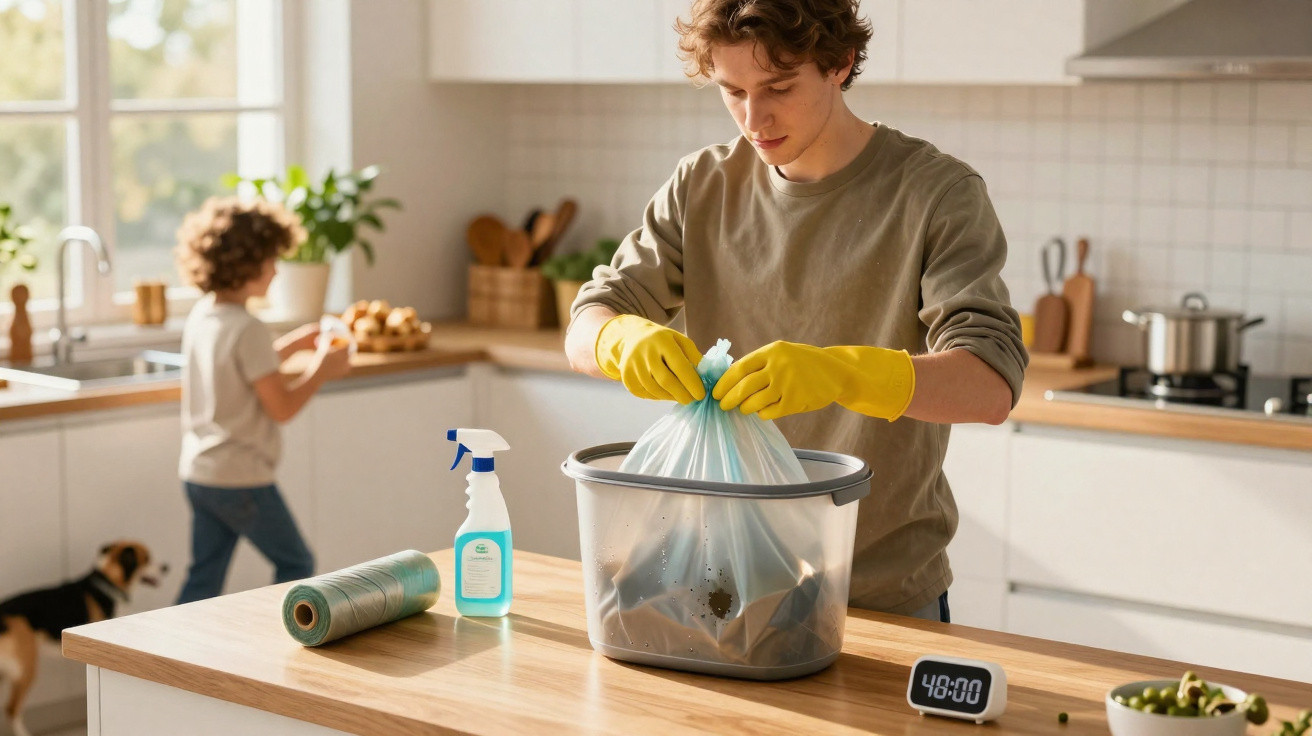
Almost every kitchen has a rubbish bin that barely registers in day-to-day life. As long as nothing spills over and the lid still closes, everything seems more or less fine. A hygiene specialist is now sounding the alarm: it is not how full the bin is, but how long the waste remains there that determines when kitchen rubbish becomes an invisible health risk.
Why kitchen waste turns faster than you might expect
A kitchen bin liner collects virtually everything produced during the day: leftover food, fruit and vegetable peelings, used tissues, kitchen roll, wet wipes, sanitary products and, sometimes, nappies. You only glimpse this mix when the lid is opened, while the processes inside take place out of sight.
Food waste adds moisture and sugar, tissues can carry pathogens, and sanitary products and wet wipes retain heat and dampness. This is precisely the environment that bacteria, fungi and small insects such as fruit flies thrive in.
“After just a few hours, an unremarkable kitchen bin liner becomes an ideal breeding ground for germs – with the right temperature, moisture and food.”
A microbiologist who works professionally with everyday sources of germs points out that the usual routine of leaving a bag in place until it is full does not match the speed at which microorganisms multiply in rubbish.
The crucial 48-hour limit for kitchen waste
The expert recommends a rule of thumb that may surprise many people: the kitchen bin liner should be changed within 48 hours at the latest, whether it is full or not. In some households, changing it every day can also make sense.
There are two reasons behind this clear limit: reducing smells and greatly cutting down bacterial hotspots directly beneath the worktop. The longer a liner remains in the bin, the more likely germs are to form a type of “biofilm” that cannot easily be dealt with by a quick wipe.
- No more than two days in an average household
- Daily, if a lot of cooking is done and fresh food is prepared
- Change it sooner if meat, fish scraps or nappies go into the bag
How full the bag is matters far less. A half-full liner that has been sitting in summer heat for three days is much more of a hygiene concern than an almost-full bag that has only been in the bin for one day.
Heat, children and pets: when extra care is needed
Forty-eight hours should be viewed as an absolute upper limit. In certain circumstances, hygiene professionals advise even shorter intervals.
Summer months and heated kitchens
Warm temperatures speed up everything happening in the bin. Bacteria reproduce more quickly, odours develop sooner and fruit flies find a breeding site faster.
For this reason, many cleaning guides suggest considerably stricter rules during summer:
- 1 day if meat, fish or cheese leftovers are put in the bin
- 1–2 days for ordinary mixed rubbish containing some kitchen waste
- Do not keep bin liners directly beside a radiator or dishwasher
Families with children and frequent cooking
Family kitchens often see cooking several times a day, with leftovers reaching the bin more quickly and children adding tissues or used wet wipes. For these households, a daily change can become the easiest solution: cook in the evening, dispose of the liner after washing up, then start the morning with a fresh one.
For people living alone or students who cook infrequently and generate little organic waste, a longer schedule can sometimes be sufficient – provided there is almost nothing damp or perishable in the liner and no odours develop.
The hidden enemy: “bin juice” inside the bin
Even when a liner is removed on time, one issue often remains: the notorious “bin juice” on the bottom or around the sides. These brown or grey streaks are made up of liquids, food residue, fats and bacteria.
“Anyone who only changes the liner leaves some of the germs behind in the bin – giving the next rubbish bag a clear head start.”
The straightforward countermeasure is to establish a regular bin-cleaning routine. Hygiene specialists advise:
- Rinsing it out weekly with hot water and washing-up liquid if food waste is regularly placed in the bin
- Cleaning it at least monthly for comparatively “dry” bins, such as those in single-person kitchens
- Letting it dry thoroughly afterwards so that a new damp layer of germs cannot form
Those who wish can sprinkle a little bicarbonate of soda or baking powder over the base of the bin after it has dried. This absorbs residual moisture and softens odours.
The right bin liner: small details with a major effect
Alongside the replacement schedule, the choice of bin liner also matters. Bags with carrying handles or drawstrings are easier to seal, allowing fewer smells to escape and reducing drips while taking the bag to the bin store or outdoor wheelie bin.
Several mistakes repeatedly occur in kitchens:
- Forcibly pressing rubbish down to “make a bit more room” – this makes the liner more likely to split and the bin gets dirty faster.
- Pouring in hot liquids, such as pasta water or leftover soup – heat softens the plastic and accelerates germ growth.
- Tipping loose liquids such as sauces or cooking fat directly into the rubbish – allow them to cool, absorb them with kitchen roll if necessary, and only then dispose of them.
A sturdy, correctly sized liner that properly covers the inside of the bin prevents liquids from running directly into it. This makes cleaning quicker and helps stop the bin from smelling as strong.
Changing the liner is not the same as putting out the rubbish bin
Many people treat changing the liner and rubbish collection as the same task. As a result, the kitchen bag often stays in place until the larger outdoor bins are put out for collection. From a hygiene perspective, however, they are separate matters.
Even if the household waste wheelie bin is collected only once a week, there is no reason not to take additional bags to the bin store in between collections. Kitchen rubbish then leaves the home sooner and the outdoor bin fills gradually – a far more hygienic approach than leaving a liner in a warm kitchen for days.
How dangerous are kitchen bins in reality?
In most cases, a bin liner left hanging for too long does not cause an acute illness, but it does increase the germ load in the home. For example, someone with a cold who puts used tissues into the kitchen bin creates a collection point for viruses and bacteria. When food scraps are added, microorganisms find the conditions especially favourable.
More sensitive groups, including young children, older people and those with weakened immune systems, can sometimes react more strongly to such sources of germs. There is also the practical issue: smells, fruit flies and maggot infestations are all far less likely when bags are changed consistently every one to two days.
Practical routines for more hygienic kitchen waste
Fixed habits can prevent this new schedule from becoming an irritating extra chore. Some practical everyday options include:
- Always change the bin liner at the end of the day’s cooking.
- Keep a small “bin kit” near the bin: spare liners, washing-up liquid, a sponge and bicarbonate of soda.
- Set a calendar reminder once a week: “rinse out the kitchen bin” – it often takes only five minutes.
- Where possible, compost organic waste separately to reduce the burden on the general-waste liner.
Anyone who tries these simple routines for a few weeks will usually notice the difference quickly: the bin smells less, fruit flies appear less often, and the thought of the rubbish beneath the worktop becomes far less unpleasant.
Terms such as “germ load” and “biofilm” can sound like something from a laboratory or high-security setting. In a kitchen, though, the principle is very simple: remove moisture, warmth and nutrients, and bacteria lose much of their advantage. A fresh bin liner every one to two days, together with a clean bin, is among the easiest everyday measures to take.








Comments
No comments yet. Be the first to comment!
Leave a Comment