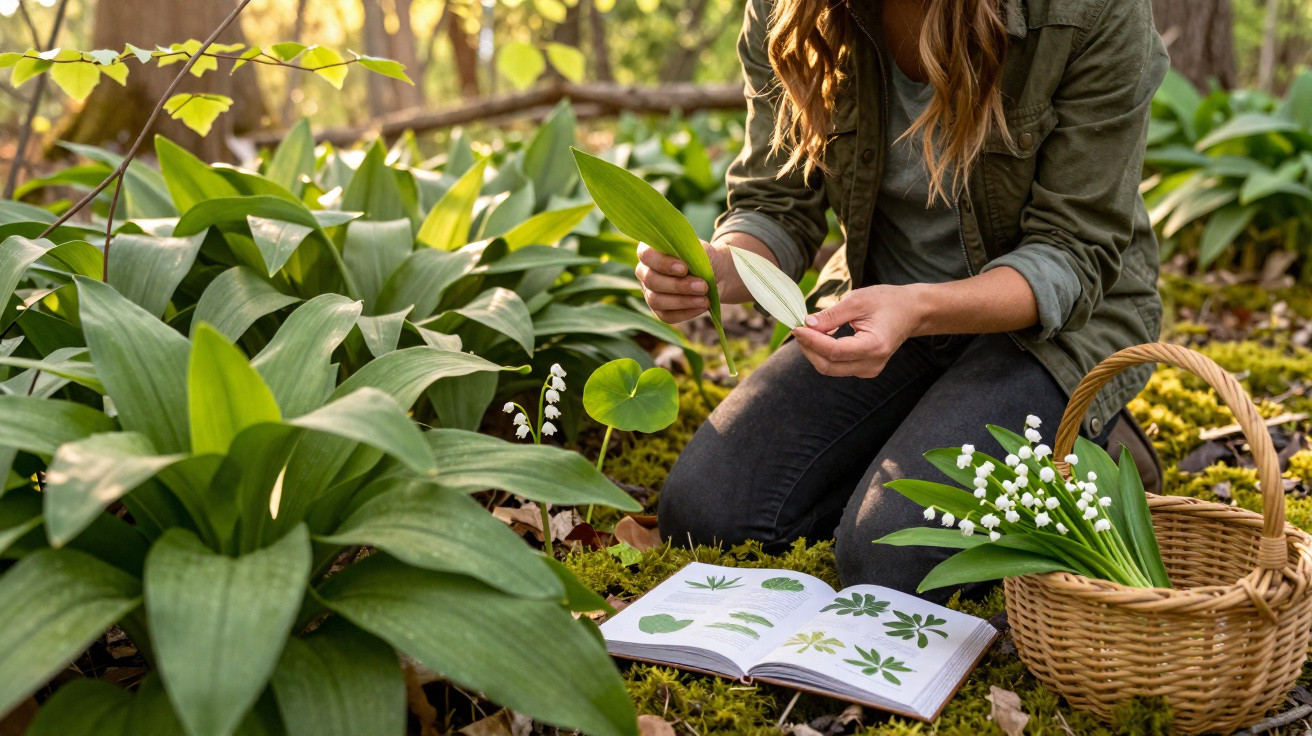
The familiar scent of garlic is in the air, the basket is half full – then you notice individual leaves that are distinctly paler, yellowish or even marked with a white stripe. Anyone who forages for wild garlic will recognise the uneasy feeling: is it still edible? Could it be confused with something else? Or is a disease responsible? These questions become increasingly common in spring.
Why wild garlic can suddenly look different in March
Wild garlic is considered a hardy wild herb. That makes leaves that look pale, striped or slightly translucent rather unsettling instead of the usual rich green. Three main factors are generally behind this:
- genetic characteristics of the plant
- insufficient light and nutrients at the site
- short-lived frost damage in spring
Something dangerous is only rarely the cause. Nevertheless, foragers should inspect plants carefully, as poisonous lookalikes such as lily of the valley and lords-and-ladies grow in woodland during the same period.
"Unusual wild garlic leaves are usually harmless – the real danger begins when the plant is misidentified."
The striking wild garlic variant: white stripes caused by variegation
Leaves with a sharply defined white or cream stripe, often running down the centre along the vein, are particularly conspicuous. Botanists refer to this feature as variegation.
The natural quirk behind it
With variegation, certain parts of a leaf do not produce chlorophyll, the green pigment. The tissue in these areas consequently appears whitish or cream-coloured. As these sections carry out little or no photosynthesis, yet the plant as a whole remains viable.
- It is not a fungal infection.
- It is not a viral disease.
- It is not caused by toxic contamination.
Such plants appear only sporadically within extensive carpets of wild garlic. They often remain in the same spot for many years and are noticed only by the few people who look closely.
"Anyone finding wild garlic with a neatly defined white stripe is usually holding a small botanical rarity."
For cooking, this wild garlic can generally be used in exactly the same way as normally coloured plants – provided it has been identified beyond doubt as wild garlic.
Pale leaves from shade and poor soils
Far more common than true variegation are simply weak-looking colours: pale green, yellowish or slightly washed-out leaves. Here, the growing location and stage of development are the decisive factors.
Less light means less green
In very dense, dark woodland, wild garlic may receive very little light in March. The plant then makes less chlorophyll, causing its leaves to look:
- lighter overall
- occasionally slightly yellowish
- often similar across several plants in the same patch
Wild garlic is also still growing in early spring. Many leaves may have emerged from the ground only a few days earlier. At this young stage, they are soft, thin and not yet fully coloured. Their green deepens with every sunny day.
Nutrient-poor ground produces paler wild garlic
Soil conditions also play a part. In less nutrient-rich places – such as woodland edges, disturbed areas or heavily rooted slopes – wild garlic may be smaller and less vibrant in colour.
| Location | Typical leaf appearance |
|---|---|
| Damp, nutrient-rich deciduous woodland | rich, even dark green |
| Very shady mature woodland | lighter, sometimes yellowish, with thinner leaves |
| Woodland edge, poor soil | smaller, paler plants with uneven colouring |
Despite their pale colour, wild garlic leaves remain edible in these situations – provided they have been identified safely.
Frost damage: yellowish and translucent patches after cold nights
In March, temperatures often shift from spring-like warmth by day to frost overnight. This is exactly what can trouble many young leaves.
Following a clear, cold night, wild garlic leaves may suddenly show:
- yellowish patches
- translucent-looking areas
- slightly watery sections
This damage occurs when frost causes cells to burst or disrupts them. The reassuring news is that wild garlic is remarkably cold-resistant. In many cases, it simply continues producing new growth, and the fresh leaves look normal again.
"Frost marks look more dramatic than they are – wild garlic generally copes with them without difficulty."
If severely damaged leaves end up in the basket, it is best to discard them and choose younger, undamaged parts of nearby plants instead.
Colour alone is never enough – accurate identification is essential
As interesting as white or yellowish leaves may be, their colour is not a reliable key identification feature. The truly sensitive question is whether the plant is wild garlic at all.
Typical identifying features of wild garlic
Experienced foragers never rely on a single sign; they check several characteristics one after another:
- Leaf arrangement: Each leaf has its own stalk emerging directly from the ground. There are no pairs of leaves on one stem.
- Leaf texture: Soft and relatively thin, with a matt underside; the upper surface may have a slight sheen.
- Smell: A characteristic garlic scent is released when a fresh leaf is rubbed between the fingers.
One point matters: always test a fresh leaf. If you crush one leaf and then touch other plants, the smell is transferred to your hands. This can easily create a false sense of certainty.
"The garlic scent is a strong identifying sign – but only when it comes directly from the plant rather than your own fingers."
Dangerous lookalikes: lily of the valley and lords-and-ladies
The real risk when picking wild garlic comes not from pale stripes but from poisonous plants that can be mistaken for it and grow at the same time.
How lily of the valley differs
- Usually has two leaves on a shared stalk.
- Its leaves feel firmer and more leathery.
- Rubbing the leaf releases no garlic scent.
Lily of the valley is highly poisonous. Even small amounts can cause severe poisoning. Anyone with the slightest uncertainty should leave the plant where it is.
Lords-and-ladies: poisonous and often growing beside wild garlic
Lords-and-ladies frequently occurs in the same damp deciduous woods as wild garlic. Its leaves are often arrow-shaped, sometimes marked with darker patterns, and clearly different in form. It does not release a garlic smell when rubbed; some people even find its scent unpleasant.
The rule here is simple:
"When in doubt, leave everything in the woods. It is better to go home without pesto than end up in A&E with poisoning."
Practical tips for safe wild garlic foraging
Anyone planning to collect wild garlic regularly in March and April can reduce the risk substantially with a few straightforward rules:
- Pick only plants you can identify with complete certainty.
- Check several features every time, rather than relying on colour alone.
- Avoid collecting in mixed patches containing many unfamiliar plants.
- Go on your first foraging trips with experienced herb gatherers.
- Take smaller quantities and select only flawless leaves.
Anyone who feels entirely unsure can also grow wild garlic in their own garden or in a balcony planter. Bulbs and young plants are available from specialist retailers and establish well in shady positions.
Why wild garlic appears so sensitive in March
Wild garlic is a particularly early starter. While many woodland trees are still bare, this wild herb is already trying to capture as much light as possible. At precisely this point, it is especially exposed to weather fluctuations, sudden temperature changes and differences in soil. All of these are reflected in leaf colour.
Anyone watching the same patch over several weeks can clearly see the colour change: from delicate light green when the leaves first emerge to a stronger, richer green in April. Against the overall display, unusual leaves often no longer seem nearly as dramatic.
How foragers can handle the “special” leaves
Over the years, many amateur herb foragers develop their own approach to leaves that stand out:
- Some deliberately put only immaculate, deep-green leaves into their basket.
- Others sort out frost-damaged or especially pale leaves once they get home.
- Others still leave particularly distinctive plants – for example, those with clear variegation – untouched to preserve the rarity within the patch.
A practical approach is to be selective while gathering. It means less work in the kitchen later and produces pesto or herb oil with a more uniform appearance.
"Pale stripes, light tips and frost scars tell the story of a growing site – they are not necessarily a warning sign against using a leaf in the pan."
Knowing the reasons behind these changes allows foragers to walk through spring woodland with greater calm, but also greater respect. A leaf’s colour can mislead; its scent, shape and stalk reveal far more. This makes a wild garlic harvest in March a safe, mindful experience in nature – despite, or perhaps because of, the unusual leaves.

















Comments
No comments yet. Be the first to comment!
Leave a Comment