The woman at the desk opposite mechanically stirs her yoghurt while replying to emails with her other hand. “All this healthy stuff,” she mutters, before reaching for the drawer of chocolate bars anyway. Three metres away, a colleague discreetly pulls his T-shirt over his bloated stomach and types “Is bloating after lunch normal?” into his phone. Nobody says it aloud, yet everyone senses it: something inside is not quite working properly. We talk about protein, low-carb diets and sugar. But one word barely comes up: fibre. It sounds like something from a chemistry lesson that you successfully forgot afterwards. And that is precisely where the problem starts.
Why your body is crying out for fibre without you noticing
We all know that vague feeling of being “too full” without actually being satisfied or properly hungry. You have eaten what should have been enough, yet an hour later you are searching the kitchen cupboards again. Your stomach feels sluggish, and so does your mind. As if somebody has pressed an internal pause button. Many people blame stress, too little sleep or one cappuccino too many. Yet very often, there is a quiet deficiency behind it that barely anyone considers. Your digestive system is running on low power because it lacks the fuel nobody advertises: fibre.
The figures are brutally clear: in many European countries, most people manage only 15 to 20 grams of fibre a day. At least 30 grams are recommended, while many experts suggest 35 grams or more. In other words, we go through every day with a deficit that does not feel like a headache, but more like a constant background disturbance. Take the 32-year-old project manager who has struggled with constipation for years and ends her evenings frustrated on the sofa. Only when she increases from 2 to 5 portions of vegetables and wholegrains each day does she notice the difference: suddenly she has more energy, her stomach is flatter and cravings occur less often. No miracle pill, just more unremarkable plant fibre.
Fibre is the part of plant foods left behind once your body has processed everything else. It may sound like waste material, but it is the complete opposite. Soluble fibre swells in the gut, slows the absorption of sugar into the bloodstream and feeds your gut bacteria. Insoluble fibre acts like a broom, helping to ensure that nothing lingers in the bowel and that everything keeps moving at a steady pace. Together, they influence your blood sugar, fullness, bowel movements and even inflammatory processes in the body. Let us be honest: nobody tracks their fibre intake every single day. But your body notices very clearly when it is missing.
Signs that you are not getting enough fibre
One of the first quiet clues is your bowel movement. If you regularly spend too long on the toilet, have hard stools or need to strain more often than you would like, your internal alarm bells are ringing – even if you would never admit it to anyone else. Many people simply live with it, take a laxative now and then, and carry on as before. But a bowel that lacks bulk because it is missing fibre becomes sluggish. It works more slowly and loses its rhythm. That is where the cycle of discomfort, tiredness and the feeling of being “blocked up” inside begins.
The next sign is more subtle: waves of cravings. You eat a white bread roll with jam for breakfast, feel content briefly, and then two hours later you are looking for another snack. Your blood sugar is on a rollercoaster because there is nothing present to smooth it out. Fibre works like a patient moderator between food and the bloodstream. It slows down what would otherwise happen too quickly and keeps you feeling full for longer. Anyone who consistently eats too little of it will know these food-related mood swings all too well. A baker says that regular customers who switched to wholegrain products suddenly seem “less irritated” when they arrive at lunchtime. Pure imagination? Hardly.
There are a few further signs that we tend to blame on other things: a mildly bloated stomach that never seems to go away, despite no food intolerance being present; a cholesterol reading that gradually rises; or blood pressure that creeps up a little each year. Fibre binds bile acids in the gut, so the body must make new ones and uses cholesterol to do so. It also feeds gut bacteria, which in turn produce substances that reduce inflammation and protect blood vessels. Too little fibre often means your body is operating without this protective buffer. You cannot see it in the mirror. You only begin to feel it when things become serious.
How to increase your fibre intake without changing your whole life
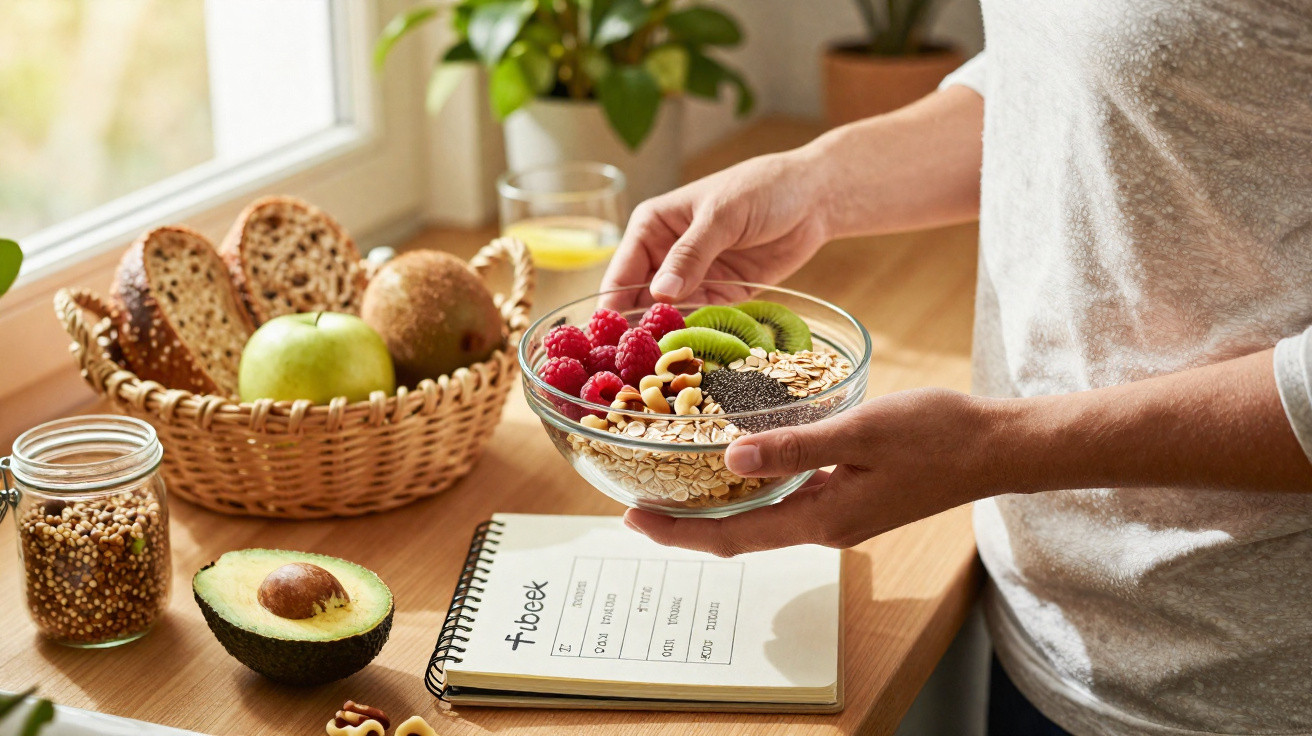
The answer is not to go from zero to one hundred and suddenly eat nothing but lentil soup and raw vegetables. Your gut is not a boot-camp participant that will enjoy that. It prefers gradual, sensible changes. One surprisingly effective first step is to swap one refined food each day for a wholegrain alternative. Replace white bread with wholemeal bread, ordinary pasta with wholewheat pasta, or cornflakes with porridge oats. Each of these small decisions adds a few grams to your daily fibre intake, without making you feel as though you are on a diet. After a week, breakfast feels different; after four weeks, your entire morning feels different.
Many people begin highly motivated, then notice after three days: wind, rumbling and perhaps even stomach pain. Then comes the most common mistake: “I cannot tolerate it, so I had better stop.” What is happening is usually less about intolerance and more about surprise. Your gut bacteria are suddenly receiving far more food, so they react, produce gas and cause a bit of upheaval. This settles when you increase fibre gradually and drink more at the same time. Water is not a wellness tip here; it is a practical tool. Fibre absorbs fluid – without water, a good idea can turn into a hard mass in the bowel. And yes, that is unpleasant too.
“Most people do not need a detox drink; they simply need 10 grams more fibre a day,” says a nutritional medicine specialist bluntly. And you can feel how right she is.
- Begin with one additional portion of vegetables or fruit a day, rather than adding five all at once.
- Exchange refined products for wholegrain versions without giving up every meal you enjoy.
- Introduce pulses gradually: start with a small serving of lentils in a salad, then move on to full bean-based dishes.
- Deliberately drink one extra glass of water with fibre-rich meals.
- Listen to your stomach: mild wind is normal, while severe pain is a sign to slow down.
Why fibre has more to do with quality of life than calories
Ultimately, this is not about gram counts but everyday life. It is about not sitting in front of your laptop after lunch with half-closed eyes, but feeling that the day still has momentum. It is about going to the toilet in the morning without an internal battle. It is about having a stomach that does not constantly demand attention when you are in a meeting or standing on the train. Fibre is not a lifestyle product you see on Instagram. It is more like the quiet, dependable friend who is never centre stage but is always there when you need them.
Think back to what your grandparents ate – stews, soups, coarse bread and apples from the garden – and you realise how much of what we now call “superfood” used to be perfectly ordinary. No smoothies or chia seeds, but beans, lentils, cabbage and oats. Much of this has slipped out of our kitchens, replaced by ultra-soft bread rolls, sweet snacks and highly processed foods between meals. The result is not just a different body shape, but a different internal rhythm. Our digestion is battling against a constant flow of fast calories and empty textures.
Perhaps this is the moment to ask yourself one simple question: what would my life feel like if my gut received every day what it was designed for? Not perfectly, not austerely, but simply a little closer to more plants, more texture and more “real” food. The answer will not appear on the scales tomorrow, but over the next month, in the next blood test and in the next calm feeling in your stomach. Perhaps it will also come with the quiet realisation that the word “roughage” was always a rather poor joke for these substances.
| Key point | Detail | Benefit for the reader |
|---|---|---|
| Hidden fibre deficiency | Most people fall well below the recommended 30–35 g per day | Understands why tiredness, constipation and cravings often occur together |
| Recognising physical signals | Sluggish bowel movements, bloating, cravings and rising blood lipid levels | Learns to interpret early warning signs before more serious problems arise |
| Practical everyday changes | A gradual shift to wholegrains, more vegetables, pulses and water | Receives a practical plan without feeling on a diet or having to give everything up |
FAQ:
Question 1: How much fibre per day is realistic if I have barely paid attention to it so far?
Start with 5–10 g more than you currently eat, for example by adding an extra slice of wholemeal bread and one more portion of vegetables. You can increase it further after two to three weeks.Question 2: Does fibre automatically cause bloating?
You may experience wind at first because your gut flora is adapting. If you increase your intake gradually and drink enough, this usually settles after a few days to weeks.Question 3: Are fibre supplements from the chemist worthwhile?
They can be a temporary solution, but they do not replace a genuine change in diet. Whole foods also provide vitamins, minerals and plant compounds.Question 4: Which foods provide particularly high amounts of fibre in a small serving?
Porridge oats, lentils, beans, chickpeas, linseed, chia seeds, berries, pears and vegetables such as broccoli or Brussels sprouts are among the most concentrated sources.Question 5: Can you eat too much fibre?
Yes, especially if you overdo it very suddenly. This can lead to severe wind, abdominal cramps and, in extreme cases, even constipation. Increasing your intake slowly is the safer approach.

















Comments
No comments yet. Be the first to comment!
Leave a Comment