Wood is widely seen as natural, durable and far more appealing than plastic in the kitchen. Yet questionable care advice, particularly on social media, is widespread. A specialist from a television programme has now debunked a routine that many people use almost automatically when they want wooden spoons, spatulas or boards to become “properly clean”.
The common cleaning mistake with wooden utensils
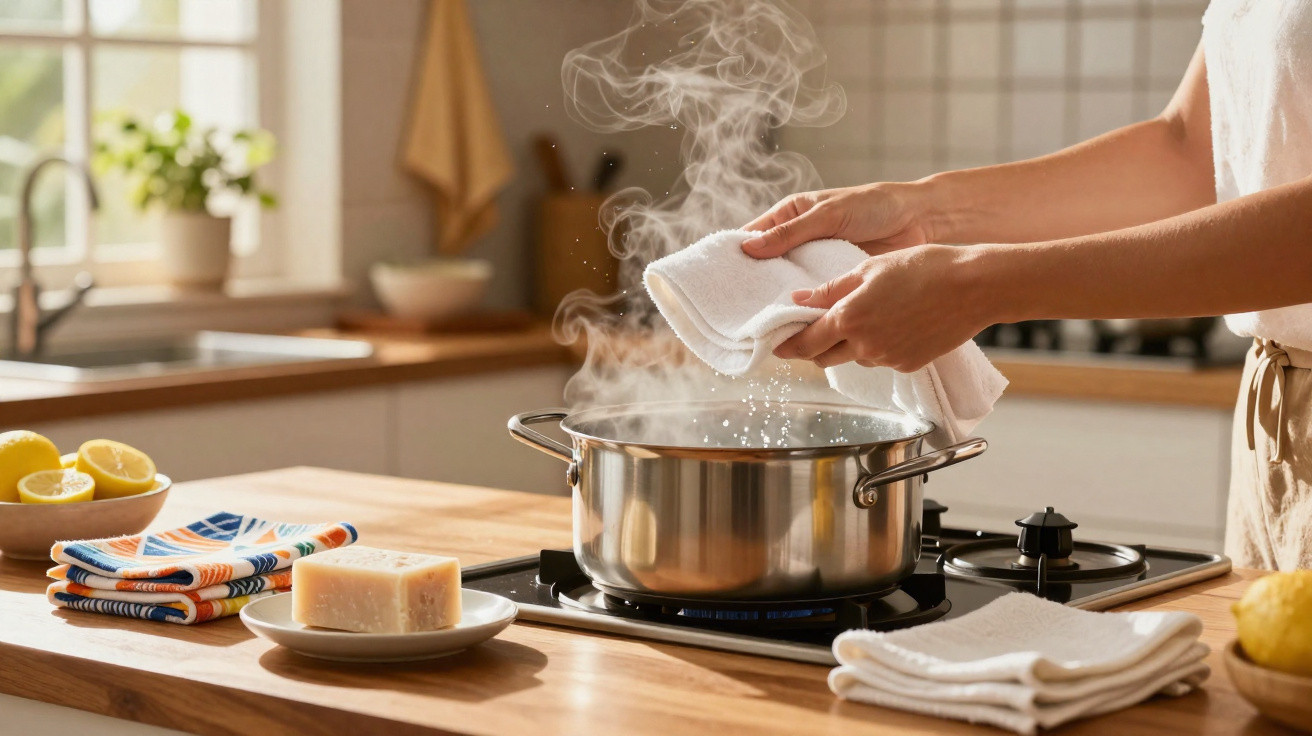
The same thing happens in many kitchens: when a wooden board or spoon is heavily soiled, it is placed in a pan of boiling water. The reasoning sounds sensible: heat should kill bacteria and clean the wood right through. In reality, however, something quite different takes place.
Boiling wood in vigorously hot water may sound hygienic, but it causes lasting damage to the material and achieves far less than people think.
During boiling, the wood swells. Its fibres open up and water penetrates deep inside. At first glance, everything appears clean and the water turns brown. Many interpret this colour as “dirt” that the boiling water has successfully drawn out of the wood.
In fact, it is mainly natural tanning agents, known as tannins, that are released from the wood. At the same time, the material loses stability. Cracks, warping and a rough surface are typical consequences.
This rough, damaged surface creates more problems over time: food residue, grease and bacteria adhere much more easily. Repeatedly boiling wood therefore achieves the opposite of the intended result – the utensil becomes an ideal breeding ground for germs.
Why boiling water ruins wooden utensils over time
Anyone who regularly immerses wooden utensils in boiling water must expect several kinds of damage:
- Warping: Spoons and boards distort and no longer sit flat.
- Cracks: Constant swelling and drying causes the surface to split.
- Rough texture: The wood feels spongy or fibrous, allowing food to stick more easily.
- Discolouration: Natural components alter the wood’s appearance and structure.
There is another aspect that many people underestimate: “boiling the life out of” wood destroys a form of natural protection. Undamaged, dense wood absorbs moisture more slowly and dries more evenly. Once harmed, it becomes much more vulnerable to further stress.
Everyday cleaning for wooden utensils
The TV expert instead recommends a straightforward, down-to-earth care routine with no dramatic tricks – and that is precisely why it works.
Step 1: Gentle cleaning after every use
After cooking, lukewarm water and a mild washing-up liquid are entirely sufficient in most cases. Those who prefer a more natural option can use traditional soap bars or a little household vinegar. Both reliably remove grease and odours.
- Never leave wood soaking in washing-up water; rinse it promptly instead.
- Never put it in the dishwasher – the heat and chemicals are too harsh.
- Dry it immediately with a cloth after rinsing, then stand it upright or leave it somewhere with good ventilation.
This prevents water from penetrating deep into the wood and collecting there. This makes an enormous difference to the lifespan of thick chopping boards in particular.
Step 2: “Deep cleaning” with sandpaper
If a spoon feels spongy or a board looks dull and unappetising, the expert advises a practical solution: fine sandpaper.
A grit of around 180 is considered a good compromise. It smooths the surface without removing too much material. A few circular movements remove discolouration, knife marks and the notorious “mushy” feel.
Rather than putting the wood through punishment, the worn top layer is carefully removed – revealing smooth, fresh material beneath.
After sanding, wipe the board or spoon thoroughly, or rinse it lightly, so that no sanding dust remains. Then allow it to dry properly again.
Step 3: Oil the wood thoroughly
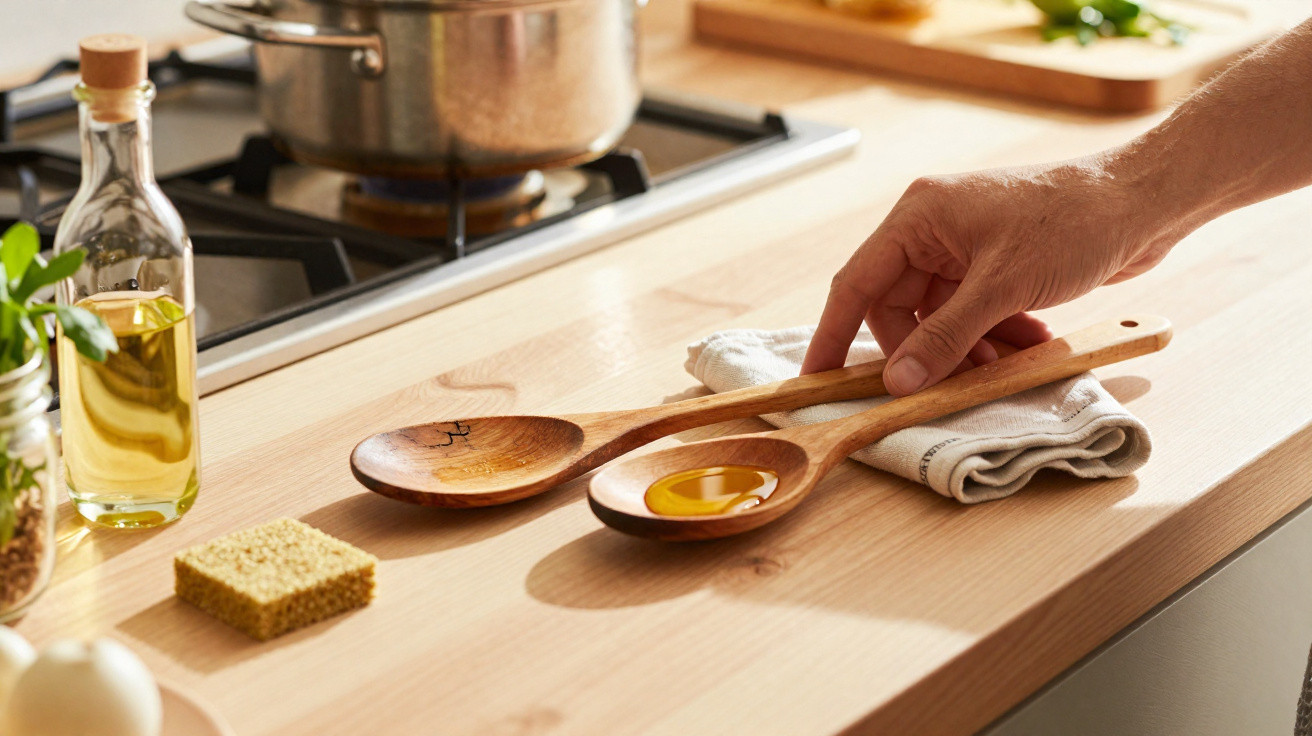
The final stage is crucial for durability: treat the wood with a suitable edible oil. It penetrates the pores, making the wood more resilient and water-repellent.
Suitable options include:
- refined sunflower oil
- grapeseed oil
- specially labelled food-safe care oils for wooden boards
Put a little oil onto a kitchen cloth, spread it evenly, allow it to soak in and wipe away any excess after a few hours. The effect is visible immediately: the wood looks richer, the grain stands out and the surface feels smooth and pleasant.
Why wood can be the better choice than plastic
Alongside the debate about correct care, criticism of plastic utensils is growing. Several doctors and environmental researchers point to potential risks when plastic spatulas, spoons or scrapers are regularly exposed to high temperatures.
When heated, components from plastics can transfer into food. These include plasticisers and other hormone-like substances. Some specialists link these substances to disruption of the hormonal system – including genital malformations, earlier puberty or a greater susceptibility to certain types of cancer.
Avoiding plastic in everyday kitchen use reduces an avoidable exposure – wood offers a robust, practical alternative.
Wood also has further advantages:
- it is less likely to scratch non-stick pans
- it feels pleasantly warm and natural
- it can be incorporated attractively into open kitchen shelving
- with proper care, it can be used for many years
The key is to choose untreated wood or wood treated with food-safe products, while avoiding dubious varnishes or unknown coatings.
How often should wooden utensils be replaced?
Even the best care routine has its limits. As soon as deep cracks appear, wood splinters develop or a permanent unpleasant smell remains, the item belongs in the bin.
As a broad rule, rather than trying to rescue wood at all costs, dispose of it consistently once it no longer appears trustworthy. Chopping boards used for raw meat deserve especially close scrutiny. However, regular sanding, cleaning and oiling can considerably extend their lifespan and reduce the risk.
Practical everyday kitchen tips
A few simple routines help ensure that wooden utensils are handled hygienically while protecting the material:
- After heavy use, such as preparing raw meat, rinse utensils as soon as possible rather than leaving them for hours.
- Use one separate board for meat and another for vegetables to prevent cross-contamination.
- Refresh wood briefly with fine sandpaper once a month, then oil it.
- Never dry utensils on a radiator or in direct sunlight – this encourages cracks.
Anyone who builds these habits into their kitchen routine no longer needs drastic measures. The notorious practice of boiling utensils in a pan becomes completely unnecessary and belongs exactly where it should: in the category of “well meant, badly done”.
For people with sensitive stomachs or young children at home, this mindful approach to wood provides an extra measure of safety. It also saves money and resources, as wooden spoons and boards last substantially longer without becoming unappetising.











Comments
No comments yet. Be the first to comment!
Leave a Comment