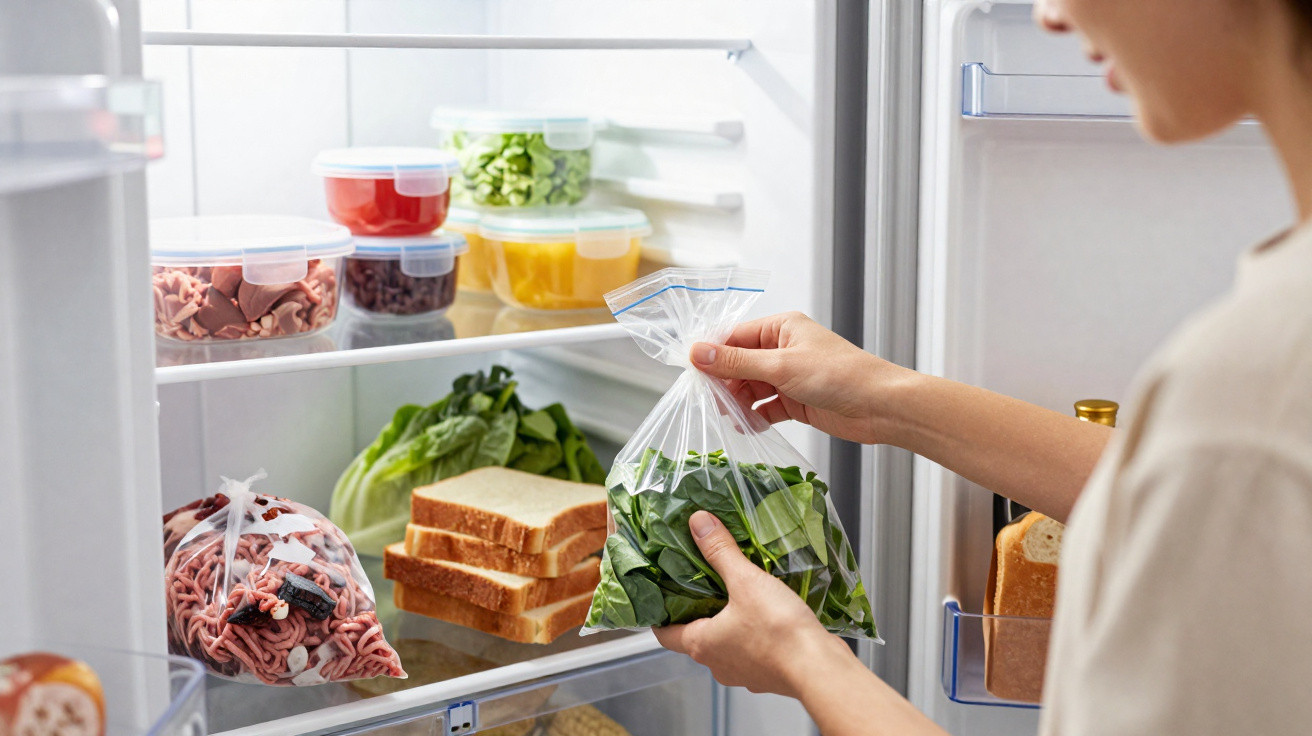
Everyone knows the situation: leftover bread, some minced meat or a bag of spinach gets pushed into the freezer, safe in the belief that it will be fine there. Months later, the packet resurfaces – iced over, pale and carrying an odd smell. The contents may be freezing cold, yet they are hardly appetising. This is where the misconception lies: cold halts microbes, not quality deterioration.
Why the freezer cannot save everything
At around -18°C, bacteria and mould are largely inactive. They can barely multiply, which initially sounds reassuring. Yet plenty is still happening inside the food: water expands, forms ice crystals and ruptures cells. Texture and bite suffer, aromas fade and fats turn rancid.
Even when frozen, food continues to age – simply more slowly and in a different way.
Items with a particularly high water or fat content are especially vulnerable. Lots of water produces soggy results, while a high fat content encourages unpleasant, “stale” flavours. If air reaches the surface as well, the notorious layer of freezer burn develops: grey, dry and tasteless.
Three everyday staples are hit particularly hard: leafy vegetables, minced meat and bread. They are commonly put in the freezer – and just as commonly forgotten there for far too long.
Leafy vegetables in the freezer: spinach, lettuce and similar produce only keep for a limited time
Leafy vegetables such as spinach, kale and lettuce are made up largely of water. Freezing creates countless ice crystals within them, breaking apart their delicate tissue. Once thawed, the water runs out again, leaving a soft, collapsed bundle of vegetables.
They are no longer suitable for salads. They can still be used in cooked dishes, but only for a limited period.
- Suitable varieties for freezing: spinach, kale, Swiss chard, savoy cabbage
- Less suitable: lettuce, rocket, lamb’s lettuce – these become extremely mushy
- Recommended freezer storage time: around 3 to 6 months
The longer vegetables remain frozen, the more their colour, flavour and nutrient content deteriorate. Vitamins are sensitive to lengthy storage, even at sub-zero temperatures.
How to freeze leafy vegetables properly
A few measures can improve the quality considerably:
- Blanch: Briefly place the vegetables in boiling water, then immediately cool them in iced water. This helps preserve their colour and texture.
- Drain thoroughly: The less water that goes into the bag, the smaller the ice crystals will be.
- Pack airtight: Fill freezer bags or containers with as little air as possible, then seal them securely.
- Write down the date: This makes it clear when the vegetables should be used by.
Using them within three months is ideal. Up to six months is usually still acceptable, but after that the benefit declines sharply – especially when the vegetables were frozen for their vitamins.
Minced meat: far more delicate in the freezer than expected
At first glance, minced meat seems an ideal candidate for the freezer. It is raw, versatile and quick to thaw. However, being so finely minced also makes it extremely sensitive. Every tiny fibre is exposed to air, while the fats are open to oxidation.
Minced meat should be seen as a short-term freezer solution – not a year-round stockpile.
This oxidation is precisely what causes a rancid smell and a grey to brownish colour. That does not automatically mean the product has spoiled, but it will taste noticeably worse and look unappetising.
| Product | Recommended storage time at -18°C |
|---|---|
| Raw minced meat (beef, pork, mixed) | 2–3 months, around 4 months maximum |
| Raw poultry mince | preferably 1–2 months |
| Large, whole cut of meat | 6–12 months (with very good packaging) |
How to keep frozen minced meat more appetising for longer
When freezing mince, use meat that is as fresh as possible and act promptly. A few practical rules help:
- Small portions: Freeze it in flat packs so the meat freezes through more quickly.
- Remove the air: Vacuum-seal wherever possible, or press bags tightly against the meat to displace oxygen.
- Freeze through quickly: Store mince as far back in the freezer compartment as possible, where the temperature is lowest.
- Use promptly: Mince stored for more than three to four months is better suited to heavily seasoned dishes such as chilli or Bolognese.
When thawing, mince belongs in the fridge, not on a radiator or in the sun. Thawing it overnight in the fridge and using it straight away significantly reduces the risk of microbial growth.
Bread in the freezer: when slices start to feel rubbery
Bread is the classic freezer item: “I’ll freeze it, then it will last forever.” That is not actually true. Over time, the starch inside the crumb changes. It dries out and loses its elasticity, while the crust becomes tough rather than crisp.
Bread does not stay fresh in the freezer; it simply ages more slowly – and eventually you can taste it.
Many people notice this when thawed bread rolls feel rubbery or toast somehow tastes “stale” despite going through the toaster. Freezing prevents mould, but it does not preserve the original freshness.
- Recommended freezer storage time for bread: around 1 month
- With very good packaging: still acceptable for up to 2–3 months
- Bread rolls and croissants: best used promptly, as they dry out even faster
How to freeze bread properly – and make clever use of leftovers
A few simple steps make bread much easier to use:
- Slice it first: Freeze bread in slices. This allows individual portions to be taken out and thawed more quickly.
- Use double wrapping: Put it in one bag, then another bag or a container. This reduces freezer burn and drying out.
- Reheat rather than merely thaw: Put frozen slices straight into the toaster or briefly into a hot oven. This makes the crust somewhat crisper again.
- Use up leftovers: Turn dry leftover bread into breadcrumbs, croutons, bread pudding or sweet bread pudding.
Anyone who freezes bread regularly should buy smaller loaves or half loaves. That way, less goes into the freezer at once and supplies remain manageable.
Freezer burn, rancidity and nutrient loss: what really happens in the cold
Three terms are relevant to frozen food and regularly cause confusion:
- Freezer burn: Dry grey or white patches on the surface. These occur when food comes into unprotected contact with air. It is not harmful, but affected areas taste bland and tough.
- Rancidity: Fats react with oxygen and break down. The smell becomes unpleasant, while the taste turns bitter or soapy. This chiefly affects high-fat foods such as minced meat, butter and oily fish.
- Nutrient loss: Some vitamins break down over time, including in the freezer. The longer food is stored, the lower its content becomes, particularly for sensitive vitamins such as vitamin C.
Carefully preparing food before freezing and avoiding overly long storage greatly reduces all of these effects. They cannot be eliminated entirely. The freezer is therefore primarily a tool for buying time – not a magic stop button for quality.
How to organise your freezer to prevent food waste
A great deal of waste happens simply because the freezer is chaotic. No one remembers how old the bags are or what is lurking in the farthest corner. A straightforward system can save a lot:
- Clear zones: One drawer for bread and baked goods, one for meat and one for vegetables.
- Labelling: Write the date and contents directly on the bag with a permanent marker.
- Regular checks: Once a month, move the oldest products to the front and use them soon.
- Realistic portions: Freeze only as much as will genuinely be used in the coming weeks.
Those who follow broad guidelines – three months for leafy vegetables and minced meat, one month for bread – and avoid treating the freezer as “long-term storage” will save money, reduce stress and avoid disappointment when opening the next ice-covered bag.














Comments
No comments yet. Be the first to comment!
Leave a Comment