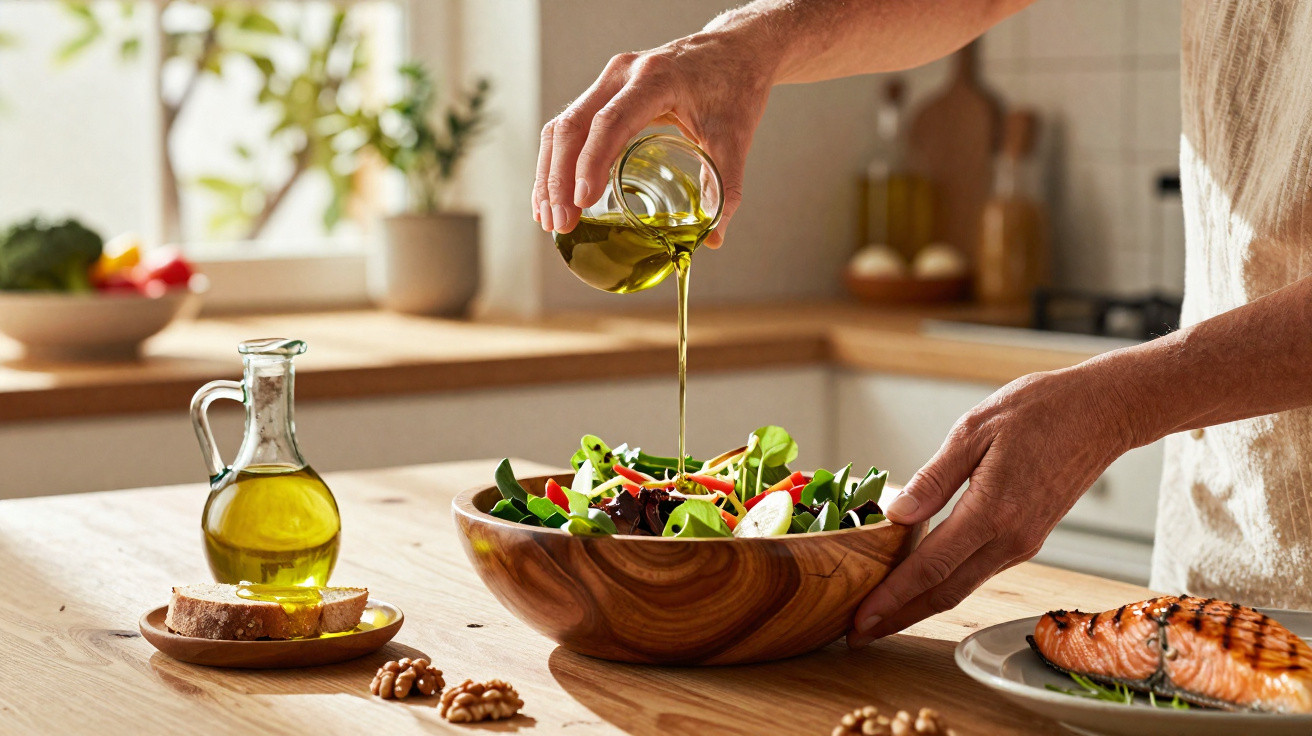
Many shoppers instinctively reach for the green bottle in the supermarket and assume that a splash of olive oil automatically makes a meal “healthy”. New findings from large, long-running studies suggest that its reputation is more than a lifestyle trend – but olive oil is not a free pass either.
Why olive oil has such a strong reputation
Olive oil has been a cornerstone of Mediterranean cooking for decades. This way of eating is repeatedly associated with protecting the heart, lowering the risk of stroke and helping people live longer.
Its nutrition profile helps explain why experts so often praise olive oil. It is particularly rich in monounsaturated fats, especially oleic acid, as well as a range of compounds known as polyphenols.
“Polyphenols act like tiny protective shields: they neutralise free radicals, slow inflammation and ease the strain on blood vessels and organs.”
This combination of “good” fats and antioxidants can influence several processes in the body:
- Cholesterol levels may improve, with protective HDL often increasing in particular.
- Blood pressure may fall slightly, while blood vessels can remain more flexible.
- Inflammatory activity in the body tends to decrease.
That may sound like all-round protection, but the picture is not quite that simple. Most of the evidence comes from observational studies. These can identify links, but cannot prove beyond doubt that olive oil alone causes the beneficial effects.
Fewer heart attacks and strokes: what studies show
One large Spanish study is particularly striking. Researchers followed more than 40,000 people for around ten years, examining their eating habits in detail.
People who used olive oil as their main source of fat had a markedly lower risk of death from any cause. The analysis found that overall mortality was around a quarter lower than among those who consumed little olive oil.
“Just a few tablespoons of olive oil each day are associated in studies with fewer cardiovascular diseases and a lower risk of stroke.”
The evidence for traditional heart health benefits is also mounting:
- fewer fatal cardiovascular events
- a lower risk of strokes
- improved blood fats and blood pressure in intervention studies using a Mediterranean diet
Some of these advantages are likely due not just to the oil itself, but to the broader lifestyle. People who use plenty of olive oil often eat more vegetables, pulses, wholegrains and fish, and are also less likely to smoke.
Does olive oil protect the brain too?
More recent evidence on dementia is also of interest. A research team analysed health data from more than 90,000 people in the United States over almost three decades.
Those who consumed more than half a tablespoon of olive oil each day were substantially less likely to die from dementia than people who used little or no olive oil. Dementia mortality in this group was around 28 per cent lower.
Experts suggest several possible mechanisms. Healthy fats support the brain’s blood vessels, polyphenols may reduce inflammation in the nervous system, and the Mediterranean diet as a whole helps keep risk factors such as high blood pressure, excess weight and diabetes under control.
“People who protect their heart usually protect their brain as well – olive oil fits perfectly into this approach.”
Can olive oil help blood sugar and diabetes?
Some research indicates that olive oil may affect glucose metabolism more favourably than many other fats. Meals containing olive oil can sometimes make blood sugar rise more slowly. Over the long term, this could reduce the risk of type 2 diabetes.
However, the overall balance remains important: olive oil is still pure fat. One tablespoon provides roughly 120 calories. Anyone who pours it generously over everything while also eating plenty of white bread, sweets and ready meals is more likely to gain weight and see poorer blood sugar levels despite using olive oil.
Why olive oil alone is not enough
As encouraging as the data appear, keeping a bottle of olive oil in the cupboard is no replacement for a balanced diet. From a nutritional perspective, the oil also has limitations.
Although it supplies plenty of monounsaturated fats, it contains only small amounts of essential fatty acids such as omega-3. The body cannot make these itself, so they need to come from food.
“Anyone relying only on olive oil misses important omega-3 fatty acids – variety in oils makes the difference.”
Nutrition specialists therefore advise combining different plant oils. Useful additions include:
- Rapeseed oil – relatively high in omega-3, suitable for cooking and salads
- Walnut oil – ideal for cold dishes and provides plenty of omega-3 fatty acids
- Linseed oil – very high in omega-3, but should only be used cold
There are also classic elements of the Mediterranean diet, including oily fish such as salmon, mackerel and herring, seafood and nuts. They make an important contribution to the protective effects associated with the “Mediterranean style”.
How much olive oil a day makes sense?
For healthy adults, one to two tablespoons of plant oils daily are considered a sensible guideline. Using high-quality olive oil for part of this amount and complementing it with rapeseed or walnut oil generally works well in everyday life.
It is worth remembering that fats are found not only in oils, but also in processed meats, cheese, ready meals, snacks and baked goods. Anyone consuming a lot of hidden fats should not overdo added oil as well.
Cold-pressed, extra virgin or refined: which olive oil should go in the trolley?
The supermarket shelf can be confusing: “extra virgin”, “cold-pressed”, “refined”, blended oils – what is actually healthy? As a general rule, the less processed the oil, the better.
- Extra virgin olive oil: gently cold-pressed, with a high polyphenol content and an intense flavour; ideal for cold dishes and gentle heating.
- Virgin olive oil: also relatively lightly processed, but with a milder aroma.
- Refined olive oil or blends: heated to higher temperatures, with fewer flavour compounds and antioxidants, but often more neutral in taste.
“Anyone wanting the full health benefit should choose extra virgin olive oil – and use it cold as often as possible.”
Blended oils that combine olive oil with rapeseed, sunflower or other oils may also be of interest for many households. Their nutritional value depends heavily on the composition, so it is always worth checking the ingredients list.
How suitable is olive oil for frying?
Conflicting advice circulates online: some people use nothing else for frying, while others warn against putting olive oil in any frying pan. The key factor is the smoke point – the temperature at which an oil visibly begins to smoke and break down.
For high-quality extra virgin olive oil, this point is roughly 160 to 170 degrees Celsius. Ordinary pan-frying generally stays below that range, so olive oil is well suited to it.
Very high temperatures can be problematic, such as deep-frying or intense searing in professional kitchens. In these cases, more heat-stable oils, including refined sunflower or groundnut oils, are the better choice.
- Salads, dips and bread: olive oil has a clear advantage
- Normal pan-frying: olive oil works well
- Deep-frying and very high heat: use neutral, heat-stable oils instead
Practical tips for everyday use
Small changes in routine can go a long way for anyone wanting to benefit from olive oil’s strengths:
- Replace some of the butter on bread with olive oil.
- Mix olive oil and rapeseed oil in salad dressings.
- Finish vegetables after cooking with a spoonful of olive oil instead of a cream sauce.
- Use ready-made dressings and sauces less often.
Storage matters too. Light, heat and oxygen cause valuable polyphenols and vitamins to degrade more quickly. Dark bottles, a cool place away from strong light, and using the oil promptly once opened are ideal.
What people with existing health conditions should consider
People with cardiovascular disease, diabetes or severe excess weight may benefit from speaking to a doctor or dietitian. Their fat intake often needs to be tailored more precisely so that calorie balance, blood fats and blood sugar are appropriate.
People with severely impaired fat digestion – for example, due to certain liver or gallbladder conditions – often tolerate large amounts of fat poorly, regardless of the source. For them, quantity matters more than the particular type of oil.
What terms such as omega-3 and polyphenols mean
Many labels now promote “omega-3” and “antioxidants”, often without explaining them. In brief:
- Omega-3 fatty acids support the heart, blood vessels, brain and eyes. They are found mainly in oily sea fish, linseed, rapeseed and walnut oil.
- Polyphenols are plant compounds with antioxidant and anti-inflammatory effects. In olive oil, they are mainly found in less processed, virgin varieties.
Olive oil therefore offers a package of protective components, but it does not replace other sources. The key is the mix: plenty of vegetables, wholegrains, pulses, nuts and fish – topped off with a good olive oil, ideally used in cold dishes.















Comments
No comments yet. Be the first to comment!
Leave a Comment