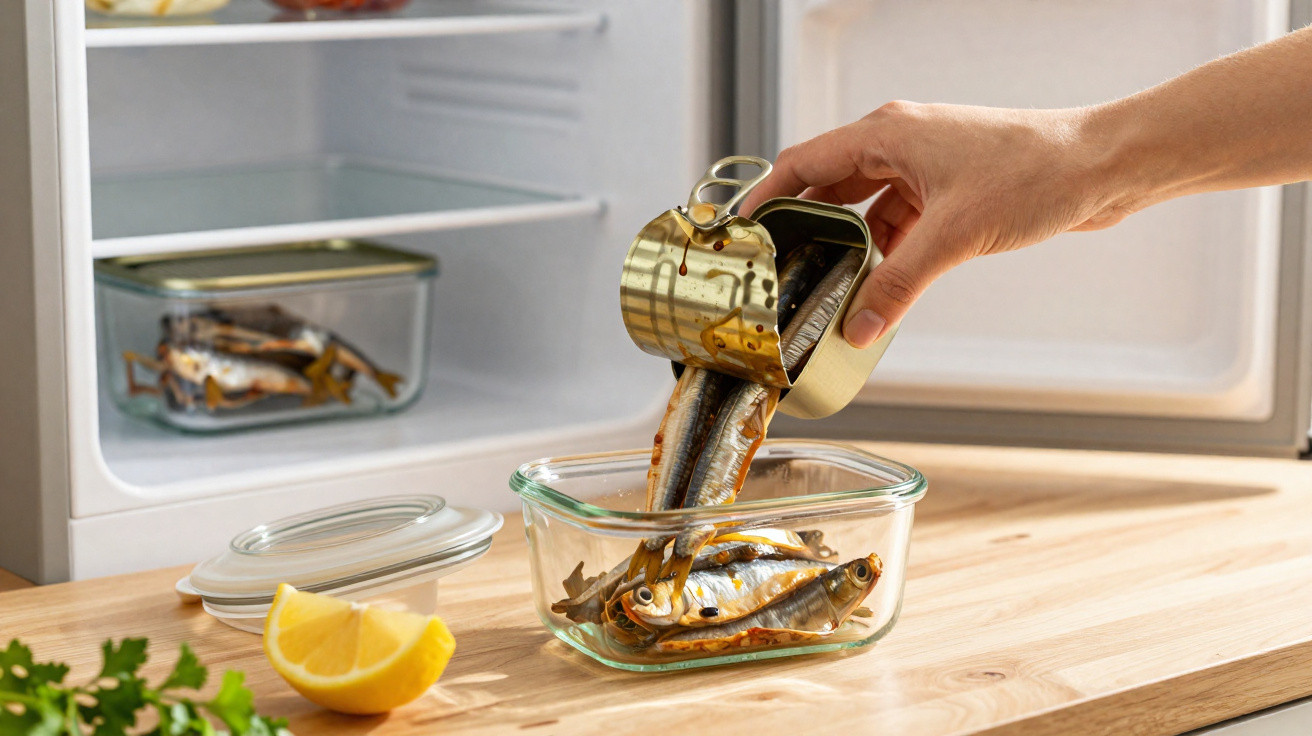
That supposedly smart shortcut can ruin both flavour and food safety. An opened tin left in the fridge creates several potential problems, from rancid fish to genuine food-safety concerns. Anyone who likes to keep sardines in the cupboard should know the key storage rules.
Why an open tin of sardines should not be kept in the fridge
While a tin remains sealed, it functions as an almost sterile environment. Manufacturers sterilise its contents before sealing the tin airtight, keeping out both bacteria and oxygen. Sardines can therefore often be stored without refrigeration for three to five years.
The situation changes completely once the tin is opened. Air, moisture and microorganisms can reach the fish. Although refrigeration slows their growth, it does not halt it entirely. A tin that has merely been partly covered again offers little protection.
An open metal tin in the fridge is an ideal starting point for germs and loss of flavour – even when its contents are well chilled.
A particular concern is that harmful bacteria such as Clostridium botulinum may multiply in damaged or previously compromised tins when conditions are unfavourable. This is the same pathogen responsible for the rare but serious illness botulism. If there is even a slight possibility that the tin was already damaged, avoid every risk after opening it.
Metal, cold and oxygen: an unfavourable combination
Food safety is not the only issue: the fish's quality can also suffer. Sardines contain plenty of fat, particularly delicate omega-3 fatty acids. These react rapidly with oxygen and can become rancid, producing musty, bitter flavours instead of a pleasant fish taste.
When fish stays in its opened tin, these fats come into direct contact with:
- the metal of the tin
- oxygen in the fridge
- sometimes acidic marinades, such as tomato sauce or lemon juice
This may lead to several effects:
- Metallic off-flavours can develop.
- The surface of the tin may begin to corrode.
- Trace amounts of metal or components of the inner coating can transfer into the fish.
- The sardines may become soft, mushy and unappetising in texture.
There is another drawback: typical fridge odours can more easily reach fish kept in a partly open tin. Anyone who has experienced a “fridge taste” in food will know how unpleasant it can be.
How long do sardines really keep after opening?
Before opening, the best-before date is usually generously long. Once the tin has been opened, however, every hour matters. The priority is no longer storage over years, but safe use within a few days.
The following guide provides useful approximate timings:
| Condition | Storage location | Recommended duration |
|---|---|---|
| Unopened tin | Cupboard, dry and dark | 3–5 years (depending on the manufacturer) |
| Opened tin, contents transferred | Fridge (0–4 °C) | 1–2 days, no more than 3–4 days |
| Opened tin, contents frozen | Freezer (-18 °C) | up to around 3 months |
Pregnant people, children, older adults and those with weakened immune systems should be especially cautious and use the fish sooner. For maximum safety, plan to eat any remaining sardines the following day or the day after.
The supposedly “long-lasting” tinned product becomes a highly perishable fresh food once opened.
The right method: how to store sardines safely
A few simple steps are enough to avoid the risk. What matters most is what you do immediately after opening the tin.
Step-by-step guide
- Have a clean glass container or food-safe plastic container with a tight-fitting lid ready.
- Wash your hands thoroughly, so that no additional germs are transferred to the fish.
- Open the tin fully, then immediately transfer the sardines and all of their liquid – oil, tomato sauce or brine – into the container.
- Seal the container tightly.
- Place it as far towards the back or bottom of the fridge as possible, where temperatures are coldest, rather than in the door where temperatures fluctuate.
- Write the opening date on the lid or on a piece of sticky tape.
- Include the leftovers in meals within 24 to 48 hours.
If you already know that you will not eat the sardines during this period, freezing is a suitable option. Here too, use an airtight container or a securely sealed freezer bag. The fish can then be kept for around three months without a significant loss of quality.
How to tell whether sardines have spoiled
Even if you have followed every storage rule, it is worth carrying out a quick check before eating them. Fish allows very little room for error and should never be eaten “just in case”.
Look out for these warning signs:
- a sharp, unpleasant or “chemical” smell
- grey, greenish or brown discolouration that was not there before
- a slimy surface or bubbles forming in the liquid
- an unusually soft, disintegrating texture
- a swollen container or a hissing noise on opening, in the case of still-sealed tins
When it comes to fish, the rule is always: if in doubt, throw it away rather than take a risk – even if it feels wasteful.
How to use up leftovers cleverly instead of leaving them sitting around
Many people leave an open tin untouched because they cannot immediately think of a way to use what remains. Keeping a small collection of quick recipes helps prevent that “I’ll just put it in the fridge for now” approach.
Quick ideas for the following day
- Sardine spread: Mash sardines with cream cheese, a little lemon and pepper, then serve on bread or crackers.
- Potato salad with sardines: Combine cooked potatoes, red onion, parsley and sardines with a little oil from the tin.
- Pasta sauce: Roughly mash the sardines, then briefly simmer them with garlic, tomatoes and a little pasta water.
- Toasted bread: Toast slices of baguette, rub them with garlic, add sardines and drizzle with olive oil.
These dishes rarely take more than ten to fifteen minutes. The sooner you use the leftovers, the less likely they are to be forgotten in the back corner of the fridge.
What “migration” from the tin means
Many consumers wonder exactly what food-safety warnings mean by “migration of substances from packaging”. It refers to tiny molecules moving from the tin material or its coating into the food.
When the tin is sealed, this process is strictly controlled and safe. It becomes more concerning when:
- the tin is damaged, rusty or scratched on the inside,
- aggressive acids, such as tomato sauce, are in contact with exposed metal for a long time,
- the contents are heated intensely or stored incorrectly.
With an opened sardine tin in the fridge, several factors can coincide: prolonged exposure to oxygen, potential corrosion around the rim and temperature fluctuations caused by repeatedly opening the door. This is precisely why experts so strongly advise against leaving leftovers in the original tin.
Why sardines are still a good food choice
None of these warnings are aimed at the product itself, but at storing it incorrectly. When handled properly, tinned sardines offer many benefits:
- They provide plenty of omega-3 fatty acids.
- They contain high-quality protein at a moderate price.
- When eaten whole, including the bones, they supply calcium.
- They keep for a long time and are ideal for the cupboard.
Anyone who takes care when opening and storing them can enjoy all these advantages without putting their health at risk. Simply transferring them to a glass container and checking the smell before eating is often enough to turn the “bad” tin back into a safe pleasure.










Comments
No comments yet. Be the first to comment!
Leave a Comment