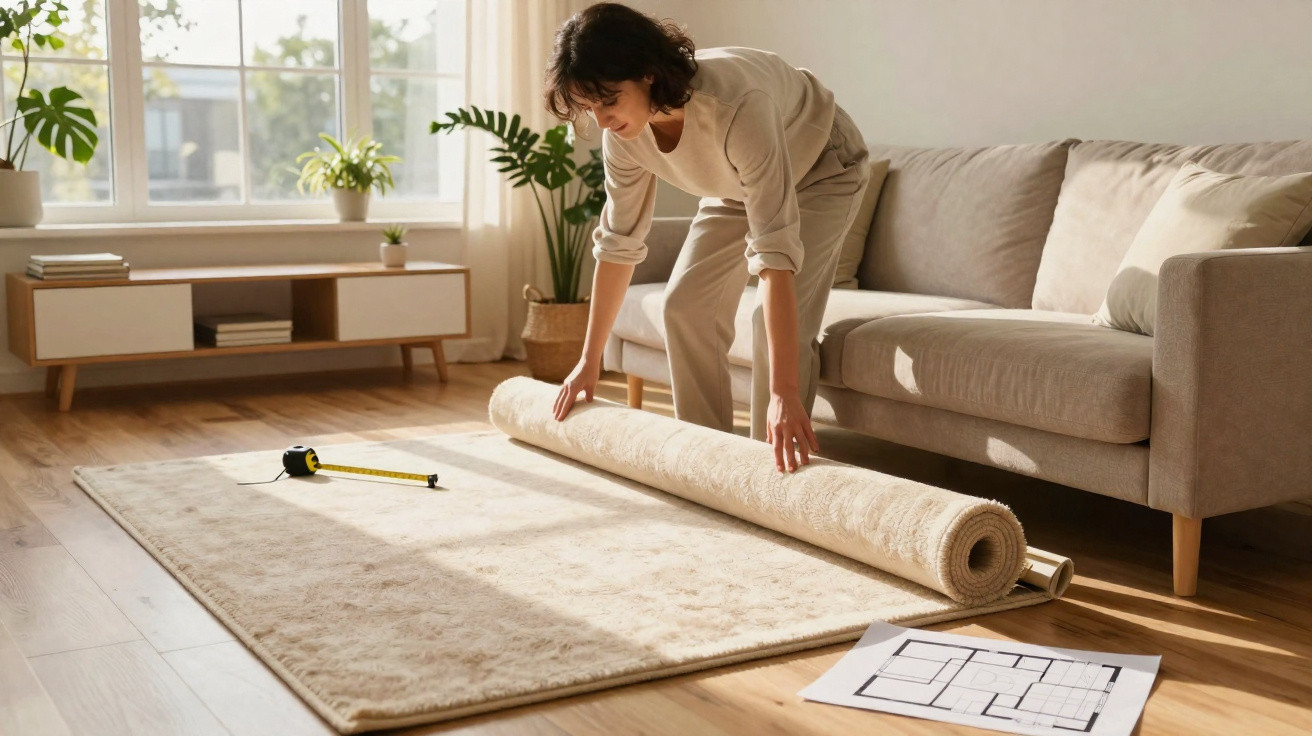
One Saturday morning, after shifting the coffee table by a few centimetres, you suddenly spot what is wrong with the living room: the sofa looks bulky, the floor feels bare, and the room has lost the sense of balance you had been trying to achieve without being able to define it. The culprit is often right there beneath your feet-subtle, yet strikingly obvious: a rug that is too small. Many people buy one believing they have found a bargain, or because they worry about overcrowding the room. They then regret that rectangle stranded in front of the sofa, as though it had been placed there by mistake. A properly sized rug does more than make the room feel warmer: it gives the entire living room structure. That detail genuinely alters how the space is perceived.
The small rug that makes a living room look narrower
We all know the feeling: a living room looks nearly finished, yet something still feels off and it is hard to say why. The sofa is attractive, the cushions have been carefully selected, and the lamp lights the reading corner well… then there is the tiny rug, floating in front of the coffee table. Rather than connecting the furniture, it forms an isolated island. The eye stops too soon, visually breaking up the room and making it seem smaller than it really is.
In a typical living room with a 220 cm three-seater sofa, a 120 x 170 cm rug rarely delivers the effect you hoped for. It may look generously proportioned in a shop, whether rolled up or displayed in a more compact setting, but it vanishes once laid at home. A 160 x 230 cm size is often the credible minimum, while 200 x 300 cm creates a more enveloping presence. Naturally, circulation matters, but the visual difference is striking.
The mistake that shrinks the whole room is selecting a rug to suit the coffee table, when it should instead relate to the sofa and armchairs. A rug is not simply something to put beneath a table: it defines an entire living area. It should make the furniture appear to have settled into place naturally. When its edges extend well beyond the coffee table, the living room immediately gains depth, without replacing a single item of furniture.
The exact rug size to choose beneath a sofa, depending on your layout
The easiest approach is to begin with the sofa's width, then ideally allow an extra 20 to 30 cm of rug on either side. For a 200 cm sofa, therefore, aim for a width of roughly 240 to 260 cm, provided the layout allows it. Before placing an order, mark out the dimensions on the floor using masking tape or a few sheets of newspaper. This little mock-up may feel somewhat makeshift, but it prevents plenty of disappointment.
With a straight sofa, two arrangements work particularly well: place only the front legs on the rug, or position the complete sofa on it if the room is large enough. The first option is especially common in flats and offers a sound balance between comfort and proportion. Let us be honest: hardly anyone measures every corner with an architect's precision every day. Even so, spending ten minutes visualising the rug's footprint can prevent a purchase that you ultimately hide beneath a table.
For a corner sofa, the rug should extend beyond the longest section and support at least the front legs of the main seating area. Also leave around 40 to 60 cm for passageways to walls or low furniture: a rug that is too large can overwhelm a living room as well.
“A successful rug does not fill an empty space: it brings together the elements that make up life in the living room.”
- Sofa measuring 180 to 220 cm: a 160 x 230 cm rug is often suitable.
- Sofa measuring 220 to 280 cm: a 200 x 300 cm size creates a more balanced foundation.
- Large corner sofa: choose 250 x 350 cm or a bespoke size if the space warrants it.
Before buying, view the living room as a lived-in space
The right size cannot be decided with a tape measure alone. You also need to consider how people enter the room, where they set down a cup, how a child runs through the living room, or how the cat always settles in the same spot. A rug should support these habits rather than becoming an obstacle. A thick material feels pleasant underfoot, but it may prevent a door from opening properly or make a small room feel more crowded.
Colour also has a subtle influence on the sense of spaciousness. A light rug with gentle texture or a low-contrast pattern lets the eye travel through the room, particularly when the sofa is dark and imposing. Conversely, a small dark rug with a pronounced border acts like a frame that is too tight. The rug should support the décor, not split it in two. In a room already full of objects, a plain or flecked shade often brings the calm you were looking for.
One final, very practical question remains: if you are unsure, should you choose the larger size? In most living rooms, yes, as long as you retain clear walkways and do not place the rug tight against the walls. A slightly generous size looks deliberate; one that is too modest suggests a temporary purchase. The right rug makes the sofa look larger without swallowing it, and can make even an ordinary room feel more welcoming-almost more expensive than it is.
| Key point | Detail | Added value for the reader |
|---|---|---|
| Rug width | Allow an extra 20 to 30 cm on each side of the sofa | The seating area instantly appears more balanced |
| Position beneath the sofa | Ensure at least the front legs rest on the rug | The furniture looks connected within one zone |
| Test before buying | Mark the dimensions on the floor with masking tape | Avoid a costly mistake that is difficult to correct |
















Comments
No comments yet. Be the first to comment!
Leave a Comment