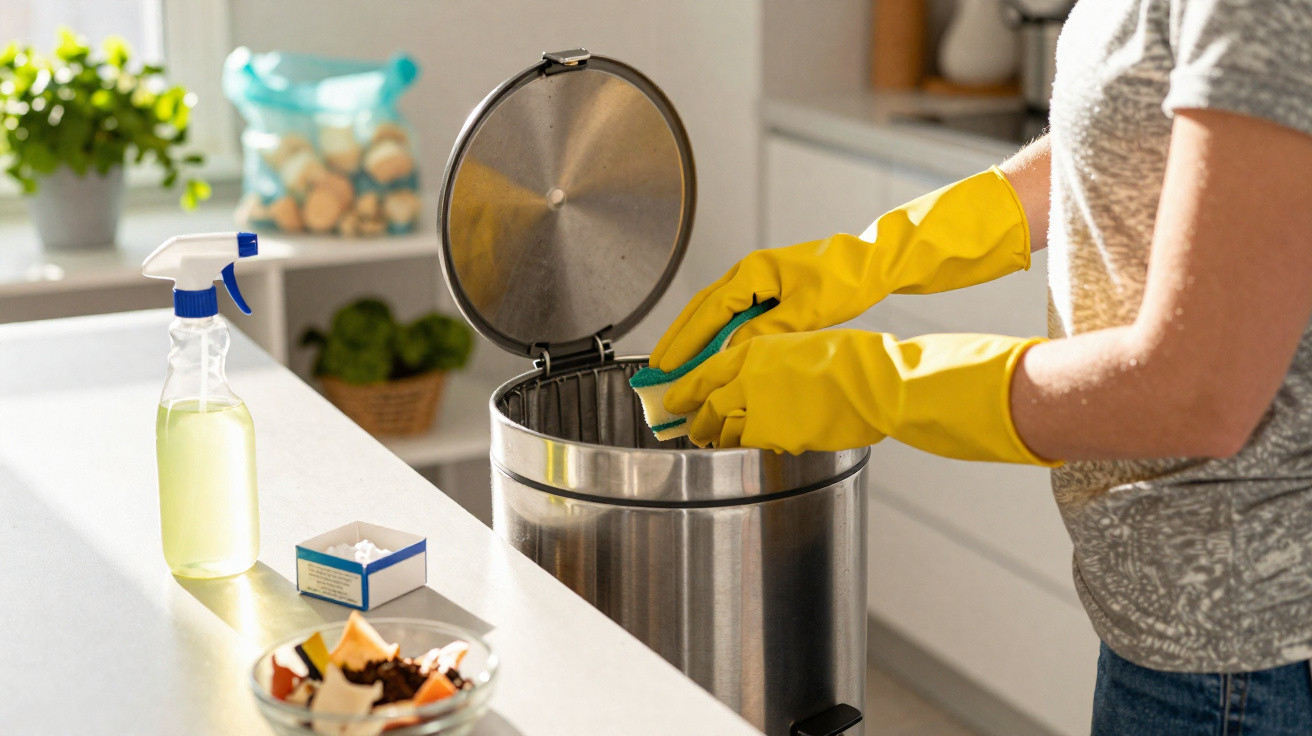
Changing the bag, closing the lid, done: that is how most people deal with their kitchen bin. Yet everyday life conveniently ignores what happens beneath the plastic bag. That is precisely where a dirty area develops, quickly leading to odours, bacteria and even mould – and it should be cleaned thoroughly at least once a week.
Why the kitchen bin is dirtier than you think
Many people assume the bin liner protects the container. That is only partly true. Bags can tear, slip out of place or develop tiny holes. Liquid from leftover food can then leak unnoticed into the bin, collecting at the bottom and along the inner walls.
“Over time, a film of grease, sauce residue and food particles forms inside the bin – an ideal habitat for bacteria and fungi.”
There is also everything that ends up in kitchen waste: leftover meat and cheese, spoiled food from the fridge, greasy packaging, and fruit and vegetable peelings. Each of these adds to the contamination. The bin is therefore no longer just a “container”, but a small, warm and damp park for microorganisms.
Hygiene experts have pointed out for years that the kitchen bin is among the dirtiest places in the home – often carrying a considerably higher load than a toilet seat, for example. The reason is simple: toilets are cleaned regularly, while bins are hardly ever cleaned. Dust, cooking fumes and a greasy film build up on the outside, while the number of germs inside rises rapidly, particularly in warm kitchens.
If the bin smells unpleasant despite its closed lid, this is no longer merely a “normal rubbish smell”, but a clear warning sign: a biofilm has already formed inside and is actively releasing gases.
How often a kitchen bin really needs cleaning
Hygiene specialists recommend giving the kitchen bin a thorough clean around once a week. In practice, this can easily be linked to every third or fourth bag change. Anyone producing a great deal of damp food waste, or cooking in higher summer temperatures, should clean it at shorter intervals.
“At the latest, the kitchen bin needs a thorough wash every two weeks – and immediately if liquid has leaked.”
One rule has no exceptions: if a bag has a hole, liquid has gathered in the bin or residue is visibly stuck to the bottom, it must be cleaned straight away. Every day of delay gives bacteria and mould more time to multiply and intensify the smell.
Step by step: how to clean the kitchen bin properly
Ordinary household cleaning products are usually enough for a thorough clean. A clear method matters more than expensive specialist products:
- Empty the bin completely, then remove larger residue by hand or with a disposable spatula.
- Fill the bin to a depth of several centimetres with hot water and washing-up liquid. Hot water loosens grease, while washing-up liquid removes odours and dirt.
- Scrub the inside surfaces firmly with a brush or sponge, paying particular attention to edges and corners.
- Afterwards, spray on a degreasing disinfectant spray or an alcohol-based cleaner. Leave it to work for five minutes.
- Rinse thoroughly with clean water so that no cleaning-product residue remains.
- Dry the bin completely with kitchen roll or a clean cloth; if necessary, leave it to air-dry fully.
- Then wipe the outside with a damp cloth as well: fingerprints, grease splashes and dust gather there surprisingly quickly.
One simple but highly effective tip is to place the bin in the shower or bath and rinse it with the shower head. This makes the task much easier, saves time and prevents dirty water from running over the sink and worktop.
Which cleaning products work particularly well
In many cases, hot soapy water and an all-purpose cleaner will do the job. Those who prefer household remedies can also use these combinations:
- Vinegar water for odours and light limescale marks
- Sodium bicarbonate (baking powder or soda crystals) to neutralise odours and dissolve grease
- Alcohol- or chlorine-based cleaners for stubborn mould or strong suspicion of germs (always ventilate well)
Important: never mix cleaning products at random. In particular, vinegar and chlorine-containing products must not be combined, as they can produce irritating fumes.
Everyday tips to keep the bin cleaner for longer
Small adjustments to the way you dispose of waste mean the bin needs scrubbing less often and your kitchen will smell noticeably fresher.
Handle wet food leftovers properly
Liquid and very greasy leftovers are the main causes of germ growth and bad smells. Useful measures include:
- Pour leftover soup, sauces or oil into an old jar or empty yoghurt pot, seal it and dispose of it.
- Let very wet kitchen waste, such as watermelon or cucumber peel, drain briefly or wrap it in newspaper.
- Wipe greasy frying pans with kitchen roll before washing them up, then place the paper in the general waste.
The drier the waste inside the bag, the less likely it is that anything will end up in the bin itself.
Change bin bags in good time
Many people wait until the bag is nearly bursting. From a hygiene perspective, that is a poor approach. A full bag becomes heavy, pulls downwards and is more likely to tear. At the same time, the waste has longer to ferment.
“A bag that is slightly more than half full is a good time to change it – especially in summer or when there is a lot of food waste.”
In households with children, pets or frequent cooking, it is worth using bin bags a little more generously as a general rule. The cost per bag is low compared with having a kitchen that constantly smells musty.
Move organic waste elsewhere
Where possible, some kitchen waste should be diverted to a food-waste caddy or separate compost bin. This is especially useful for:
- Coffee grounds, which can also be used as plant fertiliser
- Vegetable peelings and fruit leftovers
- Eggshells and teabags, depending on local council collection rules and disposal guidance
Less organic material in the ordinary kitchen bin automatically means less smell, less moisture and fewer germs.
Fighting odours: what really works
Anyone still noticing odours despite regular cleaning can take additional steps. A layer of newspaper at the bottom of the bin absorbs leaking liquids. Odour-absorbing products can also be used.
| Aid | Effect |
|---|---|
| Sodium bicarbonate (e.g. baking powder) | Binds odours and absorbs moisture |
| Cat litter (a small amount in the bottom of the bag) | Absorbs liquid and reduces odour, particularly with animal waste |
| Dry ground coffee | Masks odours and creates a more neutral scent |
Fragrance sprays only cover up smells for a short time. If the inside of the bin remains dirty, the stink will quickly return. The cause must always be removed from the container itself.
Health risks and what lies behind the “biofilm”
The slimy coating that forms on the bottom and walls of a bin is more than simply “dirt”. Specialists call it a biofilm: a mixture of organic residue, bacteria, fungal spores and their metabolic products.
This film clings stubbornly and protects microorganisms from dying off quickly. In a warm, damp kitchen environment, they can multiply rapidly. This is not automatically dangerous for healthy people, but it can cause problems for allergy sufferers, young children, older people and those with weakened immune systems – such as airway irritation from mould spores or gastrointestinal complaints after hand contact.
Regularly cleaning the bin significantly reduces this exposure. In particular, a neglected bin simply does not fit with households that take care over hygiene around raw meat, fish or baby items.
How to build kitchen bin cleaning into everyday life
For many people, the difficulty is not willingness but routine. One easy trick is to link “bin day” to an established task, such as the weekly kitchen floor clean or shopping day. As soon as the rubbish is taken out, carry out the short cleaning routine straight afterwards.
If you rinse the bin in the shower, you could do it after having your own shower, for example. The water is already running and the extra effort takes only a few minutes. This turns an annoying chore into a regular, manageable task that keeps the kitchen noticeably fresher and more hygienic over the long term.










Comments
No comments yet. Be the first to comment!
Leave a Comment