At first, it is hard to trust what you are seeing. The pan is cool, dinner went well and the kitchen still carries the scent of garlic and butter. Then, as the light catches the glass-ceramic cooktop, a long silver scratch becomes visible. You try your thumb, washing-up liquid and a sponge, followed by a cloth. Nothing changes. What was once a gleaming black surface now appears dull, used and almost uncared for.
You go back over what happened. Was it the cast-iron frying pan, boiled-over sugar or salt grains trapped beneath the pan? A quick search for replacement costs is enough to make your heart sink.
What many people fail to realise is that plenty of these marks are not permanent damage.
Some can be removed.
Why scratches develop on a glass-ceramic cooktop
Marks on a glass-ceramic cooktop seldom result from one major incident. More often, they build up unnoticed through daily cooking: a pan is dragged rather than lifted, a pot has an uneven base, or a few grains of salt remain under a saucepan. Eventually, the shiny black surface becomes a record of every rushed weekday meal.
When the lighting is right, each fine line suddenly stands out. In an instant, a modern and streamlined kitchen can look older than it should. It feels slightly unfair: you have been cooking normally, not mistreating the appliance, yet the cooktop seems to suggest otherwise.
Take Sophie, 34, who lives in a small flat with an open-plan kitchen. She bought her glass-ceramic stove three years ago and loved it immediately. To her, it brought a small piece of a design showroom into her home. Last winter, she bought heavy-bottomed stainless-steel pots, “for life”, as the salesman said.
During one busy evening, she moved a full pot from one ring to another by sliding it instead of lifting it. Its base had a small metal burr as well as some burnt-on sauce. The following morning, sunlight revealed a pale curved mark on the cooktop: almost artistic, but in the wrong way. She used vinegar, washing-up liquid and a magic sponge, but the line remained. Sophie honestly believed that she had permanently ruined the surface.
The truth is more complicated. Many apparent “scratches” on glass-ceramic are actually transferred metal marks, mineral deposits or stubborn residue that looks like a scratch. Genuine deep grooves can occur, particularly where very rough or damaged cookware has made contact with the surface, but they are much less frequent than people tend to think.
Glass-ceramic is durable and made to cope with high heat and everyday cooking. However, it is vulnerable to hard particles being rubbed over it, including sand grains, sugar crystals and the jagged bottoms of certain pans. Recognising the difference matters: where a mark is superficial, a careful four-step method can often greatly reduce it – or make it almost disappear.
Four straightforward steps to restore a scratched glass-ceramic cooktop
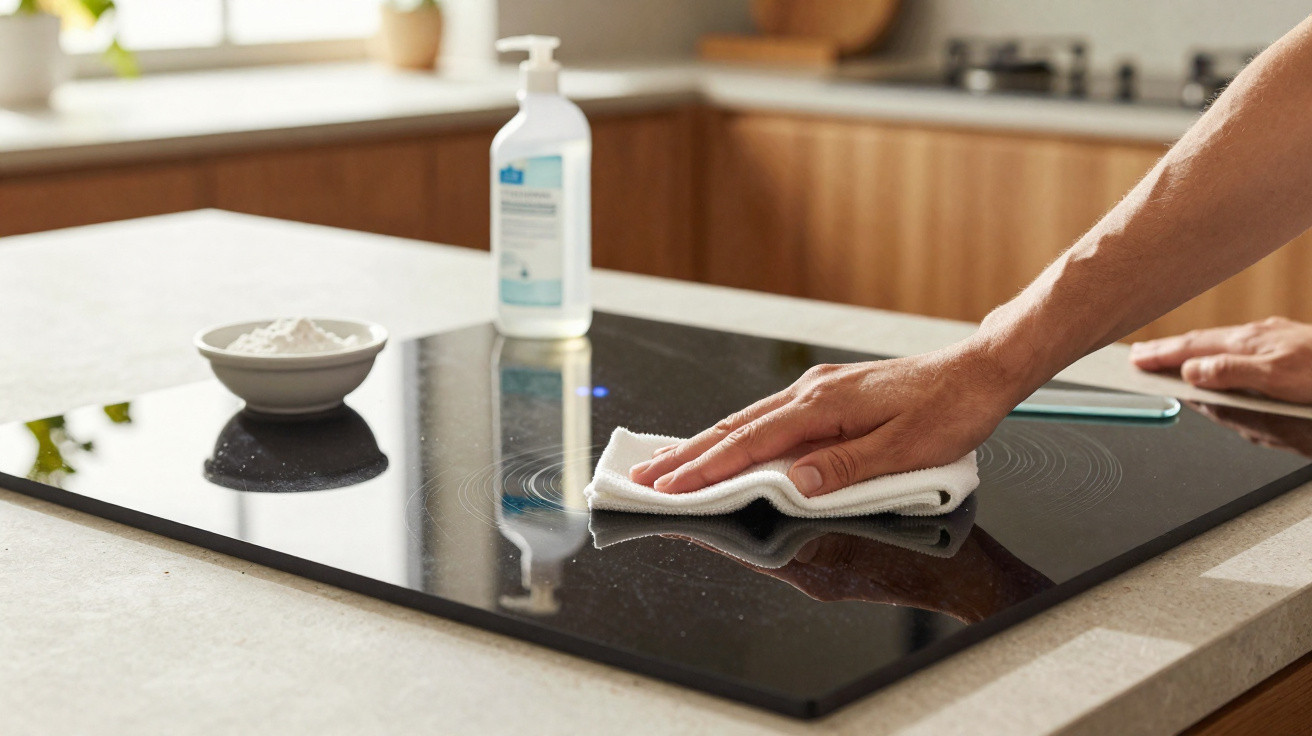
The first stage is not especially exciting, but it is essential: a thorough clean. This is not the usual quick wipe after a meal, but a proper reset. Begin with the cooktop completely cold. Use a specialist glass-ceramic cleaner, or make a paste from bicarbonate of soda and a few drops of water. With a soft cloth, spread it gently over the marked area.
Next comes the crucial part: leave the product in place. A few minutes will allow residue to soften. Hold a dedicated glass scraper nearly flat against the surface, with the blade at roughly 30 degrees, then move it in straight lines. Do not press as though you are stripping paint. Wipe the area, rinse it and only then inspect the mark again in good light. At this point, many supposed scratches have already vanished.
The second stage is polishing with a gentle abrasive. Put a small amount of non-gel white toothpaste or a dedicated glass-ceramic polish onto a soft microfibre cloth. Work it over the scratch in small circular movements for one or two minutes, then wipe it away and check the result. If necessary, repeat carefully.
This is the point at which many people make matters worse, either by giving up too soon or by being too aggressive. They reach for wire wool, bathroom scouring powder or the abrasive green side of a sponge. That is when a recoverable surface can become permanently dull. Patience often works better than force on glass-ceramic.
The third stage is to refine and protect the finish. Once the mark has faded, wipe across the whole area using a clean microfibre cloth and a few drops of white vinegar, then dry it fully. If you own a glass-ceramic maintenance cream, spread on a thin layer and buff it until the surface returns to its nearly mirror-like shine.
“I was convinced I’d need a new cooktop,” says Julien, who rents a small studio in Lyon. “After three rounds of gentle polishing and a proper cleaner, 80% of the scratches I saw the first day basically vanished. The rest only show if you crouch down and go hunting for them under direct light.”
- Choose a dedicated glass-ceramic cleaner or a mild paste, rather than harsh scouring powders.
- Only work on a cold surface, and fit a new razor blade in the scraper.
- Polish in small circles and assess the progress in good light between applications.
- Stop once the mark has faded, so that you do not over-thin the surface.
- Complete the process with a protective cream for a smooth, almost “new” finish.
A cleaner cooktop and a more relaxed approach to cooking
After following these four steps, an interesting change often takes place. The cooktop is not simply smoother: you also become more conscious while cooking. You start spotting rough edges on pans, hesitate before sliding a heavy pot over the glass and wipe up small sugar spills immediately instead of leaving them until “later tonight”.
Of course, nobody manages this every day. Life gets chaotic, dinners run late, children cry and sauce boils over. New marks on the surface are inevitable. But understanding that many can be reduced or removed replaces panic with a sense of care. You are no longer powerless whenever a small accident happens.
| Key point | Detail | Value for the reader |
|---|---|---|
| Identify the mark | Tell the difference between residue or transfer marks and a genuine deep scratch | Avoid unnecessary worry and select the appropriate treatment |
| Use gentle abrasives | Toothpaste or dedicated polish, together with microfibre and a scraper | Restore a smoother, shinier finish without causing damage |
| Change daily habits | Lift rather than slide, clear spills promptly and inspect pan bases | Reduce future scratches and prolong the cooktop’s life |














Comments
No comments yet. Be the first to comment!
Leave a Comment