The smell reached me before anything else: that slightly bitter, charred note that signals dinner has gone from “mmm” to “oh no”.
I had looked away from a pan of rice for what, honestly, cannot have been more than a minute. When I rushed back to the hob, the base of my stainless steel saucepan appeared to have been coated in black tar with superglue. Cold water made no difference. Washing-up liquid simply skimmed over it, utterly useless. Standing there with a wooden spoon, I was already having the usual private argument: soak it for three days, or discreetly throw it away and claim it split?
We all know the feeling when one brief phone scroll leaves an otherwise decent pan looking beyond saving. The embarrassment is not really the burnt meal; it is knowing you are about to scrub like a Victorian scullery maid to make it even remotely presentable. This time, though, I did not. A teaspoon of one inexpensive powder removed the entire grim mess as though it had never existed. The surprising thing was not that it worked, but that nobody had mentioned it earlier.
The day I almost abandoned my favourite pan
This particular pan carries a history. I bought it in my early twenties, when I decided I had finally outgrown peeling non-stick coatings and suspiciously lightweight saucepans. It has survived house shares with unreliable ovens, moves up far too many stairs, and at least three ill-fated homemade caramel experiments. It is not luxurious, but it has always felt like one adult decision I have kept in my kitchen ever since.
That was why I was so irritated with myself after badly scorching its base while making an entirely standard one-pot dinner. The food was fused to the bottom so darkly that it almost gleamed: the sort of stain that says, “Congratulations, you now own a dedicated pan for boiling eggs only.” I filled it with hot soapy water, walked away, returned, scraped, muttered, and gradually accepted the inevitable. You know the sensation: this will take the whole evening and probably remove some skin from your knuckles.
Honestly, nobody properly deep-cleans stainless steel every day. Most of us rinse, swipe, stack and carry on with everything else. Serious restoration is supposedly for weekends that never materialise. So when a friend sent me a photograph of her own pan catastrophe and casually wrote, “Just use baking soda, you muppet,” I nearly laughed. Could one teaspoon of the stuff I scatter at the back of the fridge to absorb odours really repair this blackened crater? Surely not.
The teaspoon that made the difference
Inexpensive cupboard powders tend to sit quietly occupying space until somebody reveals what they can actually do. I searched through the cupboard and found the slightly battered cardboard box: baking soda, bicarbonate of soda, that modest white powder your nan probably used with more confidence than any of us. I had used it for fluffier pancakes, banana bread and deodorising smelly trainers. Cleaning ruined pans had never occurred to me.
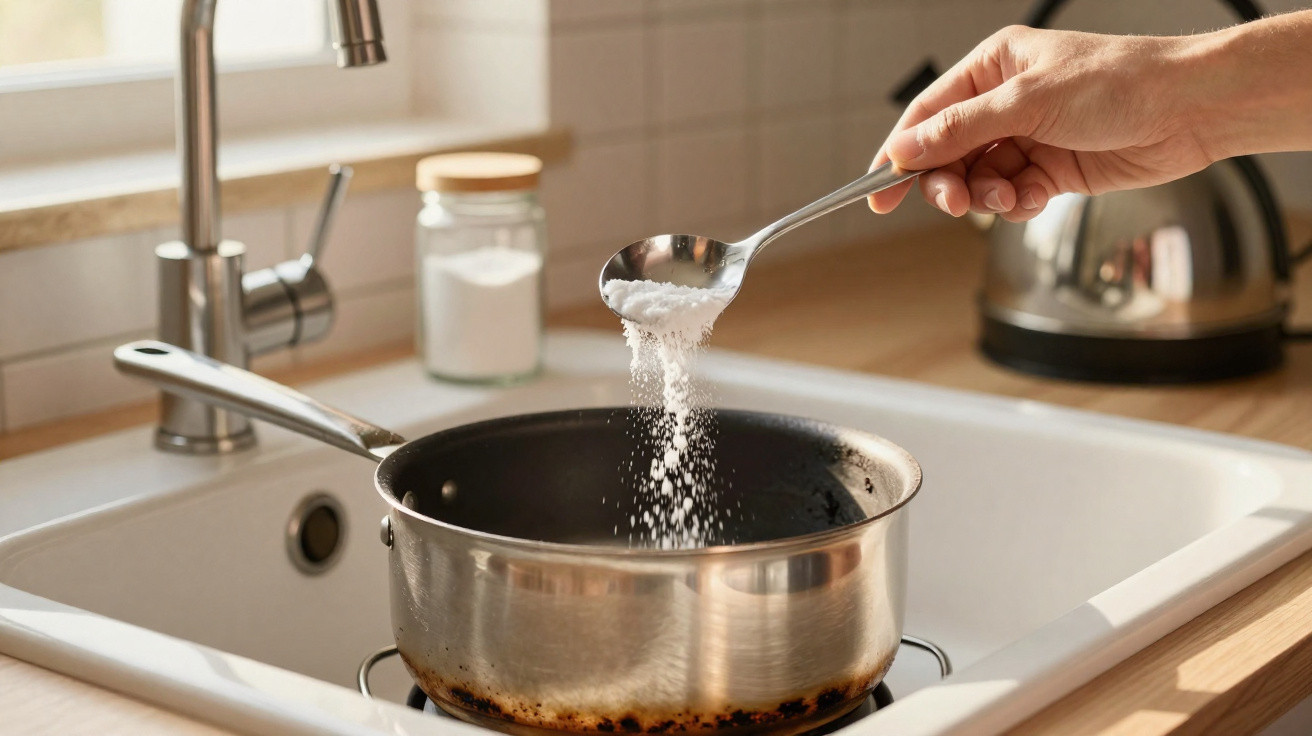
Still, curiosity paired with mild despair can be remarkably persuasive. I poured a shallow pool of hot water into the burnt pan, enough to cover the scorched base, and scattered roughly a teaspoon of powder across the damage. There was a gentle fizz around the edges, nothing like the dramatic volcanoes from school science lessons, more a tiny exhale of relief. The smell changed too: less burnt toast and more lightly metallic steam. I left it there, fully expecting the same obstinate black coating to be waiting for me later.
Ten minutes afterwards, the water had become cloudy and a little murky. When I pushed a wooden spoon against the base, the burnt layer actually shifted. It did not break away in hard flakes, but loosened into soft, sludgy patches, as if the pan had finally decided to release its grievance. I emptied the water, passed a soft sponge around the interior, and watched with quiet disbelief as the marks came away without any heroic scrubbing. One teaspoon. No elbow grease. My pan looked… fine. Almost smugly fine.
What is actually happening in the pan?
I am not a chemist, merely someone who has burnt more dinners than I would like to admit, but the reasoning is strangely comforting. Baking soda is mildly alkaline, while much of that crisp, stuck-on food residue is acidic or breaks down in gentle alkaline conditions. With heat and a little time, the powder softens the carbonised pieces that would normally cling on for dear life. You are not dissolving the metal; you are simply convincing the burnt food that it no longer belongs there.
The real magic is realising you do not need to go after cookware with a scourer as though you are sanding floorboards. Stainless steel is durable, but each aggressive scrub leaves a small scratch: a minor insult to the smooth finish that appealed to you in the shop. One teaspoon of a cheap cupboard staple brings less guilt, less damage and fewer evenings bent over the sink wondering why adulthood requires so much soaking.
How to use baking soda on burnt stainless steel
The first time, naturally, I made it more complicated than necessary. I weighed the baking soda, questioned how hot the water should be and wondered whether a special sponge was required. The best part of this method is that it has no interest in your perfectionism. All it needs is some heat, some time and an unremarkable white powder.
The straightforward method
Begin with an empty pan. Remove any loose burnt food; there is no need to be gentle at this stage. Add enough hot tap water to cover the stained patch comfortably. Set the pan on the hob, bring the water to a gentle simmer for a few minutes, then switch off the heat. Sprinkle about one teaspoon of baking soda over the water and watch it puff and swirl as it drops to the base.
Then leave it alone. Make tea. Scroll without purpose. Wait at least ten minutes, or longer if the stain is genuinely apocalyptic. On your return, gently move a wooden spoon or soft spatula across the bottom. You will notice the resistance easing. Discard the cloudy water, then wipe the pan using a non-scratch sponge and a small amount of washing-up liquid to see how much has lifted already. Particularly stubborn patches may require a second teaspoon and another brief soak, but you are no longer battling the pan.
For a large pan or a broad burnt area, you can increase the amount to a tablespoon of baking soda. Even so, there is something especially pleasing about knowing that one teaspoon can correct an entire evening’s mistake. It is modest, inexpensive and unexpectedly forgiving, which is more than most kitchen accidents can claim to be.
The quiet embarrassment of burnt pans
There is something particularly humbling about offering someone tea while a blackened pan sits soaking accusingly beside the sink. It can feel like an admission: I was distracted, careless, not quite the capable adult suggested by the polished pots on the rack. We often conceal cooking’s messier moments - the failures, stuck-on bits and overboiled disasters - as if good food appears without any casualties.
But burnt pans are perhaps the most honest evidence that life has continued beyond the hob. The baby cried, your boss emailed, a parcel arrived, or your mind simply drifted elsewhere. The pan has no idea that you were trying. It records only the outcome, in thick brown rings on its base. That is why this little baking soda trick feels like more than a cleaning tip. It allows you to make a mistake while keeping the kitchen tools you care about.
Everyone owns one item of cookware they are a little embarrassed by: the saucepan that always looks “a bit off”, the frying pan with a permanent shadow, or the roasting tin that never appears when guests visit. Quietly reversing those marks with a gentle, inexpensive powder feels unexpectedly freeing. There is no need for a special £12 miracle paste in a branded tub. The answer is probably already yours, ignored on the third shelf.
Why stained cookware is hard to let go
There is an emotional element too. We retain battered pans much as we keep chipped mugs and slightly warped chopping boards. They have seen things. They have survived flatmates, relationships, diets and passing bursts of enthusiasm. Yet every new brown ring can bring a small amount of shame, like a silent reminder of each time we “failed” to multitask.
Baking soda does not erase those memories, only the visible proof. It gives stainless steel a reset without removing its history. Sometimes, that’s all we really want – not perfection, just the chance to start again without feeling like we’ve ruined something permanently.
Beyond burnt marks: other helpful kitchen fixes
After seeing what that teaspoon could achieve, it felt as though I had put on new glasses and noticed every little thing that had been quietly irritating me. There were heat-tinted rainbow rings on the base of my frying pan, pale tea marks inside my favourite mug, and a baking tray that always seemed to have survived a minor explosion. It turned out that all of them were surprisingly manageable with the same low-effort approach.
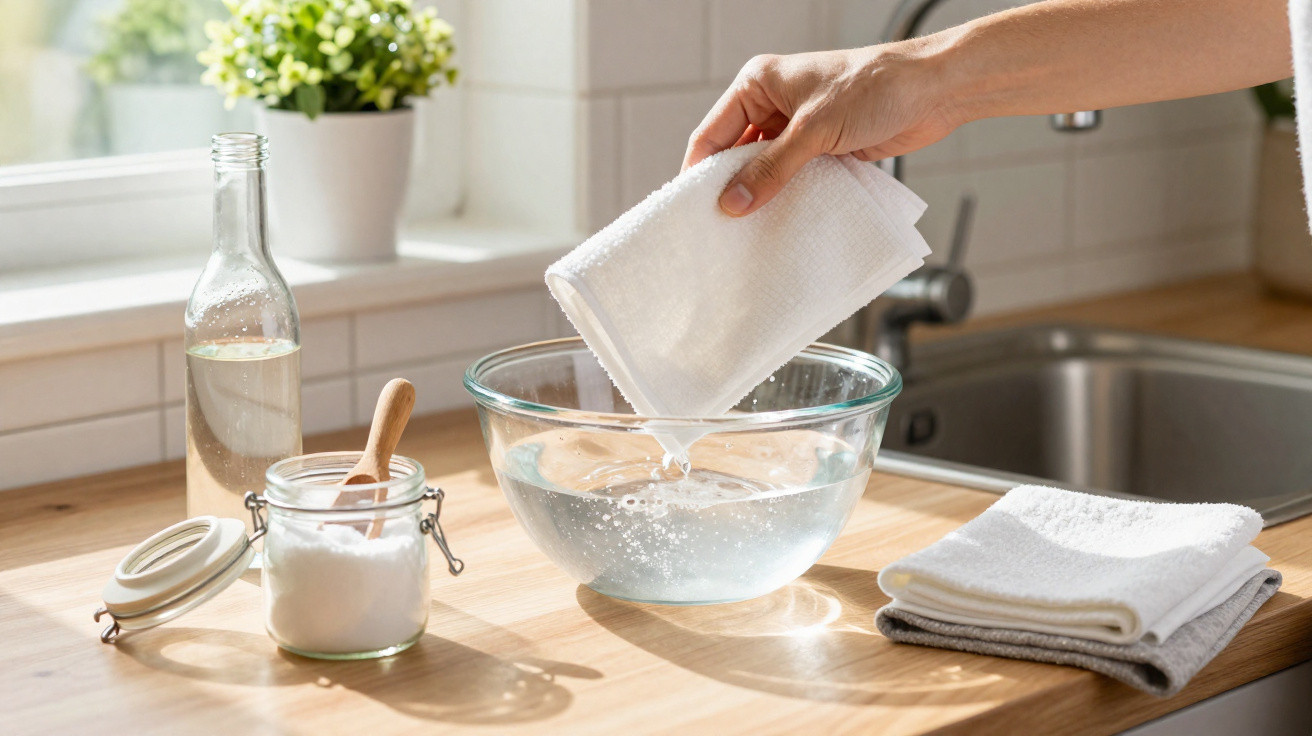
A paste made from baking soda and a splash of water, gently rubbed over a cooled stainless steel surface, removes cloudy patches and unexplained smudges that ordinary soap leaves behind. Allow it to sit for several minutes, then wipe it off with a damp cloth. The same paste transforms brown rings in mugs and teapots into marks that rinse away within seconds. Nothing needs to be attacked with brute force; the powder does the hard thinking for you.
There is a soothing pattern to the process: sprinkle, wait, wipe. No frantic scouring, aching wrists or fear that you have shortened your pan’s life by ten years. It is quietly rewarding, like finally deleting a pile of old emails: small and unglamorous, but somehow you feel lighter once it is done.
The boundary between care and obsession
There is, naturally, a risk of going too far in the opposite direction. Once you realise how easily stainless steel can be rescued, it becomes tempting to pursue an impossible mirror finish. You might find yourself at the sink on a Tuesday evening polishing the underside of a saucepan as though it were a show car. That route leads to madness, and probably irritation with anyone else who dares to cook using “your” pan.
This teaspoon method is not intended to make us all obsessive. Its purpose is to reduce the distance between “I’ve ruined it” and “I can fix that after dinner”. You need not panic whenever something catches on the bottom. You do not have to guard the hob like a hawk because you fear cosmetic damage. Knowing that an easy reset sits in the baking cupboard changes the emotional experience of cooking altogether.
Burning happens. It happens to skilled cooks, distracted parents, exhausted students and everyone else. The question is whether that moment ends with a bin bag and a guilty replacement purchase, or a one-minute sprinkle followed by a quiet, almost smug feeling of control. You deserve the second option.
Why this small trick stays with you
One week after my baking soda revelation, I was almost oddly calm when another pan began to catch. There was no dramatic gasp and no internal speech about how I “always do this”. I lowered the heat, completed the cooking and, later, once the kitchen was quiet and the plates had been stacked, filled the pan, boiled the water and reached for the same humble box. One teaspoon, a wait, a wipe. Finished.
There was something reassuring about it. Not because the saucepan looked factory-new - it still showed the faint, truthful signs of a well-used piece of equipment - but because panic had been replaced by a small ritual I could depend on. That is what most of us want from everyday hacks: not miraculous solutions, but a little kindness built into life’s dull tasks. A way of telling ourselves, “You messed up, but that doesn’t mean you’ve broken everything.”
So yes, it may sound almost silly, perhaps too minor to be worth mentioning: a teaspoon of baking soda can lift burnt stains from stainless steel without scrubbing. But that tiny act contains something larger: an affordable way to look after the things you already own, a gentler response to your own mistakes, and the quiet satisfaction of seeing a pan that looked ruined slowly return to itself, as though it were shaking off the hardest part of your day and saying, without fuss, “Let’s try again tomorrow.”













Comments
No comments yet. Be the first to comment!
Leave a Comment