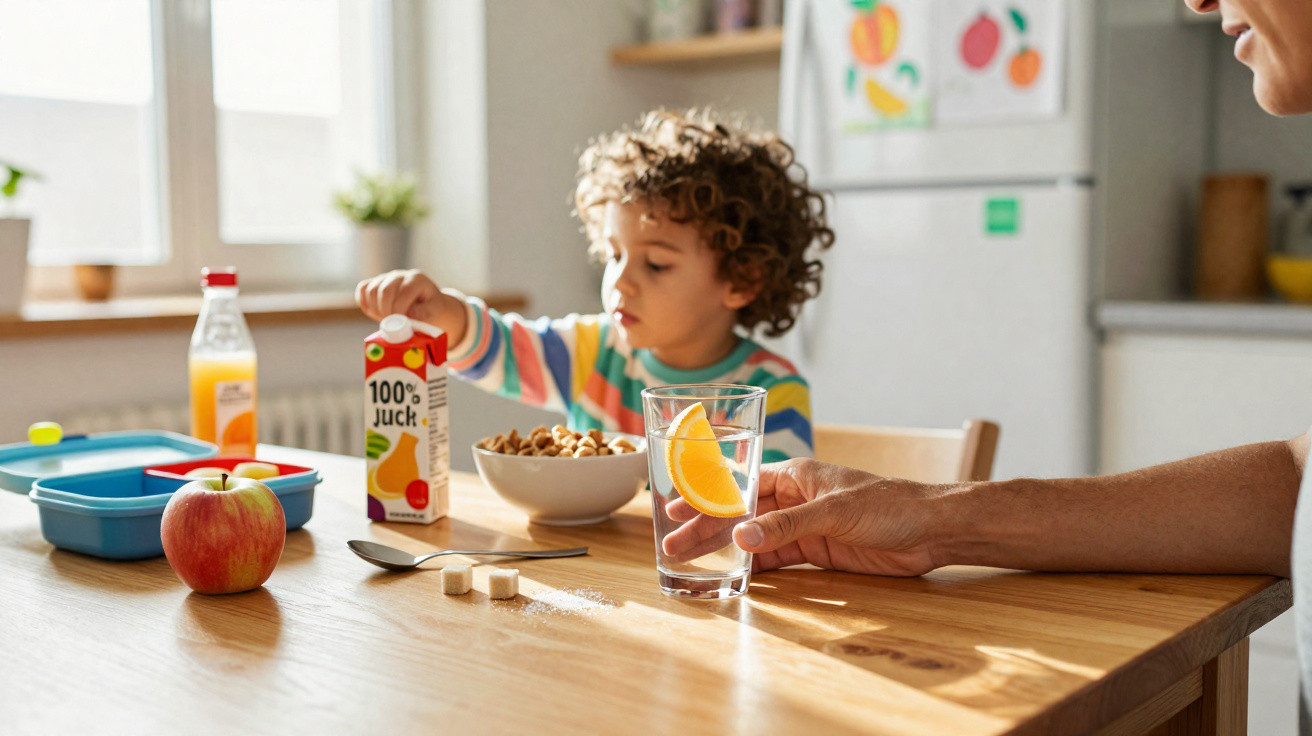
Parents often reach for orange juice or hot chocolate at breakfast, hoping to give their child something beneficial. A nutrition expert now cautions that these routines frequently contain a substantial excess of liquid sugar, which can place strain on a child’s body early in the day – affecting energy, concentration and, in the long term, health.
When the day begins with a sugar spike
Orange juice, multivitamin juice and instant hot chocolate are considered “better” than fizzy drinks or cola in many households. After all, the packaging features fruit or milk, often alongside claims such as “no added sugar” or “rich in vitamin C”.
This is precisely where the expert’s criticism begins: although these drinks provide vitamins, they can also contain very large quantities of readily available sugar. Unlike the sugar in a piece of fruit, it is consumed in liquid form.
“Liquid sugar passes through the body almost unchecked – children can drink more than is good for them without realising it.”
According to the nutrition adviser, one large glass of orange juice at breakfast may already account for most of a child’s recommended daily sugar intake. Add hot chocolate, sweet cereal and spreads, and the day is often already overloaded with sugar before lunch.
What the term “free sugar” means
The key point is this: even when a carton says “100% juice, no added sugar”, the drink remains a sugar bomb. The sugar naturally present in juice is classed as so-called “free sugar”.
Why juice does not have the same effect as fruit
When children eat a whole apple, they chew the fruit and its fibre slows down sugar absorption. This gives the body time to respond and allows a feeling of fullness to develop.
Juice works differently:
- Almost all of the fruit fibre is missing.
- The drink moves through the stomach and intestines very quickly.
- Blood sugar rises sharply, then drops again substantially.
The expert explains that free sugar affects the body in the same way as “ordinary table sugar”, even if it originally came from an orange. What matters is not where the sugar came from, but the form in which it is consumed.
“No added sugar” does not mean “low in sugar” – juice in particular naturally contains a great deal of sugar, just without spoonfuls being added to the glass.
How much sugar is really in a child’s cup?
The World Health Organization recommends only a very limited daily amount of free sugar for children. The expert gives an example: a large glass of orange juice can already provide around 18 grams of sugar. Children are often advised to have no more than approximately 25 grams per day, meaning that breakfast alone can use up most of the daily limit.
Hot chocolate is no better. In many products, sugar appears first on the ingredients list. This means it makes up the largest proportion of the powder.
- In some cocoa powders, sugar is the main ingredient.
- Cocoa itself often appears only second on the list.
- What ends up in the cup is essentially sweetened flavouring with a little cocoa taste.
Stirring two or three well-heaped teaspoons of powder into a mug of milk effectively serves several spoonfuls of sugar – in addition to the milk’s naturally occurring sugar.
Why liquid sugar does not fill children up
Another issue is that liquid sugar provides very little fullness. While a breakfast rich in wholegrains keeps children going for longer, sugary juice simply rushes through the body.
These sugar spikes can result in:
- A rapid rise in blood sugar levels.
- A short burst of energy, during which children may seem overexcited.
- A swift fall in blood sugar, known as a tendency towards low blood sugar.
- Tiredness, difficulty concentrating and cravings for sweet foods.
“Starting the day with a sugar spike lays the foundation for constant ups and downs in energy and mood.”
Teachers often report that children are already restless or lethargic by around nine o’clock in the morning. Morning nutrition plays a far greater part in this than many parents realise.
What children should drink in the morning instead
The expert is not suggesting anything revolutionary, but rather a classic option that is often overlooked in everyday life: water.
Water as the default, juice as the exception
After a night’s sleep, the body primarily needs fluids rather than a load of sugar. Water is the best choice: it rehydrates without putting stress on the pancreas.
Parents can follow a simple principle:
- Default drink: water, unsweetened tea or lightly flavoured water, for example with slices of lemon or berries.
- Juice: no more than one small glass a day, ideally diluted.
- Hot chocolate: occasional and deliberate, preferably lightly sweetened or made with less powder.
The nutrition expert emphasises that this is not about banning everything. A small juice can be perfectly fine – the deciding factors are quantity and frequency. Switching from a large glass to a small one, or mixing juice with water, noticeably reduces the sugar load.
Unsweetened alternatives that children genuinely enjoy
Many parents recoil when they hear: “Water only!” They expect protests at the breakfast table. In practice, however, children tend to adapt surprisingly quickly to less sweetness when the approach is consistent but relaxed.
Everyday tips for reducing liquid sugar
A number of strategies work well for families:
- Choose diluted juice rather than pure juice, gradually increasing the proportion of water.
- Use colourful drinks bottles, which can make water more appealing.
- Serve unsweetened herbal or fruit tea lukewarm.
- Offer chicory drinks or malt coffee to older children, with a little milk and no sugar.
- Establish routines: “water first”, with juice reserved for particular days or weekends.
“Taste can be trained – reducing sweetness gradually shows that children will naturally ask for less sugar over time.”
Parents can also adjust breakfast as a whole: more wholegrains, nuts, yoghurt with no added sugar and fresh fruit help children stay full for longer and make them less likely to want extra sweetness.
Long-term effects: more than “just a little sugar”
Liquid sugar does not only affect weight. It can also influence teeth, metabolism and eating habits. Children who regularly have sweet drinks from an early age face a higher risk of tooth decay, concentration difficulties and an unhealthy relationship with sweet foods later on.
Nutrition specialists point out that the body is less able to “count” liquid calories. Children often drink considerably more than they would eat if the same amount of energy were placed in front of them as solid food. This can contribute to excess weight without children feeling “properly full”.
The combination with other sweet foods also matters. If juice is accompanied by sweetened cereal, spread and a sugary snack in the lunchbox, sugar consumption can quickly add up to levels well beyond the recommendations.
How parents can make the change step by step
A drastic change often leads only to arguments. Gradually adjusting habits is more practical. One possible plan is:
| Phase | Morning drinks | Aim |
|---|---|---|
| Weeks 1–2 | Half a glass of juice, half a glass of water, less cocoa powder | Children become accustomed to less sweetness |
| Weeks 3–4 | Diluted juice with a high proportion of water, with water as the default | Thirst is mainly quenched with water |
| From week 5 | Water or unsweetened tea, with juice only occasionally and in small quantities | Sugar from drinks is permanently reduced significantly |
It is helpful to involve children. They can choose their own drinks bottle, help select fruit for water or have a say in the tea. Parents who explain that sugar tastes nice but can be tiring for the body in large quantities often find that children respond far more thoughtfully than expected.
Ultimately, this is not about strict diet rules, but about making daily life healthier without much effort. When water and unsweetened drinks become the norm, while juice or hot chocolate remain an occasional treat, things quickly become easier – for children, parents and blood sugar levels.










Comments
No comments yet. Be the first to comment!
Leave a Comment