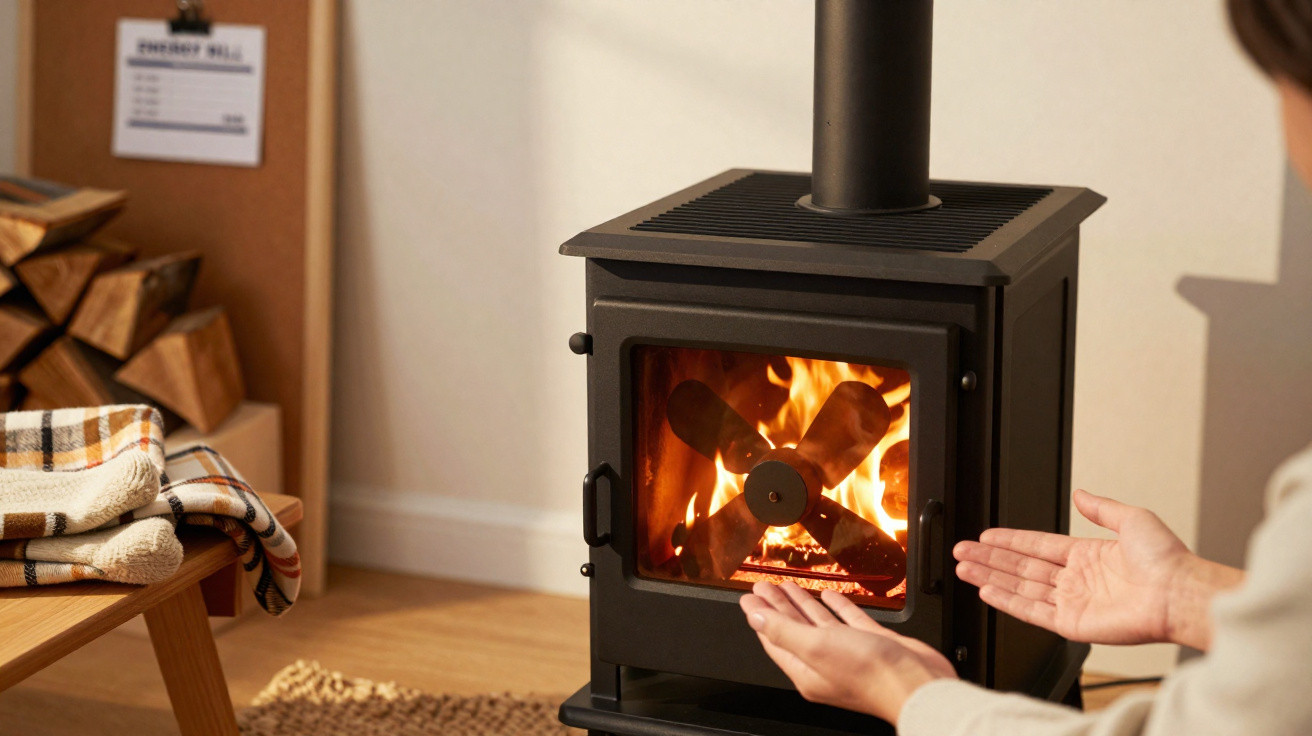
A compact piece of equipment could transform how comfortable your home feels this season.
When heated air gathers beneath the ceiling, your feet can end up feeling the cold. Bringing that warmth back down into the occupied part of the room can quickly improve comfort.
Why this heat-powered fan stands out
Lidl is introducing a compact heat-powered stove fan under its Tronic brand in November, at €19.99. It needs no socket and leaves no cables trailing across the fireplace area. Simply position it on a hot surface or attach it to the flue, and it begins circulating warmth through the part of the room where people sit.
"It kicks in at roughly 65°C and runs without drawing a single watt from the mains."
Its purpose is straightforward: it tackles the cold patches near floor level by mixing otherwise static layers of warm and cool air. This can mean warmer legs while sitting on the sofa, a more pleasant play space for children on a rug, and less need to turn up the stove simply to compensate for a cool sensation.
How the thermoelectric part works
A solid-state module is positioned between the fan’s heated base and its cooler upper section. This difference in temperature generates a small electrical current that powers the motor. As the stove temperature rises, the current becomes stronger and the blades rotate faster, while remaining within the appliance’s safe operating limit.
The models appearing in Lidl stores begin operating at around 65°C and generally work with base temperatures of up to about 345°C. Their aluminium and steel construction disperses surplus heat, shields the electronics and keeps the fan light enough to remain stable on top of a stove.
"Think of it as a heat recycler: it doesn’t add energy, it spreads the heat you already paid for."
Which Lidl stove fan to choose and where to place it
Lidl offers two versions. One is designed to stand directly on the stove top, while the other attaches to the flue using a supplied band. Both feature aluminium blades measuring roughly 18 cm, a practical size for most living rooms.
| Version | Position | Main benefit | Best suited to |
|---|---|---|---|
| Free-standing | On the stove’s hot plate | Simple placement with no drilling required | A stove with a broad, unobstructed top in a central location |
| Flue clamp | On the stove pipe | Accurate airflow direction while saving space | Inset stoves or appliances close to a wall, where direction is important |
- Ensure the surface has reached a minimum of 65°C before fitting the fan.
- Point the airflow towards seating or a desk rather than a wall or curtain.
- Keep 20–30 cm clear in front of the blades to prevent stagnant areas.
- Wear a heat-resistant glove when moving or removing the fan.
- Take it off once the stove has cooled, preventing thermal shock caused by abrupt temperature changes.
"Price spotted: €19.99, reference 100397513, under Lidl’s Tronic brand. Materials: aluminum and stainless steel. Availability varies by store."
Comfort you can notice, savings you can measure
The earliest improvement is usually felt near the floor. Rather than being warm at ceiling level but chilly around the ankles, the room feels more balanced. Since the air is being mixed, the same stove setting can reach a comfortable feel more quickly. Once heat stratification is reduced, many households say they use less wood or fewer pellets.
Results in real homes differ because they depend on room dimensions, ceiling height, insulation and the stove’s position. Even so, household records of log and pellet use frequently fall within a 7% to 20% reduction after adding a fan. High-ceilinged rooms and difficult layouts often benefit most, as air circulation achieves what the stove cannot manage on its own.
"Household tests often land in the 7–20% savings band when mixing trims the hot‑ceiling, cold‑floor gap."
Does it really “double” the warmth?
This expression refers to the warmth people feel in the living area, rather than an increase in the stove’s actual heat output. A quick test can show the effect. Put one thermometer near the floor and a second at 1.5 m. Run the stove for 30 minutes without the fan and record the difference, then repeat the test with the fan in place. In many rooms, the vertical variation falls from 3–5°C to around 1–2°C. The available heat becomes more useful because it reaches occupants instead of remaining near the top of the room.
In a small lounge, this circulation can make the same fire feel as though it “works twice as well”, since warmth now reaches every corner. A large open-plan room should still see a noticeable improvement, although the fan’s direction and its distance from the seating area will affect the outcome.
Practical checks before you buy
- Noise: a gentle rush of air is normal. If it whistles, reposition the fan or move it away from surrounding edges.
- Size: blades of around 18 cm will generally fit standard stove tops; for clamp versions, check the available space around the flue.
- Temperatures: do not exceed the stated maximum base temperature, normally about 345°C. Avoid particularly hot spots that may overheat the module.
- Compatibility: the fan can work with wood-burning stoves, many pellet appliances and inserts, provided there is an accessible flat, hot metal surface.
- Guarantee: Lidl generally includes a manufacturer’s warranty with these special offers. Check the details displayed in store.
Short playbook for best results
- Send the airflow across the main seating area or towards a reading corner.
- Block clear draughts using draught excluders and new window seals, helping to retain the mixed air indoors.
- For pellet appliances, choose the hottest safe metal surface and follow the stove manufacturer’s instructions.
- Place a thick rug over tiled or stone flooring to reduce the cold radiating from below.
- Clean dust from the blades each week; deposits restrict airflow and may discolour when heated.
- Fit a carbon monoxide alarm and maintain adequate ventilation in every room with solid-fuel heating.
Extra context for savvy heaters
A ceiling fan set to reverse at a low speed can support the same objective. It moves warm air down the walls without creating a noticeable draught. In a living room with a high void or mezzanine, combining a stove fan with a ceiling fan can help balance temperatures between levels.
For an easy way to assess the benefit at home, record your fuel use for a week with the fan and another week without it in comparable weather. Reducing consumption by one log on a six-log day represents a cut of roughly 15–20% for that period. The effect can become significant during a lengthy cold spell.
There are some precautions to bear in mind. Do not place the fan on glass or a decorative plate that is not designed for high temperatures. Keep suitable distances from soft furnishings. For enamel surfaces, consult the manual or place a thin metal pad beneath the fan to protect the finish. Where a flue becomes extremely hot, clamp models must be positioned carefully so that the module stays within its operating limits.
Many households also overlook a useful comfort adjustment. Once the fan has evened out the room temperature, reduce the stove’s air supply slightly. You can maintain the same comfort with a slower, cleaner burn: less soot on the glass, fewer refills and a more relaxed evening beside the fire.












Comments
No comments yet. Be the first to comment!
Leave a Comment