
Some kitchen tools stand the test of time. Others can gradually break down into the food you eat.
New laboratory evidence and increasing regulatory scrutiny have put common kitchen equipment in focus. Heat, wear and acidic ingredients may draw chemicals from some materials into food. Replacing a few products can reduce contact with PFAS, microplastics and metals without disrupting your budget or favourite meals.
What researchers are warning about
PFAS, frequently referred to as forever chemicals, were valued for their resistance to water and heat. However, they do not readily break down in people or the environment. Exposure has been associated with increased risks of several cancers, thyroid disruption and a reduced vaccine response. Microplastics and metals raise comparable concerns: even very small amounts can accumulate, particularly through frequent use at high temperatures.
Heat, friction, and acidity act like a chemical crowbar. If a utensil’s weak, your dinner becomes the extraction site.
Seven kitchen items to replace now
Black plastic cooking utensils
A shiny black spatula or ladle may be made from recycled plastic with an unknown history. Testing across several markets has identified unwanted additives and even heavy metals in black utensils. High cooking temperatures can accelerate their transfer into oils and sauces. For regular cooks, this can become a consistent addition to each meal.
Better choices: use stainless steel for searing, properly finished hardwood or bamboo for gentle stirring, and high-grade silicone with nonstick cookware.
Plastic cutting boards
Every cut with a knife can remove invisible plastic fibres. These particles stick to damp ingredients before travelling into the pan. Plastic boards also develop cuts that can harbour bacteria. Wood works in another way: it can self-heal, take in moisture and inhibit microbes if cared for correctly.
Better choices: select end-grain wood for everyday preparation; keep separate boards for raw proteins and ready-to-eat food; replace boards once grooves become deep.
Low-grade silicone bakeware
Silicone products are not all made to the same standard. Items with excessive filler or poor curing may release siloxanes and, in certain cases, PFAS additives. Warning signs include a pronounced chemical odour, an oily film following washing, and thin, floppy sides that brown food unevenly.
Better choices: choose 100% silicone that keeps its form and is labelled LFGB-grade or platinum-cured. Unless the manufacturer explicitly permits more, keep use below 220°C.
Scratched Teflon and other PTFE nonstick pans
At high temperatures, PTFE coatings can emit more fumes, while scratched coatings may shed flakes. Metal utensils, scouring pads and overheating an empty pan all increase this risk. Replace the pan if it has chips or areas that feel rough.
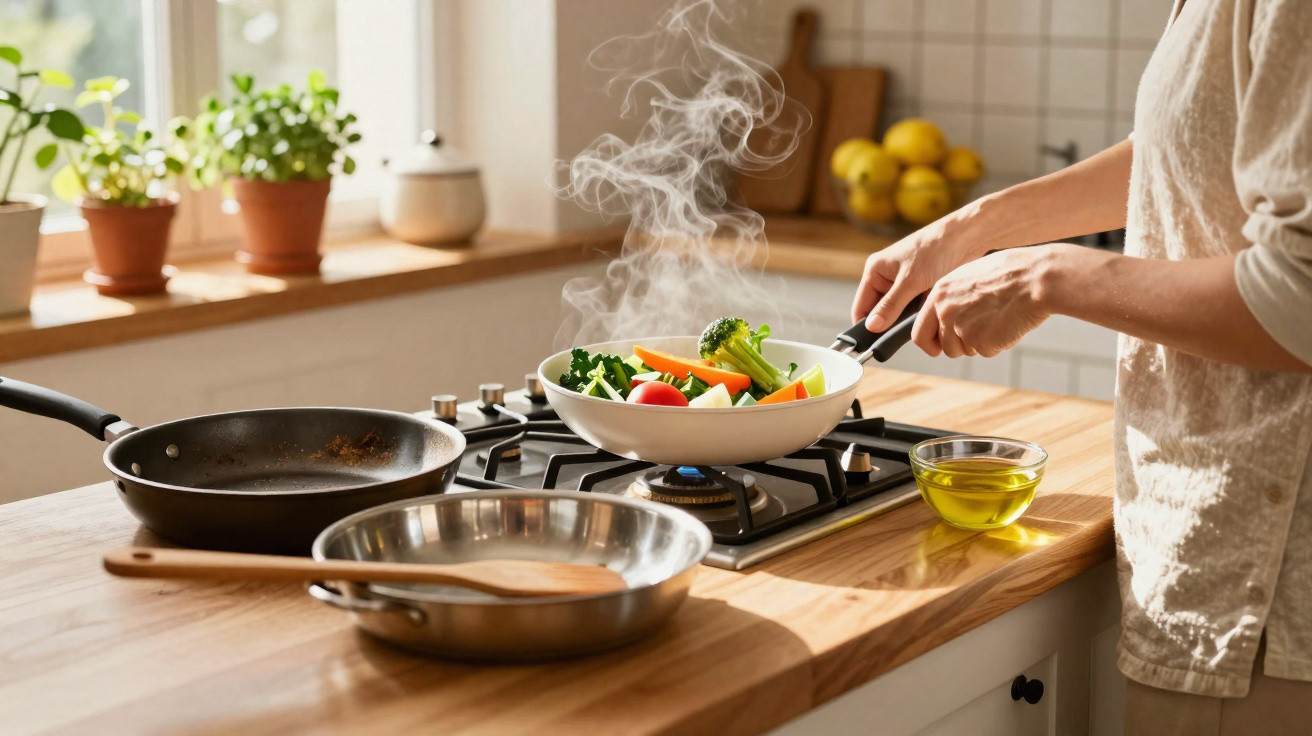
Better choices: use stainless steel for routine sautéing; choose cast iron or carbon steel, once seasoned, for steaks and eggs; or use good-quality ceramic-coated pans for delicate cooking. Medium heat and a little oil help to stop food sticking.
Unlined copper pots and bowls
Bare copper reacts with acidic ingredients, including tomato sauce, wine reductions and citrus glazes. This reaction may transfer copper to your food. Although copper offers excellent heat conductivity, most cooking requires a tin or stainless-steel lining.
Better choices: use lined copper where precise temperature control matters; save unlined copper bowls for whisking egg whites rather than cooking acidic foods.
Plastic electric kettles
Boiling water puts stress on plastic components and seals, which can release microplastics and, in some models, PFAS-related compounds. Heat can also carry volatile substances into the steam. Daily tea and coffee routines can turn minor releases into repeated exposure.
Better choices: opt for stainless-steel or borosilicate-glass kettles. Tip away the first boiled water from a new kettle and descale it routinely.
Unanodised aluminium cookware
Untreated aluminium may leach into acidic or salty foods, particularly during prolonged simmering. Aluminium is widely used, but hard anodising changes its surface to make it more durable and stable. The resulting layer helps prevent scratches and reduces migration.
Better choices: use hard-anodised aluminium, enamelled cast iron or stainless steel for tomato sauces, braises and pickling liquids.
Scratched nonstick, mystery plastics, and uncoated reactive metals are the fastest pathways from utensil to bloodstream.
How to check your kitchen in 10 minutes
- Examine nonstick pans: retire any with chips, blisters or rough areas.
- Press your silicone: after washing, it should be springy rather than chalky or oily.
- Smell your bakeware: a lingering chemical odour after heating for 10 minutes at 175°C suggests poor quality.
- Review cutting boards: replace boards with deep cuts or frayed plastic edges.
- Look inside kettles: lids, viewing windows and spouts made from plastic come into contact with steam; choose pathways made entirely from metal or glass where possible.
- Check copper: cook acidic dishes in lined pieces and use bare copper only for whipping.
Material guide at a glance
| Material | Best use | Heat guidance | Care tip |
|---|---|---|---|
| 304/316 stainless steel | Searing, sautéing, boiling | Safe at high heat | Heat first, then add oil to help food release |
| Cast iron | Steaks, cornbread, roasting | Hob and oven | Season often and dry without delay |
| Carbon steel | Eggs, stir-fries, crêpes | Tolerates high heat | Develop the seasoning and do not soak |
| Hard-anodised aluminium | Evenly heated sautéing and sauces | Medium to high | Use soft utensils and avoid abrasives |
| Borosilicate glass | Baking, storage, kettles | Oven-safe; avoid thermal shock | Let cool gradually; do not use under the grill |
| Enamelled cast iron | Acidic braises, soups | Steady low to medium heat | Use only wooden or silicone utensils |
| LFGB-grade silicone | Muffins, spatulas, mats | Up to the manufacturer’s limit | Remove grease with a hot, soapy wash |
Buying signals that actually mean something
- Look for “PFAS-free” or “PTFE-free” on coatings rather than simply “nonstick.”
- For silicone, seek LFGB-grade or “platinum-cured”, along with thick sides that retain their shape.
- Choose stainless steel marked 304 or 316, with sturdy rivets or welded joins.
- Ensure aluminium pans are clearly described as hard-anodised.
- Pick enamelled cast iron with a chip-resistant glaze, and avoid scratched interiors.
- Select glass or stainless-steel kettles with as little plastic as possible touching water or steam.
Small changes that reduce exposure
Keep temperatures moderate on all nonstick surfaces, and do not preheat an empty pan. Use wooden or silicone utensils with coated cookware. Open a window or use ventilation while searing. Avoid storing tomato sauce or salty brines in reactive metals. Replace chipped enamel and peeling coatings. Until you can replace questionable bakeware, line it with baking parchment.
What to do with risky kitchen items
Do not give worn nonstick cookware or unknown plastics to friends or charity shops. Many local authorities take metal pans as scrap, though it is worth checking their rules for small appliances and mixed materials. For plastic boards and utensils, consult local recycling guidance, as some collections do not accept food-contact plastics. Where recycling is unavailable, move items to non-food jobs, such as mixing craft materials, before eventually disposing of them.
Why this matters beyond one meal
Cancer risk is not determined by one breakfast. It can build through repeated exposure from several sources, including cookware, packaging, dust and water. Replacing seven items reduces a continual source of exposure. Alongside effective ventilation, sensible heat management and safer storage, the benefits build into everyday habits.
Cost-saving replacement plan
Spread replacements over several stages. Begin with a stainless-steel saucepan and a wooden board. Buy a cast-iron frying pan the following month. Change the kettle in the third quarter. By the end of the year, you will have renewed the essentials without putting sudden pressure on your budget-and your food will taste better too.











Comments
No comments yet. Be the first to comment!
Leave a Comment