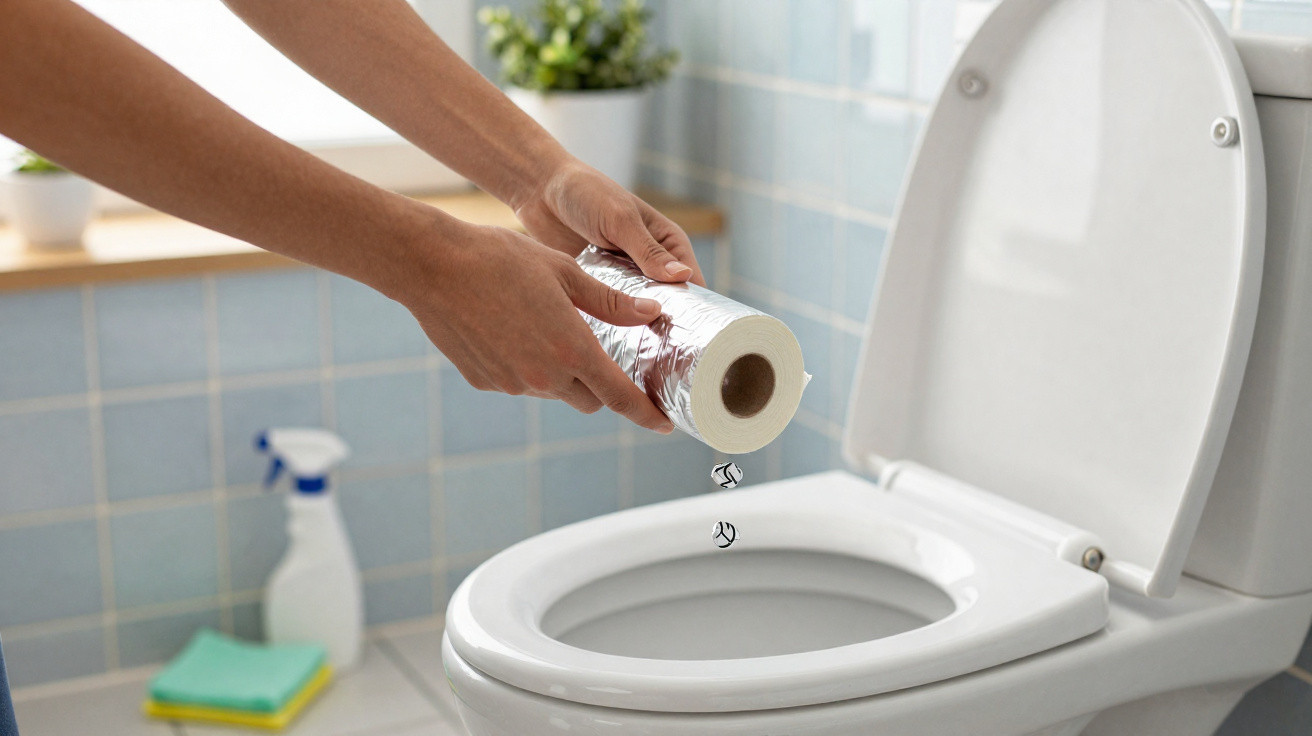
The morning starts, you only want to pop into the bathroom – and are confronted with limescale marks, urine scale and cloudy water.
Frustration instead of freshness.
Many people then reach straight for powerful toilet cleaners, harsh gels and expensive specialist brushes. Yet an ordinary item from the kitchen drawer could make a surprising difference: aluminium foil.
How the aluminium foil trick is meant to work in the toilet
The concept sounds almost too straightforward: place a few balls of aluminium foil in the cistern or directly in the toilet bowl, where they are supposed to help prevent deposits over time. Two effects are repeatedly cited as the reason:
- The metal surface slightly alters the surface of the water.
- Deposits and traces of dirt are less able to stick to the ceramic and the waterline.
“In a toilet, aluminium foil does not work like a cleaning product, but more like a small disruptive factor for limescale and urine scale trying to build up.”
As a result, dirt should be easier to flush away or remove with a quick stroke of the brush. Particularly in hard-water areas, many users report that stubborn rings are less likely to form.
Using the aluminium foil trick in practice
Option 1: Balls in the cistern
With this approach, the foil balls are placed inside the cistern. They sit in the water that is later flushed into the toilet.
- Tear off a piece of aluminium foil roughly the size of an A5 sheet.
- Scrunch it into a ball as firmly as possible, around the size of a golf ball.
- Make 2 to 3 balls in this way.
- Open the cistern and carefully place the balls in the water.
- Replace the lid and continue using the toilet as usual.
The aim is for every flush to pass over the metal surfaces. Some people believe this releases ions into the water that interfere with limescale deposits. There is currently no clear scientific evidence for this effect, although plenty of households report their experiences.
Option 2: Balls directly in the toilet bowl
It is even simpler to use the method in the visible part of the toilet:
- Shape 1–2 smaller balls, roughly the size of marbles.
- Put them in the toilet, preferably at the side or back so that they cannot disappear straight into the outlet.
- Leave them in place for several days and occasionally nudge them with the brush so that they do not “stick” in place.
“Anyone trying the trick should inspect and replace the foil balls regularly, before they break down completely or tear apart.”
What the trick can and cannot do
Aluminium foil is not a replacement for a proper deep clean. However, it may help make new deposits more difficult to form. This is most noticeable when the toilet has just been cleaned and the aluminium foil trick is started afterwards.
Realistic expectations of the effect
Similar observations appear in users’ accounts:
- Less pronounced brown or yellowish rings at the waterline.
- Easier removal of deposits beneath the rim.
- Slightly clearer flush water, particularly where tap water is very hard.
How well it works depends heavily on water hardness, how often the toilet is used and the existing cleaning routine. Those who already clean their bathroom regularly are more likely to find the trick a small everyday aid than a miracle solution.
Aluminium foil in the toilet: benefits, limitations and environmental questions
It is important to consider the downside too. Aluminium foil is made from aluminium, and producing it uses a great deal of energy. Any additional use should therefore be considered carefully.
| Aspect | Advantage | Disadvantage |
|---|---|---|
| Cleaning effort | Deposits are often easier to remove | Does not replace thorough cleaning |
| Cost | Low, as foil is usually already at home | Creates additional foil use over time |
| Environment | May reduce the need for harsh chemicals in wastewater | Aluminium production affects the climate and consumes resources |
| Safety | No direct contact with aggressive cleaners | Loose pieces of foil can block a filter or pipe |
“Anyone using the trick should be mindful of how much foil they use and should not thoughtlessly allow it to disappear down the drain.”
Alternatives that can be combined with aluminium foil
The aluminium foil trick works best as part of a wider routine. Many households also use mild but effective home remedies. Examples include:
- Vinegar or vinegar essence: Reliably dissolves limescale, particularly when left in the toilet bowl overnight.
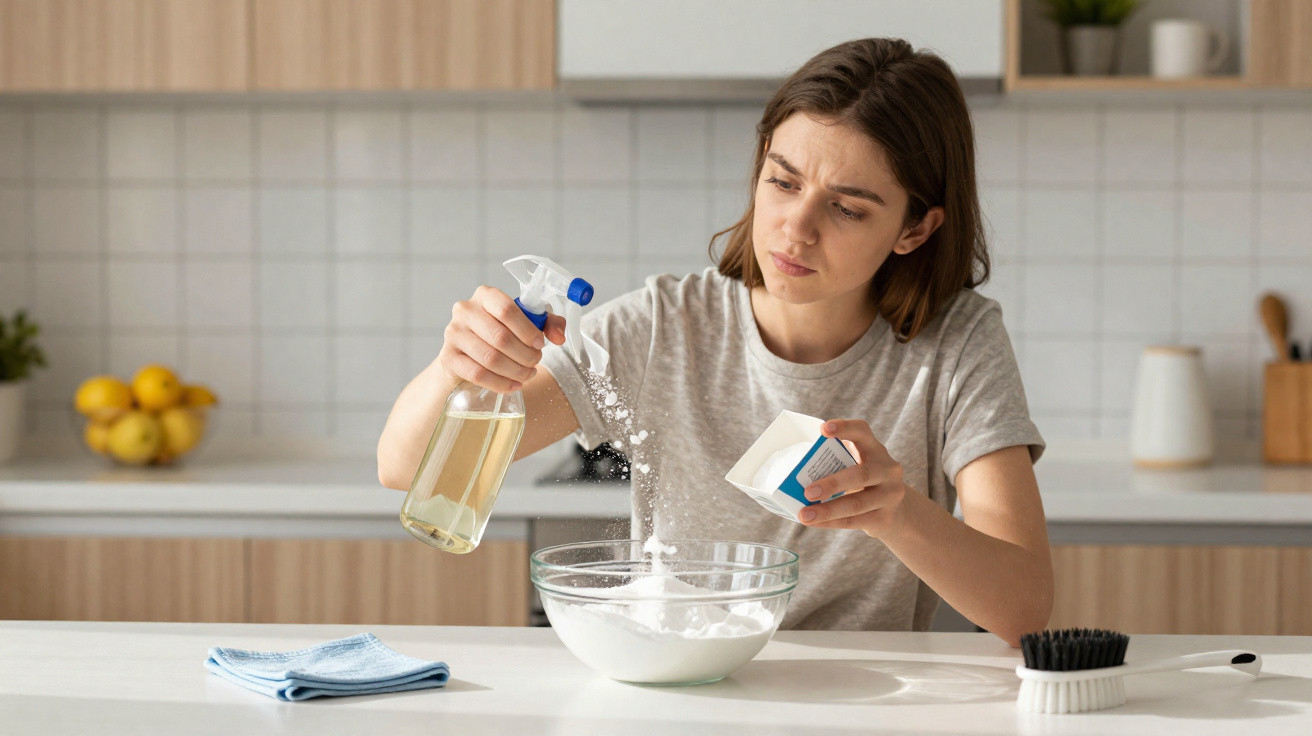
- Bicarbonate of soda or baking powder: Absorbs odours, fizzes when combined with vinegar and supports cleaning.
- Citric acid: Pleasantly scented and effective against limescale; never combine it with bleach.
Anyone who first removes old residue thoroughly with vinegar and a brush, then adds the aluminium foil balls, may benefit from that clean starting point for longer.
How often a toilet really needs cleaning
A common misconception is: “I can see when it is dirty.” In reality, many deposits initially form unnoticed below the waterline or under the rim. Household and hygiene experts generally recommend:
- A thorough clean at least once a week.
- Preferably two to three times a week in households with several people or children.
- Rinsing the toilet brush briefly under water after every use and allowing it to dry.
The aluminium foil trick may extend the time between the most intensive cleaning sessions slightly. It should not replace them altogether.
Risks to keep in mind
Monitor materials and mechanisms
Modern cisterns often contain delicate plastic components. Large, sharp-edged pieces of foil could become trapped in them. Therefore, make the balls as compact as possible, avoid loose scraps and check occasionally that everything can still move freely.
Smaller balls in the toilet bowl do not usually pose a serious problem. Even so, it is worth checking carefully: if they move into a narrow point in the outlet, toilet paper may collect around them and cause a blockage.
Health considerations
Aluminium has been criticised for years, including in connection with deodorants and cookware. In relation to toilet water, however, human exposure is considerably lower. The balls mainly remain in the cistern or bowl, without direct contact with skin or food.
Even so, specialists advise against letting children play with them and recommend always disposing of used foil in general waste rather than flushing it down the toilet.
A realistic everyday scenario
Imagine a three-person household in a hard-water area. Until now, the family has visibly scrubbed at limescale rings every two to three days. After a thorough clean with vinegar essence, they put three aluminium foil balls in the cistern.
Over the next two weeks, they notice that deposits still develop, but they do not adhere as stubbornly. A quick brush is often enough, rather than using force and harsh cleaners. The family cuts down on aggressive products, uses more home remedies – and continues to use the foil balls as support.
Why simple household tricks are in demand
Cleaning is becoming more expensive, energy prices are rising and many people are trying to reduce the chemicals they use day to day. In this climate, uncomplicated solutions attract attention – especially when they use an item already sitting in a drawer.
The aluminium foil trick fits this trend precisely: it does not require major changes, only a small experiment. Anyone who is curious can try it, while still keeping their own responsibility for the environment and water use in mind.










Comments
No comments yet. Be the first to comment!
Leave a Comment