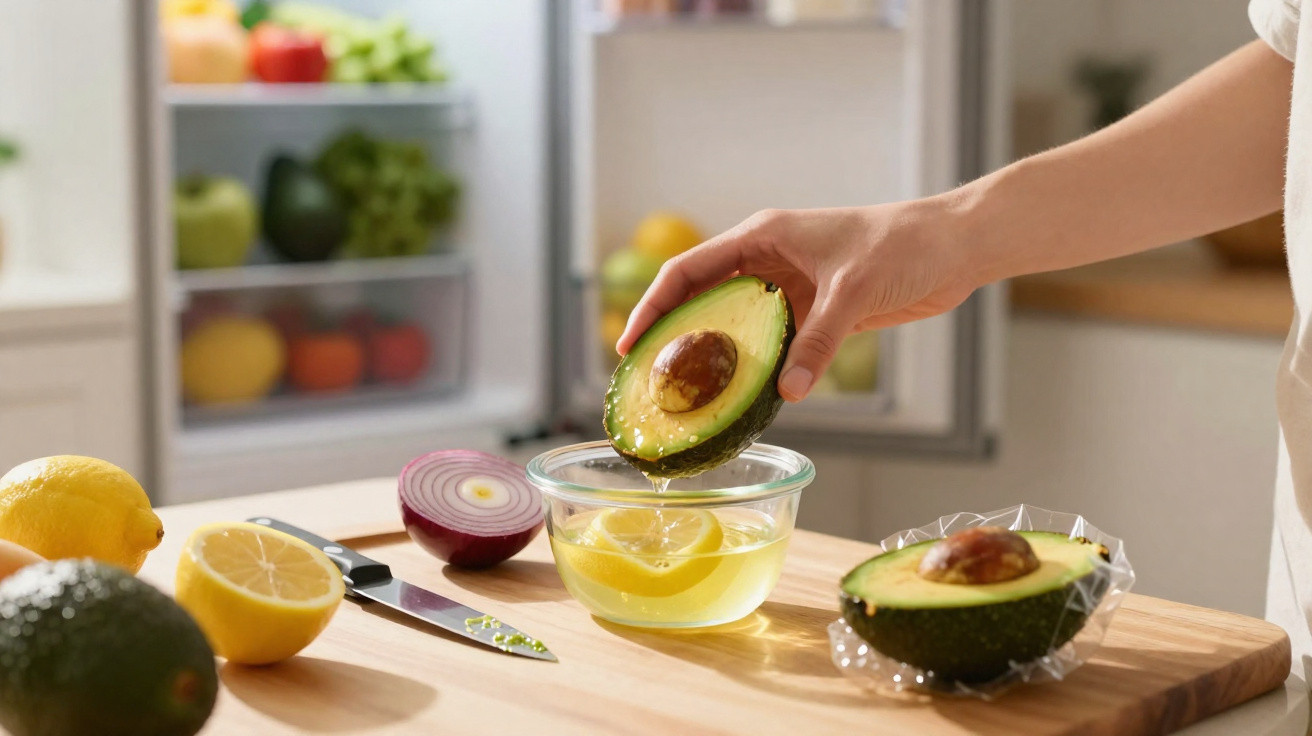
The halved avocado waits on the worktop like a tiny ticking bomb.
You have lifted out several velvety slices for toast, told yourself you will “use the rest later”, and covered what remains in some vaguely optimistic way. Two hours later, you open the fridge to find that once-vivid green treasure has become a gloomy, mottled brown reminder.
You look at it with the familiar mix of guilt and irritation. Should you eat it regardless? Bin it? Carefully carve away the discoloured areas like a fruit pathologist? At some point, you read online about lemon juice, an onion or olive oil. By then, it all starts to feel like loosely organised chaos.
The reality is that there is a best way to preserve an avocado. It simply is not the approach most people take.
Why cut avocados spoil so quickly
As soon as the knife cuts through an avocado’s skin, an invisible race starts. Oxygen reaches the flesh, the vivid green interior reacts, and unattractive brown patches begin to appear. At first, it is not always obvious; it merely seems a touch darker, like a sunset fading too fast.
Leave it on the worktop and the transformation can feel strangely personal. The edges of the flesh soften, while the upper surface changes from lively to weary-looking. Beneath that, its consistency begins to move from buttery towards grainy. What was an ideal Instagram breakfast at 9 a.m. becomes something you tuck behind the milk carton by lunchtime.
One Tuesday morning in a bustling office kitchen, I saw three people discard half an avocado. One had kept a half with the stone still in it, wrapped in cling film and now dull and speckled. Someone else had avocado cubes in a plastic tub, with a greyish top layer and the rest untouched. The third person simply shrugged: “It went weird overnight.” None had stored their avocado quite properly, yet all believed this was normal.
Each person had their own explanation. One relied on lemon juice but had not pushed out the air. Another believed the stone could somehow “keep it fresher” by itself. The third had put it in the fridge, uncovered, and hoped for the best. Small, almost unconscious choices were wasting perfectly good food, without anyone questioning them. That low-level avocado waste becomes a weekly habit, much like overripe bananas or the salad you had planned to eat.
The science behind it is straightforward. Browning is oxidation: enzymes in avocado flesh react with oxygen in the air, turning the surface brown. Low temperatures slow the process, acid slows it further, and excluding oxygen works best of all. Every partly useful tip combines these three tools in some way: cold, acid and a barrier against air. The most dependable technique simply brings them together more intelligently, rather than hoping the stone acts as a lucky charm.
The best way to store an opened avocado - and what to avoid
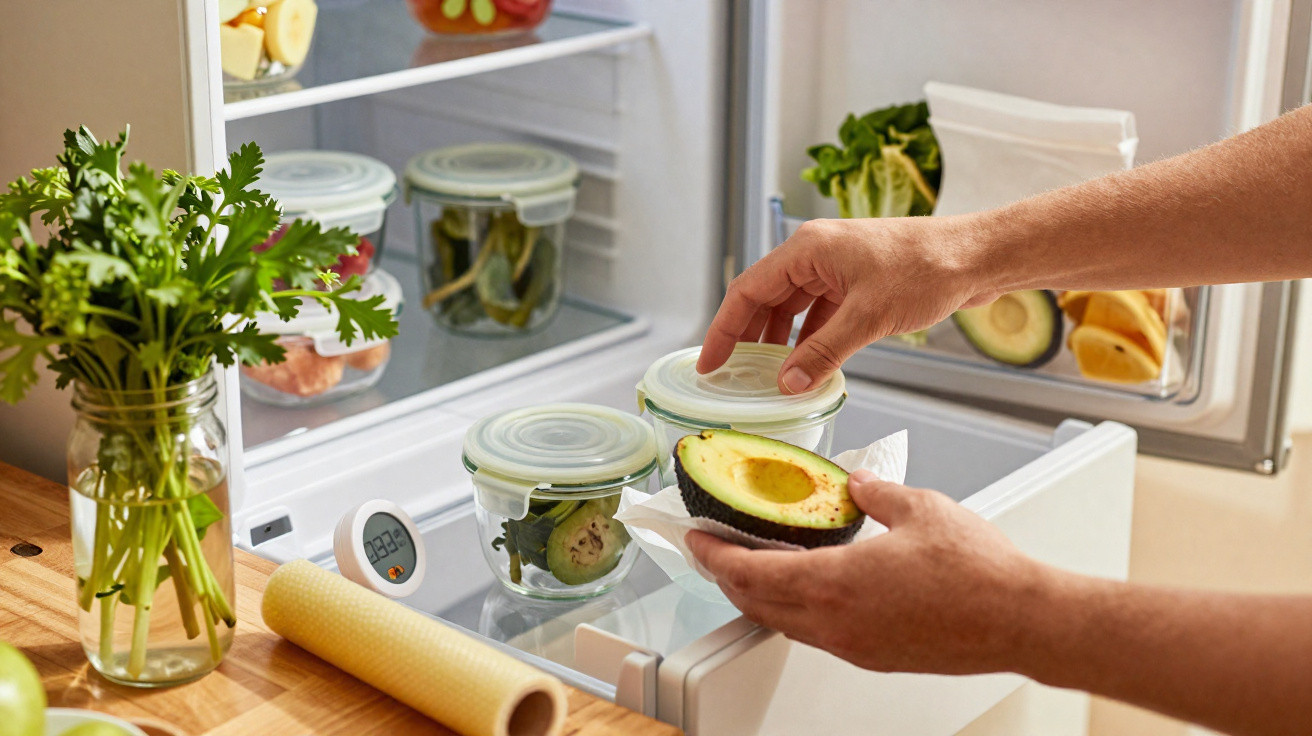
The consistently successful method is remarkably easy: tightly cover the cut face and refrigerate it. Keep the stone in the leftover half if it is still there, then brush or rub a light coating of lemon or lime juice over the exposed flesh. Next, press a sheet of cling film or reusable food wrap directly onto the surface, smoothing away pockets so that virtually no air is left behind.
Put the wrapped half into an airtight container or a small zip bag, removing as much air as possible, then place it in the coldest section of the fridge rather than in the door. When you uncover it the following day, the uppermost layer may be slightly darker. Remove a paper-thin layer with a spoon, and the flesh underneath should remain bright, creamy and entirely good to eat.
Shortcuts are where most people run into problems. They cover just the container rather than the avocado itself, leaving air around the fruit. Or they leave out the citrus because it feels like an unnecessary extra task on a Tuesday evening. Others put the half on the worktop “just for a bit”, then do not remember it until the following morning. During a busy week, these small food-storage routines can easily start to seem optional.
Then there are the viral hacks: keeping avocado in water, pouring on excessive oil, or scattering salt and hoping for a miracle. Some offer a little help, others are excessive, and a few create genuine food-safety concerns if used for too long. Let’s be honest: nobody really does this every day. The technique you will continue using is the one that takes 30 seconds and does not feel like a science experiment after dinner.
One food scientist I spoke to told me:
“The goal isn’t to freeze time, it’s to slow it down just enough that yesterday’s avocado still feels like today’s lunch.”
That is the real benefit of a thin layer of acid and close wrapping. It gives you more flexibility during the week, rather than impossible perfection in a vacuum.
Here is a quick guide to the methods that usually work best in everyday kitchens:
- Lemon or lime + direct-contact wrap + fridge = best combo for 24–48 hours.
- Mashing with lemon and storing it in a small container packed to exclude air works even better than keeping large chunks.
- Oil alone provides a little protection, but it is less effective than many people think and alters the texture more quickly.
- The stone delays browning only on the flesh it directly touches; it is not a magical shield.
- Avocado stored in water may appear green while still deteriorating internally over time.
Living with avocados without wasting half of them
When you begin to treat an opened avocado as something to manage proactively rather than respond to afterwards, the rhythm of your kitchen changes slightly. Instead of cutting it and forgetting about it, you cut it with a modest plan in mind. If you know you want some for tomorrow’s lunch, you naturally leave the better-looking half whole, add a little citrus and wrap it before you sit down to eat.
It starts to feel less like a task and more like rinsing a frying pan: fast, automatic and barely worth thinking about. Another benefit is that you can buy avocados with greater confidence. You can cut into a perfectly ripe one on a Wednesday evening without feeling obliged to eat all of it because the clock is ticking on its colour. The guilt eases, and the waste falls.
The next time you peel back the wrap from a stored avocado and see that green still shining back at you, it subtly improves your day. It feels like a small victory, as though you are no longer losing the endless struggle against spoilage and hurried schedules. Some people share that moment in a group chat or send a photo to a friend who always complains about “cursed avocados”. Others quietly pass on the habit by showing a partner, flatmate or child.
Food-storage advice can sound minor, but it sits where time, money and self-care meet. That half avocado is never solely about fruit and oxygen. It is about whether your future self, opening the fridge at lunchtime tomorrow, finds a small disappointment or a small relief. Across a year, that distinction adds up in your budget, your bin bag and your patience with everyday chaos.
| Key point | Detail | Benefit for the reader |
|---|---|---|
| Limit oxidation | Use acid (lemon) + minimal exposure to air | Keep the flesh green and appetising for longer |
| Chill quickly | Store in the fridge, away from the door | Slow browning and retain the texture |
| Keep the steps simple | Wrap directly against the surface and place in an airtight container | An easy routine to repeat every day, without mental effort |









Comments
No comments yet. Be the first to comment!
Leave a Comment