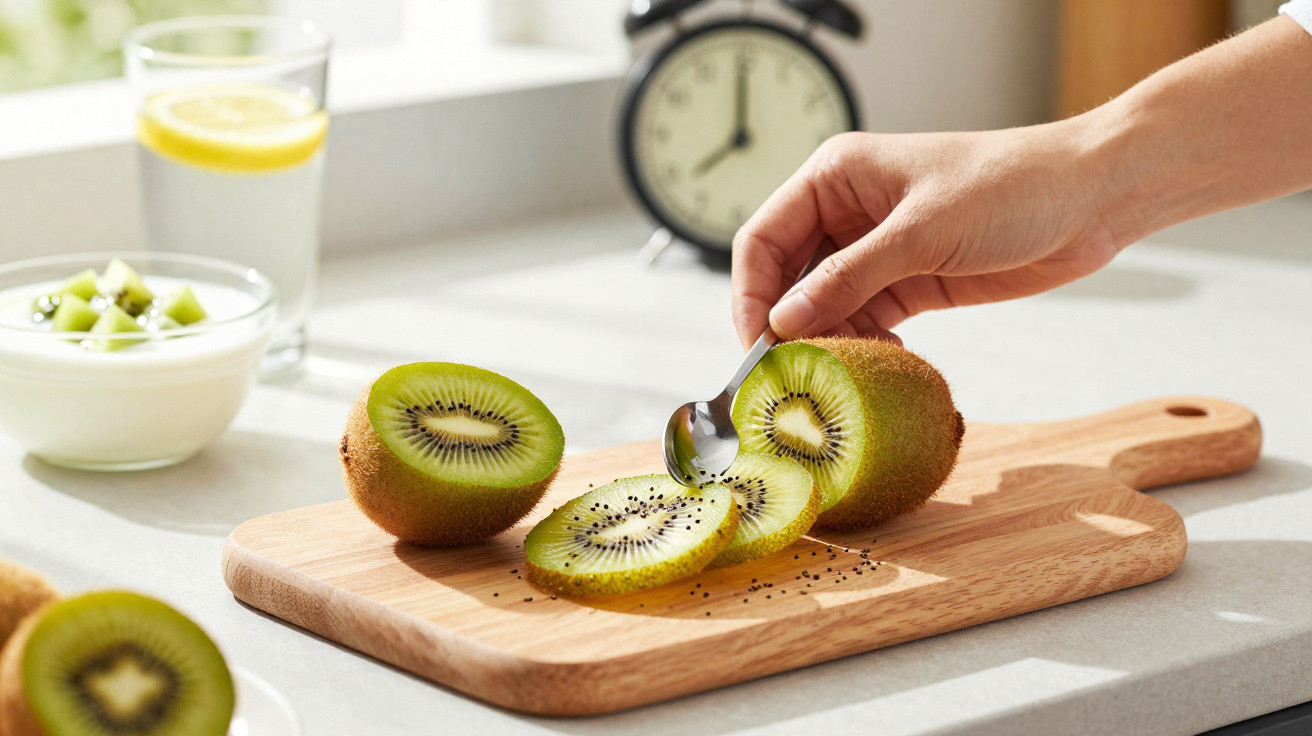
Whether green or golden, kiwis can appear equally harmless in the fruit bowl.
Still, one of them has a subtle nutritional edge.
The familiar green kiwi now sits alongside its smooth-skinned golden relative on supermarket shelves. Both are nutrient-rich, but the figures reveal that one type offers a slightly greater advantage for particular health priorities.
Green and golden kiwis: two varieties, one emerging favourite
For many years, the standard kiwi in European kitchens was the mildly furry, sharp-tasting green Hayward variety. Grown in orchards across New Zealand, Italy and France, it became an everyday fruit: cut it open, scoop it out and eat.
Golden kiwi, frequently sold under names such as “Sungold”, has disrupted that habit. Its skin is less hairy, its taste is sweeter and gentler, and its flesh resembles mango far more than spinach in colour. It is, in effect, a sunlit take on the same fruit.
These outward differences reflect two separate nutritional make-ups. Both choices are good for you and supply vitamins, minerals and antioxidants. However, whether your focus is digestive health, immunity, price or flavour, one may be the better match.
The golden kiwi delivers more vitamin C, while the green kiwi brings notably more fibre and a proven effect on bowel regularity.
Vitamin C: golden kiwi has the advantage
Vitamin C is a major reason why nutrition specialists so often recommend kiwis. It contributes to immune function and collagen formation, while helping to shield cells from oxidative stress.
This is where golden kiwi leads. Average values suggest that a single fruit provides around 161 mg of vitamin C, versus approximately 93 mg in a green kiwi of a comparable size.
For context, many health bodies recommend about 75–110 mg of vitamin C daily for adults. In practice, this means:
- A single golden kiwi can meet or surpass daily requirements by itself.
- One green kiwi still supplies a substantial proportion of the recommended amount.
- Two kiwis, of either variety, will comfortably satisfy recommended intakes for most people.
In practical terms, golden kiwi may suit anyone who struggles to eat fruit consistently. Having one at breakfast could be enough to maintain vitamin C intake with very little effort.
One golden kiwi can provide a full day’s worth of vitamin C, which makes it a convenient “immunity shortcut” for busy schedules.
Fibre and digestion: green kiwi’s hidden strength
The comparison shifts when fibre is considered. Fibre is important for digestion, appetite management and regulating blood sugar.
Research indicates that green kiwis generally provide around twice the fibre found in golden kiwis. That gap matters for those with slow digestion or diets lacking in fibre.
European authorities have also recognised a particular health benefit: consuming two to three green kiwis daily can support normal bowel function by increasing stool frequency. This places the modest green kiwi among a limited group of fruits with an officially acknowledged digestive effect.
Two to three green kiwis a day can support regular bowel movements and ease mild constipation without resorting to supplements.
For people aiming to raise their fibre intake through food, replacing a mid-morning biscuit with a green kiwi can be an easy, low-effort change. Buying the fruit while it is still slightly firm also makes it easier to carry in a bag or lunch box.
Green and golden kiwis compared at a glance
| Feature | Green kiwi | Golden kiwi |
|---|---|---|
| Vitamin C (approx.) | ~93 mg per fruit | ~161 mg per fruit |
| Fibre | High, about twice that of golden | Moderate |
| Flavour | More tart, slightly acidic | Sweeter, milder |
| Price | Generally cheaper | Often above £1 / $1 per fruit |
| Digestive effect | Officially recognised support for bowel regularity | Helpful but less documented |
Sleep, serotonin and the “evening kiwi”
Kiwis may offer a further, less obvious benefit beyond immunity and digestion: they can affect sleep. The fruit contains serotonin, a neurotransmitter involved in mood and sleep regulation that may aid the body’s production of melatonin, the hormone associated with falling asleep.
Evidence on eating kiwi in the evening remains limited, but the available studies point in a similar direction. People who consume kiwis before bed sometimes report falling asleep more quickly and experiencing slightly improved sleep quality.
An evening kiwi will not act like a sleeping pill, but it can nudge your body towards a more restful night.
For anyone who usually reaches for biscuits or chocolate late at night, substituting one or two kiwis could offer two advantages: fewer ultra-processed calories and a modest contribution towards improved sleep.
Peel or no peel: the fibre question
A continuing debate among kiwi enthusiasts concerns the skin. Some eat kiwis as they would an apple, skin included, whereas others carefully spoon out the flesh and discard the outer layer.
Both the brown, furry peel of green kiwis and the smoother peel of golden kiwis can be eaten. After thorough washing, the skin provides added fibre as well as extra antioxidants. Nutritionally, there is a good case for leaving it on.
In everyday eating, though, texture counts. The hairs on green kiwi can be unpleasant for many people, who may choose golden kiwi if they plan to eat the peel. Scrubbing the fruit briefly under running water can reduce some of the fuzz, although it cannot remove the feeling completely.
Eating the peel boosts fibre intake, yet pleasure often wins: plenty of people still reach for a spoon instead of biting into the whole fruit.
Price, origin and fitting kiwis into everyday meals
Golden kiwis tend to be pricier than green ones. In many shops, the golden type may cost more than one pound or one dollar per fruit, while green kiwis are considerably less expensive, particularly when purchased in larger packs.
Production closer to home has increased across several European areas, including France, reducing transport distances and often resulting in fresher fruit. Looking at country-of-origin labels can help lower the environmental footprint, whatever colour kiwi you select.
Easy ways to eat kiwis
Kiwis work in plenty of everyday meals with minimal preparation:
- At breakfast: sliced onto yoghurt, oats or granola, alongside nuts or seeds.
- As a snack: eaten whole after washing and scrubbing the skin, or halved and scooped out.
- In salads: combined with spinach, feta and walnuts for a sweet-sharp contrast.
- As dessert: served with plain skyr or Greek yoghurt in place of sugary puddings.
One detail is worth remembering: kiwi contains actinidin, an enzyme that breaks down protein. This is useful for tenderising meat in marinades, but it can also make dairy curdle if it sits for too long. Adding kiwi to milk-based puddings immediately before serving prevents an odd, watery consistency.
Which kiwi is right for each goal?
The choice between green and golden kiwi is simpler when individual aims are identified. Someone seeking extra vitamin C during winter colds may prefer golden kiwis, particularly if they enjoy sweeter fruit and only eat one piece a day.
For people with occasional constipation or a low-fibre diet, green kiwi is the clearer option. Two to three fruits eaten across the day may encourage bowel regularity, as long as fluid intake is sufficient.
Those watching their spending may also opt for green kiwis. They still have a strong nutritional profile, usually cost less and have a well-established digestive benefit. Using each variety for different occasions can be an uncomplicated approach: golden for high-vitamin-C days and green for gut health and everyday snacks.
Everyday situations and modest health benefits
Consider a week of lengthy office days, limited sunshine and an irritating sore throat. Eating one golden kiwi with breakfast each morning could help fill the vitamin C shortfall created by hurried meals and few vegetables.
In a different example, imagine someone raising their protein intake for training while consuming very little wholegrain food. Including two green kiwis - one after lunch and another after dinner - could help compensate for some of the missing fibre and support comfortable digestion.
Such changes seldom seem transformative in a day. Across several months, however, they build up. Eating fruit regularly supports a more varied nutrient intake and can reduce dependence on supplements and processed snacks.
People with sensitive mouths, or known allergies to latex or particular fruits, should take some care. Kiwi may cause tingling or mild irritation for certain individuals, especially on the lips and tongue. Trying a small amount first and seeking advice from a healthcare professional if symptoms develop are sensible precautions.
When used thoughtfully, green and golden kiwis can support practical habits: one is somewhat more focused on digestion, while the other offers more vitamin C and convenience. Their real value lies in choosing the appropriate fruit for the appropriate need, not in a marketing claim on the label.

















Comments
No comments yet. Be the first to comment!
Leave a Comment