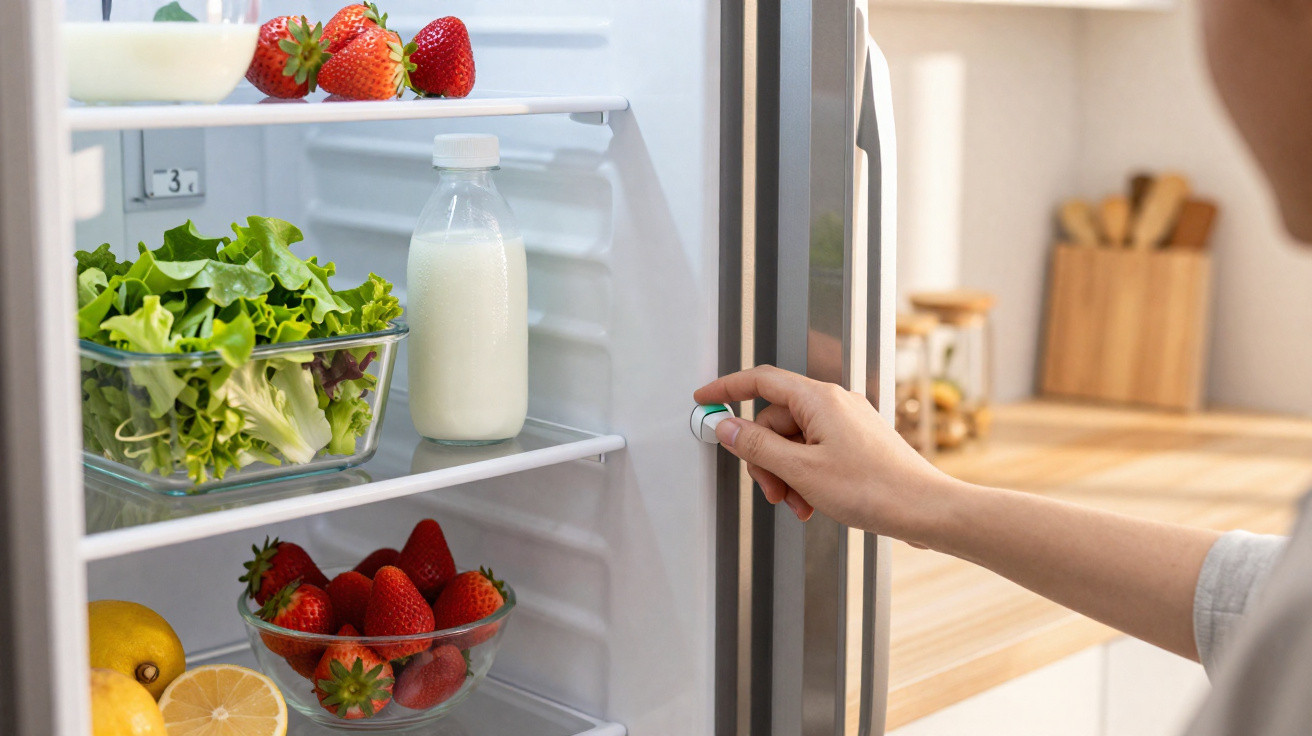
Bright greens, plump cherry tomatoes and a neat scattering of feta on top: the sort of plate that makes you quietly pleased as you shut the fridge door. Two days later, that same bowl had become a miserable, watery heap pushed against the back wall, its lettuce leaves drooping as though they had surrendered. Nobody had eaten it. Nothing had gone “bad”. Still, it had deteriorated as if it had been left in the sun for a week.
Most of us blame time when food spoils too quickly in the fridge. Or we blame the supermarket, the packaging or the strawberries themselves. We throw away half a cucumber, complain briefly, then carry on. But the real answer is right there in the kitchen: softly glowing in the dark and humming all day long. It comes down to one small number on one small dial.
The small fridge temperature change that quietly transforms everything
Look inside almost any fridge and you will see the same arrangement: a setting that somebody once put on “3” or “middle”, then never thought about again. Few people know what those settings really mean. People move home, inherit appliances, and the mysterious dial stays untouched. Meanwhile, milk turns sour a day earlier than expected. Berries develop white mould overnight. Leftovers taste slightly “off” sooner, and we vaguely put it down to busy lives.
Food scientists use figures rather than instincts. The ideal fridge temperature is approximately 3°C to 4°C - around 37°F to 39°F. In everyday use, that can be only 1 or 2 degrees colder than many fridges actually are. Even so, this slight change meaningfully slows bacterial growth, oxidation and moisture loss. You will not notice the difference from one hour to the next. You will notice it when your chicken curry still smells completely fresh on day four.
One UK study found that many domestic fridges were routinely sitting at 7°C, or even 8°C, particularly when they were full or frequently opened. On paper, that may not seem significant. In reality, it can double or triple how quickly certain bacteria multiply. This is not only about safety; it affects flavour and household spending too. Picture berries lasting another two days, cheese remaining firm rather than becoming sweaty, and leftovers being eaten rather than making a guilt-ridden journey to the bin.
The difference between “fine” and “optimal” is very small: one colder notch on the dial. That is all it takes. No new appliance, no detox plan - just one mildly unexciting but surprisingly effective turn of plastic.
How to set your fridge temperature so food genuinely lasts longer
The easiest step is to stop relying on the numbers on the fridge dial and use a proper fridge thermometer instead. A basic model costs less than a coffee. Place it on the middle shelf, leave it for a few hours, then check the reading. If it is above 4°C (39°F), turn the dial slightly colder and check again later. You are aiming for the 3–4°C range, where food remains safe and fresh without freezing milk or lettuce.
That modest reduction from 5°C to 3–4°C is what makes the difference. It can extend the life of meat, dairy products and ready meals by a day or more. Yogurt keeps its proper texture. Herbs are less likely to collapse into slime within 48 hours. Leftover pasta does not develop that stale fridge flavour as quickly. It is neither glamorous nor smart-home technology; it is more like finally learning to use the volume control on the radio you already have.
One Tuesday evening in a small Paris flat, I watched a young couple try this adjustment. They had been throwing vegetables away every week, irritated but resigned to it. Their fridge measured 7°C, with the dial innocently set to “3”. They lowered it by one notch and waited until morning. It reached 3.5°C. The next week, the same bunch of coriander that normally wilted by Thursday was still vivid on Saturday. Their milk, usually almost finished by day five, lasted through the weekend. Their shopping habits had not changed - only that number had.
We have all found something furry at the back of the fridge and felt a mixture of revulsion and quiet embarrassment. Now imagine doing that less often. A soft cheese you enjoy could hold its shape for another three days. Sliced ham might not develop its rainbow sheen quite so soon. The same groceries begin to feel as though they cooperate a little more. A French food-safety report suggested that keeping household fridges below 4°C could significantly lower the risk associated with common pathogens such as Listeria and Salmonella. The same principle also protects flavour and texture. Cold slows everything down.
Some people worry that setting a fridge colder will use more energy. The surprising reality is that a correctly adjusted fridge can actually operate more efficiently. When its temperature is more stable, the compressor runs in steadier cycles. Less food spoils and ends up in the bin, which is where the real environmental cost lies. A slightly colder fridge can mean fewer food shops, fewer emergency takeaways and fewer disappointing discoveries wrapped in cling film.
The tiny habit that makes your fridge seem smarter than it is
The approach is almost absurdly straightforward. First, buy an inexpensive fridge thermometer. Next, choose a quiet moment - not just after a large food shop - and put it on the middle shelf, away from the door. Shut the door, wait at least four hours and read the temperature. If it is above 4°C, move the dial a very small amount towards colder. Then leave it alone again. You are fine-tuning, not repairing anything.
Repeat this process over a day or two until the fridge settles at around 3–4°C (37–39°F). Fridges respond slowly and can be stubborn. Think of it as adjusting a shower: make a slight alteration, then wait, rather than repeatedly turning it back and forth. Consistency matters more than absolute perfection. When you find the right setting, do not keep changing it. Check again when the seasons change, after moving home or following a deep clean.
Let’s be honest: nobody genuinely does this every day. Nor do you need to. Treat it as an occasional reset, much like tidying out a drawer. For the rest of the time, a few simple habits will do the work. Do not put hot pans straight into the fridge; allow them to cool slightly so they do not raise the internal temperature. Avoid standing with the door open while deciding what to eat. Do not overfill the shelves, as tightly packed food creates pockets of warm air. Small and mundane actions, but with a substantial and subtle effect.
“We measured dozens of family fridges,” explains a food microbiologist from Lyon. “Simply getting them below 4°C extended the realistic eating window for many leftovers by about one full day. People did not alter what they cooked. They just stopped losing so much of it.”
Three familiar mistakes are made by almost everyone:
- Storing milk and eggs in the door: this is the warmest and least stable area.
- Filling the fridge too tightly: cold air needs room to circulate, otherwise warm spots develop.
- Neglecting the crisper drawers: they are specifically designed to regulate humidity for fruit and vegetables.
Move milk and delicate dairy products to the back of the middle shelf. Reserve the door for sauces, drinks and condiments. Store raw meat at the bottom, so any drips cannot contaminate other food. Combined with that slight temperature reduction, these layout changes can make an older fridge perform almost like a newer, smarter one.
Rethinking the cold glow in your kitchen
Once you have seen what a difference a couple of degrees can make, other habits become more noticeable. You no longer blame “bad luck” for limp herbs or grey leftovers. You look at “use by” and “best before” dates more curiously, aware that they assume a particular temperature your fridge may or may not maintain. You find yourself opening the door for shorter periods. Not through guilt, but because you start viewing the fridge as a small ecosystem rather than merely a cold cupboard.
This minor fridge temperature adjustment can also change the mood around food at home. Less waste means fewer unspoken disputes over who forgot what at the back. It helps the weekly shop last longer, especially when money is tight. It can be the difference between eating out because you want to and eating out because everything in the fridge seems doubtful. That little number on the dial is quietly linked to your budget, your health and your feeling of control.
The next time you discard half a punnet of berries or a tub of leftovers you meant to eat “tomorrow”, consider this. It is not a personal failing, but a design issue: an almost invisible setting that was never properly explained, a number nobody thought to question. This week, rather than buying a miracle food-storage container or another diet book, try turning the dial by one notch and placing a thermometer on a shelf. Then see what happens.
| Key point | Detail | Benefit for the reader |
|---|---|---|
| Set to 3–4°C (37–39°F) | Use a thermometer, rather than relying only on the dial | Extends food life by 1 to 2 days |
| Avoid using the door for delicate foods | Put milk, eggs and leftovers at the back of the middle shelves | A steadier temperature, less waste and fewer risks |
| Do not overfill the fridge | Allow cold air to circulate and use the vegetable drawers | More even cooling and fresher food |









Comments
No comments yet. Be the first to comment!
Leave a Comment