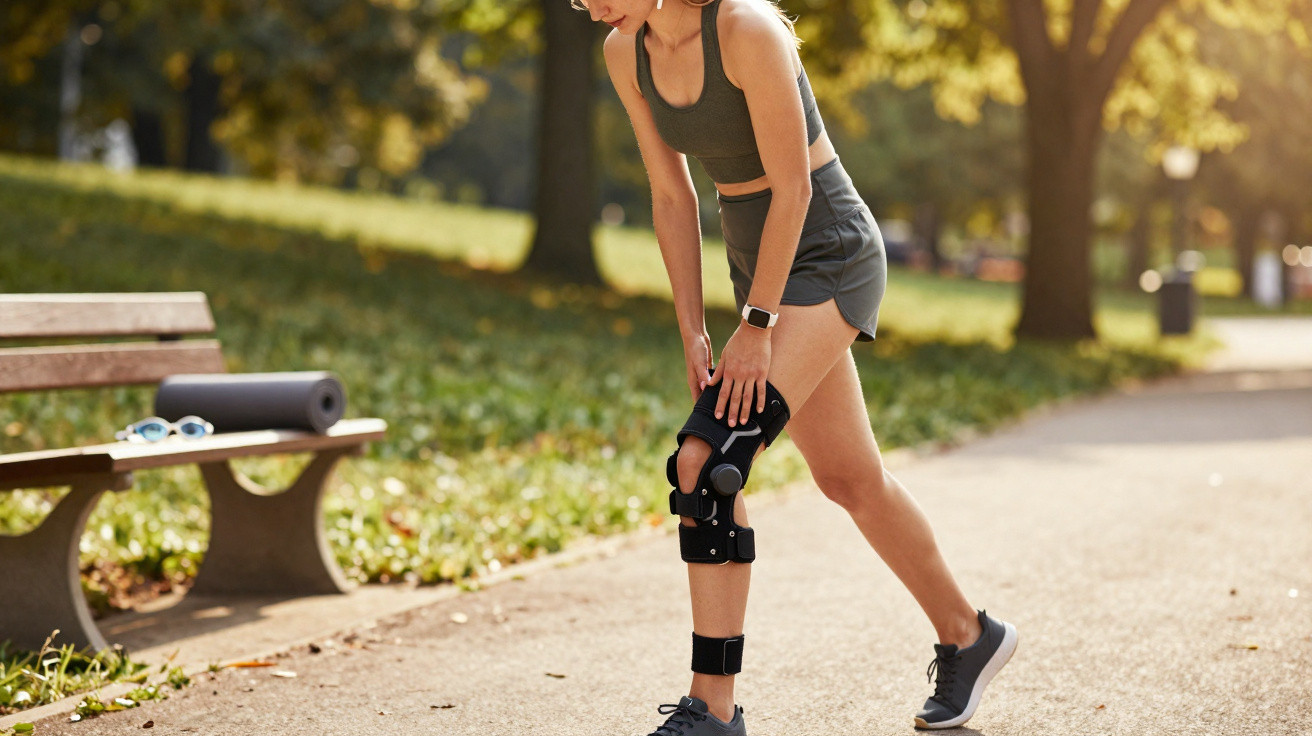
The physiotherapy room carried a faint scent of chlorine and eucalyptus when Lucy received the verdict. A 42-year-old former runner who had taken up swimming and kept two faithful Pilates mats at home, she sat on the edge of the treatment table with her knees carrying their familiar, muted ache. She had anticipated the standard advice: “Keep swimming, keep doing Pilates, avoid impact, you know the drill.”
Instead, her therapist glanced up from the scan and said, almost offhandedly, “You might want to start walking.”
Lucy stared. Walking? The activity she had spent years avoiding? The dull, unfashionable movement that barely seemed to count as exercise?
She left the clinic with a prescription for thirty minutes of brisk walking four times a week, feeling unexpectedly insulted.
Had she really spent all that time holding planks and refining her freestyle, only to learn that ordinary walking could be kinder to her knees?
The unsexy workout your knees may secretly prefer
Ask people with painful knees how they keep active, and the answers tend to sound familiar. “I swim.” “I do Pilates.” “I stick to low impact.” It is almost said under the breath, like a password for entry to the club of responsible adults with joint pain.
Walking is rarely included. It seems too everyday, too unhurried and too closely associated with errands, dog leads and school runs. But an increasing number of physiotherapists and sports doctors are quietly delivering the same message: for many temperamental knees, carefully measured walking is not the problem; it is the rehabilitation.
The surprising part is not that walking can help. It is that it may be safer and more useful than certain supposedly knee-friendly favourites when those activities are performed poorly or pushed too far.
Consider Mark, 51, a former basketball player with cartilage damage who made an admirable switch to lengthy pool sessions. Three times each week, he powered through lap after lap, convinced he was protecting his joints. His cardiovascular fitness improved, but his knee pain stubbornly remained.
Then, during a rainy week when the pool shut for maintenance, he began walking on the hilly streets around his home simply to “do something”. Twenty minutes became thirty, then forty, at a speed where he could talk but could not quite sing.
At his follow-up six weeks later, his physiotherapist could scarcely believe the figures. There was less swelling, stronger quadriceps and less pain when walking downstairs. What was the sole change? He had replaced some swimming sessions with structured walks across varied terrain.
The reasoning is often overlooked. Swimming and Pilates are brilliant for mobility, core control and overall strength. They are indeed gentle on the joints, but they also eliminate or significantly reduce the load travelling through the legs. As a result, the knees never fully practise coping with the genuine demands of daily life: gravity, uneven pavements, quick turns and the bus you occasionally have to run for.
Purposeful walking applies light, repeated and controlled pressure to the cartilage, tendons and muscles. That pressure signals to the body, “Hey, we still use this system, please maintain it.” It is like sending regular emails to your knees so that they do not archive themselves.
The issue is not that walking is risky for painful knees; it is that most people either avoid it entirely or throw themselves into it like a Netflix binge after a season finale.
How to walk “for your knees” instead of “despite your knees”
On paper, the safest plan for knee-friendly walking is almost offensively straightforward. Begin with 10–15 minutes at an easy pace on level ground, three or four times per week. If pain remains broadly unchanged or is slightly improved over the following 24 hours, add 5 minutes to one or two walks the next week.
Treat it as a gradually rising volume control rather than an on-off switch. The goal is a “green-light zone”: mild discomfort that resolves quickly, rather than sharp pain that persists or intensifies. Many knee specialists rely on a 0–10 scale, aiming to keep pain during walking at 3 or below, with no worsening the following morning.
Perfect technique is unnecessary. However, one rule matters: stop or reduce the session if your knee swells, locks or becomes more painful than a mild nag.
The first common error is attempting to swap an entire exercise routine for walking in one heroic week. You move from hardly walking at all to 8,000 steps daily, feel pleased with yourself and leave your knees feeling ambushed. We have all experienced that point where good intentions crash directly into reality.
Another mistake is treating walking as incidental background activity. You wander in unsupportive shoes, carry three shopping bags, scroll through your phone, then blame your knees once everything becomes tight.
A kinder strategy is to distinguish between “training walks” and “life steps”. Your phone-free 20–40-minute walk is medicine; everything else is a bonus. That small mental adjustment reduces pressure and, strangely, often improves consistency.
“People think swimming and Pilates automatically fix painful knees,” says Emma Rodrigues, a London-based physio who works with recreational athletes. “They help hugely, but if the knee never practices taking load, it’ll complain the minute you go back to stairs, hiking or travel days. The overlooked middle ground is progressive, intentional walking.”
To make this approach practical, try these straightforward changes over the coming month:
- Replace one weekly swimming or Pilates session with a 30-minute brisk walk on flat ground.
- Use a “talk test”: you should be able to speak in short sentences, rather than deliver full monologues or gasp for breath.
- Walk out for half of the planned time, then turn around. Do not negotiate and do not take shortcuts home.
- Record pain from 0–10 before the walk, immediately afterwards and the next morning for two weeks.
- When that becomes easy, introduce a small hill or stairs once each week, then reassess.
When the “boring” choice ends up changing everything
If you feel defensive about your treasured pool laps or reformer sessions, that is understandable. No one enjoys being told that the activity they selected, and reassured themselves was safest, may not tell the whole story. There is a quiet sense of loss in accepting that your careful plan was not as targeted as you had hoped.
But this is where walking slips in: not as competition, but as the missing element. You do not need to abandon the pool or the mat. You simply stop assuming they can completely replace the modest act of placing one foot in front of the other, carrying your own weight on real ground.
In reality, nobody manages this every single day. Children, deadlines, weather and tiredness intervene. That is why the people who succeed are not purists; they are those who aim for “often enough” and steadily accumulate months of easy, repeatable walks.
| Key point | Detail | Value for the reader |
|---|---|---|
| Walking loads the knee gently | Regular, moderate force helps cartilage and muscles adapt instead of decondition | Rebuilds tolerance to daily activities like stairs, hills and travel days |
| Start small and track pain | 10–15 minutes, flat ground, keeping pain at 3/10 or less with 24-hour check-ins | Reduces fear of movement and lowers risk of flare-ups |
| Combine walking with swimming/Pilates | Use pool and mat for support work, walking for load and function | Creates a safer, more complete plan for long-term knee comfort |















Comments
No comments yet. Be the first to comment!
Leave a Comment