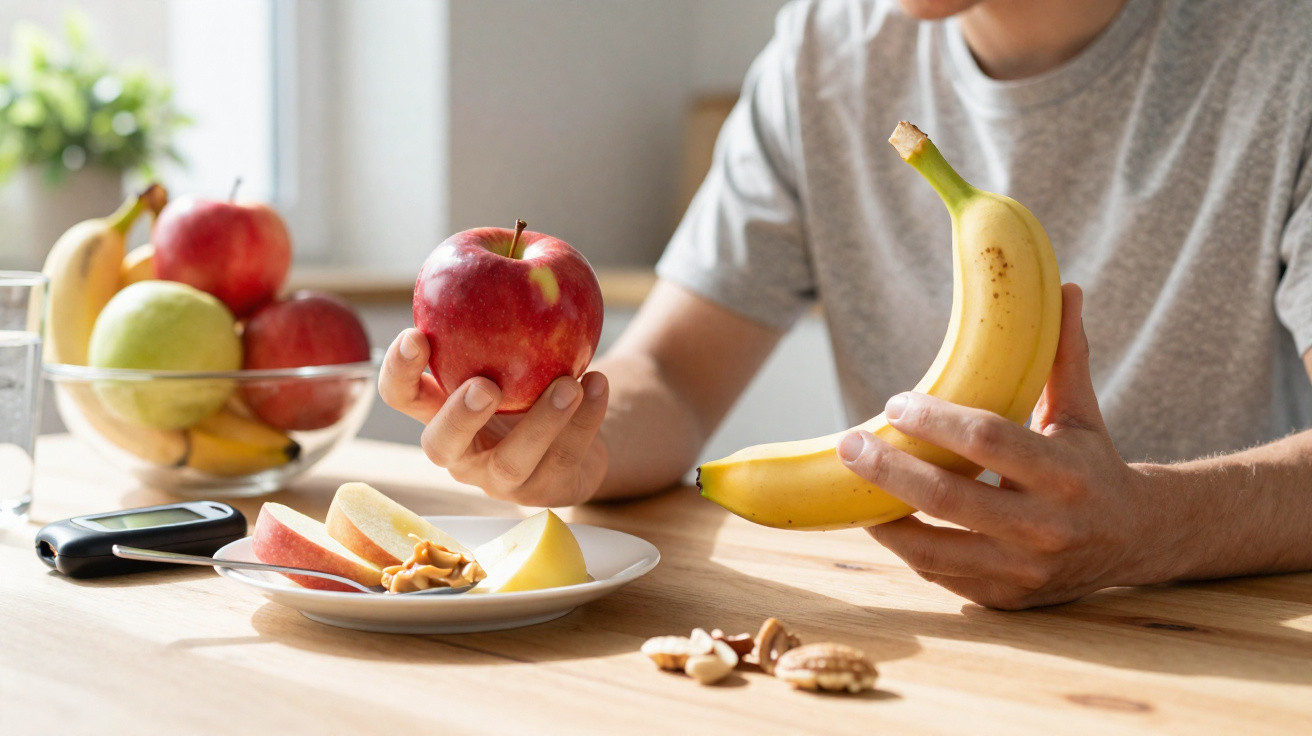
When hunger strikes and you reach for a piece of fruit, that choice can subtly influence your blood sugar for several hours.
For people monitoring glucose, choosing between a crunchy apple and a sweet banana is not always a casual decision. Both are widely seen as nutritious and neither appears problematic, but they do not affect blood sugar in precisely the same way. Nutrition specialists are clarifying the distinctions, and their guidance is more nuanced than simply labelling one fruit ‘good’ and the other ‘bad’.
Apple or banana: what is really at stake?
Apples and bananas have a broadly similar nutritional makeup: naturally occurring sugars, carbohydrates, fibre, vitamins and water-rich bulk that can help you feel satisfied. Neither fruit needs to be treated as off-limits, including for those with prediabetes or type 2 diabetes.
The issue is not whether you can eat either fruit, but how your body may react during the hour or two following that snack.
For blood sugar, the game is less about perfection and more about speed: how fast those fruit sugars reach your bloodstream.
That rate is shaped by three main considerations:
- the fruit’s glycaemic index (GI)
- the quantity and kind of fibre it provides
- the serving size and, in the case of bananas, its degree of ripeness
Glycaemic index: why apples are usually gentler on blood sugar
The glycaemic index measures how rapidly foods increase blood sugar in comparison with glucose. A lower score indicates a more gradual rise.
| Fruit | Typical GI | Carbs (medium piece) | Fibre |
|---|---|---|---|
| Apple | ~38 (low) | ≈ 25 g | ≈ 4 g |
| Banana (ripe) | ~52 (moderate) | ≈ 27 g | ≈ 3 g |
A typical apple falls within the low-GI category, whereas a ripe banana is classed as moderate GI. In practical terms, the carbohydrates in a banana are likely to be taken up faster, particularly once it has become very sweet and ripe.
Dietitians point to soluble fibre, notably pectin, as a key reason apples are often easier on blood sugar. In the gut, this fibre creates a gel-like substance that slows carbohydrate digestion and absorption. The difference may be modest, but it matters: when the same sugar is absorbed over a longer time, blood sugar tends to rise less sharply and follow a smoother curve.
Keep the skin on your apple: much of the fibre that slows sugar absorption is in or just under the peel.
Bananas: how ripeness changes the picture
A banana on its third day is nutritionally different from one on its tenth. As it ripens, the starch it contains is converted into sugars, altering the way it affects blood sugar.
Green, yellow and spotted: what their appearance tells you
- Very green bananas have more “resistant starch”, which acts more like fibre and produces a slower increase in glucose.
- Firm yellow bananas occupy the middle ground, containing a combination of starch and sugars.
- Soft bananas with plenty of spots contain more simple sugars and generally raise blood sugar more rapidly.
Serving size is equally important. One large banana may readily amount to the equivalent of two small portions of fruit. For a person with prediabetes, the difference can show up clearly on a continuous glucose monitor.
A smaller, just-yellow banana will usually have a milder effect on blood sugar than a big, very ripe one with brown spots.
Dietitians also emphasise that apples and bananas offer more than sugar. Both provide polyphenols and other plant compounds associated with a reduced longer-term risk of type 2 diabetes and heart disease. Health over time is not determined by a single banana, but by habits repeated over months and years.
Which fruit leads to fewer blood sugar spikes?
When apples and bananas are eaten by themselves in comparable portions, most experts give the apple a slight advantage for producing a more gradual blood sugar response. Its lower GI and marginally higher fibre content are responsible for that edge.
- If carbohydrates trigger a strong blood sugar response for you, an apple will generally cause a smaller, slower rise.
- A ripe banana usually acts more quickly, especially when the fruit is large.
- Choosing a smaller, greener banana can make its effect more similar to that of an apple.
However, looking only at the figures overlooks an important factor: context. Your blood sugar curve can be influenced just as much by what you eat alongside the fruit, your earlier activity during the day and whether you move after your snack as by choosing an apple rather than a banana.
How to eat apples and bananas without major glucose spikes
Avoid eating “naked carbs”
Dietitians frequently caution against “naked carbs” – carbohydrate-rich foods consumed alone, without protein or fat to slow down digestion.
Pairing fruit with protein or healthy fats can blunt the blood sugar rise almost as effectively as choosing the “better” fruit.
Useful combinations include:
- Apple slices with a light spread of peanut butter or almond butter
- A small banana served with a handful of nuts
- Either fruit paired with plain Greek yoghurt
- An apple alongside a slice of cheese for a savoury alternative
These pairings work in two ways: they reduce the speed at which glucose enters the bloodstream and help you stay full for longer, potentially reducing sugar cravings later in the day.
Plan your movement as well as your meals
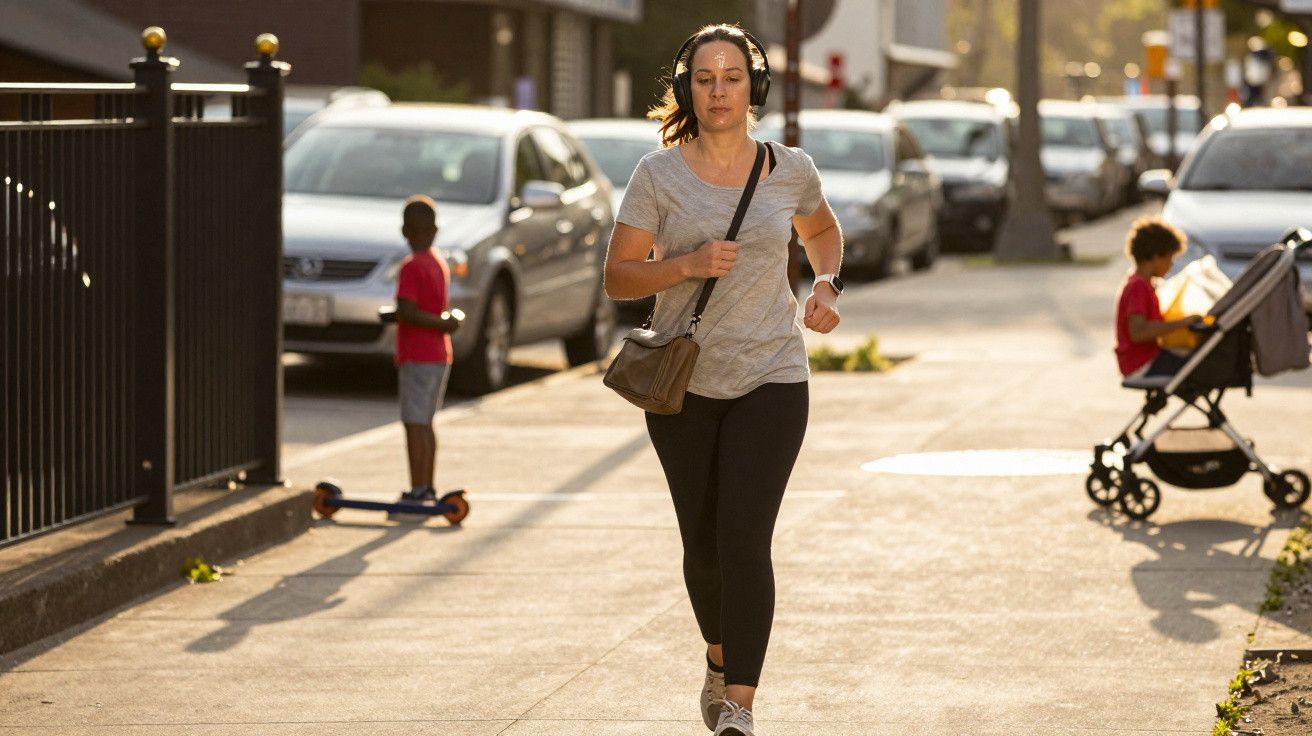
Gentle activity after eating can have a remarkably powerful effect on blood sugar. A 10–15 minute walk prompts your muscles to take glucose from the bloodstream, without requiring substantial surges of insulin.
If you have eaten a banana while out and about, walking along a train platform, taking the dog out or climbing the stairs can all lessen the blood sugar spike that might otherwise occur.
Think of a short walk after fruit as part of the snack itself, not an optional extra.
When an apple is the more sensible choice than a banana
In certain circumstances, an apple can be the more strategic option:
- Late-night snacks: A slower release of sugar may be more favourable for overnight glucose levels.
- Sedentary days: If you expect to be inactive after eating, the apple’s lower GI becomes an advantage.
- Prediabetes or newly diagnosed diabetes: Although both fruits can be included, beginning with lower-GI choices helps many people understand how carbohydrates affect them.
At these times, an unpeeled apple paired with some protein can provide a consistent release of energy without a pronounced peak.
When a banana may actually be the better option
Bananas are not the bad fruit in this comparison. In particular situations, they may be exactly the right choice.
- Before or after exercise: The faster-acting carbohydrates in a ripe banana can provide workout fuel or restore energy afterwards.
- For people susceptible to hypoglycaemia: When blood sugar falls too low, a banana can raise it more quickly than an apple.
- Digestive tolerance: Some people find bananas easier on the stomach than apples, which may cause wind in sensitive digestive systems.
Selecting a smaller banana, or one that is not excessively ripe, can help balance these advantages with a less substantial increase in glucose.
Key terms that affect how you interpret nutrition labels
Two ideas underpin the apple–banana discussion and are often misunderstood: glycaemic index and glycaemic load.
- Glycaemic index (GI) indicates how quickly 50 g of carbohydrate from a food raises blood sugar, using a scale from 0 to 100.
- Glycaemic load (GL) modifies that figure to reflect a usual serving size. A food may have a moderate GI but a low GL when it is normally eaten only in a small amount.
Both apples and bananas sit in the low-to-moderate GI range, while standard individual portions have a moderate glycaemic load. This is one reason nutrition guidance continues to include whole fruits, bananas included, in the recommended daily variety for people at risk of diabetes.
Everyday practical scenarios
Consider these two mid-afternoon snacks:
Scenario 1: You eat a large, very ripe banana on its own at your desk, then remain seated for another two hours. Blood sugar climbs relatively fast, reaches a higher point and drops more quickly, which could leave you hungry or fatigued by early evening.
Scenario 2: You have a medium apple with the peel on, sliced and accompanied by a small handful of almonds, then take a 10-minute walk to the shops. Blood sugar rises at a slower pace, peaks lower and remains more stable until dinner.
Both options involve ordinary foods. The second option simply combines several small benefits: lower-GI fruit, extra fibre, protein and fat, plus some physical activity. Repeating that approach over weeks and months can promote improved glucose control without imposing dramatic food rules.
The real win is not choosing apples over bananas forever, but learning how to make either work for your blood sugar, your routine and your taste buds.













Comments
No comments yet. Be the first to comment!
Leave a Comment