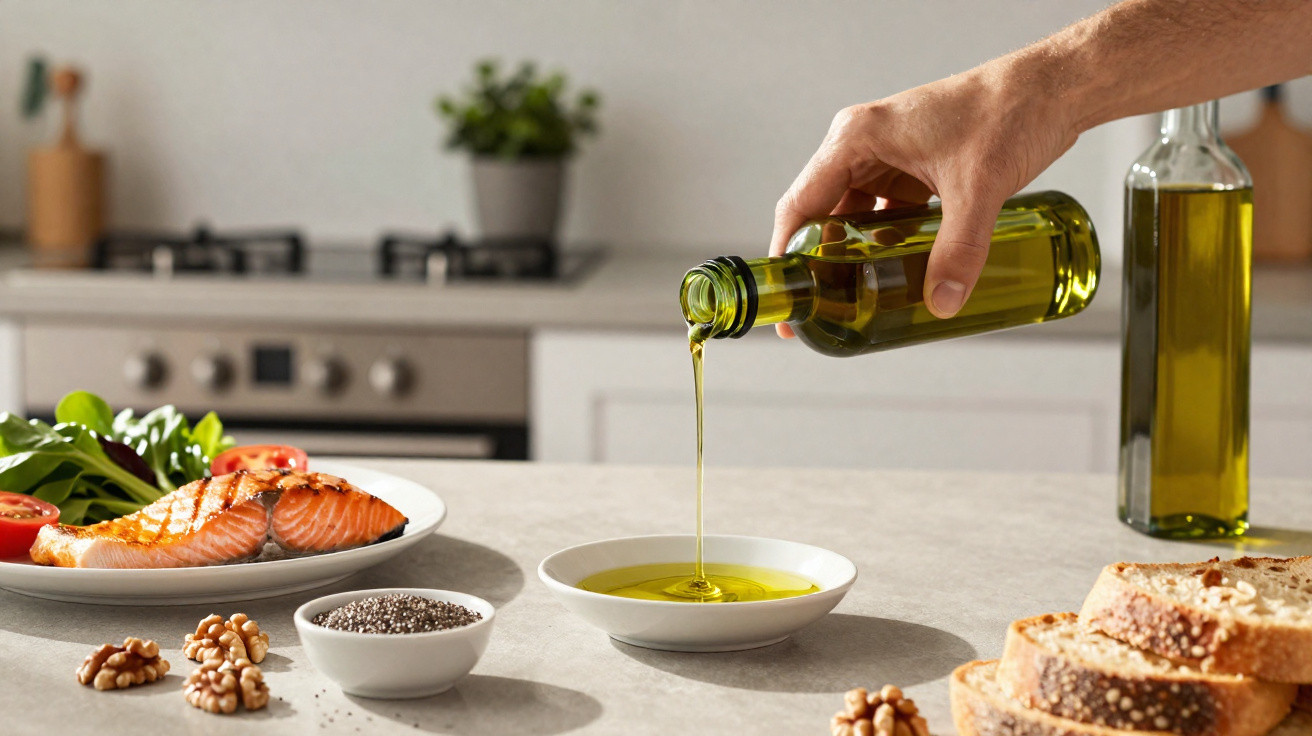
For years, olive oil has been regarded as a kitchen wonder ingredient – but what are its genuine health benefits, and where are its limits?
Many people reach almost automatically for the green bottle when choosing a “good fat”. Olive oil is widely thought to protect the heart and circulation, support the brain and even extend life. Recent large-scale studies do indeed confirm striking effects – but they also show that olive oil is not a magic solution on its own and should not completely replace other fats.
Why olive oil has such a strong reputation
Nutrition specialists have long described olive oil as a cornerstone of Mediterranean cooking. Its composition is the reason: it contains a high proportion of monounsaturated fatty acids, particularly oleic acid (omega-9), as well as plentiful polyphenols.
Olive oil provides healthy fats and antioxidants that can reduce the long-term strain on the heart, blood vessels and brain.
Polyphenols are plant compounds with antioxidant properties. They neutralise free radicals, which can damage cells. Together with oleic acid, they can have several effects:
- promote a favourable balance between “good” HDL and “bad” LDL cholesterol
- may slightly lower blood pressure
- help to stabilise blood-vessel walls
- reduce inflammatory processes in the body
These effects are considered particularly important for long-term cardiovascular health.
What major studies say about olive oil and heart disease
A major Spanish long-term study following more than 40,000 participants for ten years reached a clear conclusion: people who used olive oil as their main source of fat had a significantly lower mortality rate.
In this study, overall mortality fell by around 26 per cent when olive oil was the main source of fat.
Further analyses suggest that deaths from cardiovascular disease and the risk of strokes are reduced in particular. Even small quantities appear to produce measurable effects: specialists say that a few tablespoons a day may benefit the cardiovascular system.
It is important to note that these are observational studies. They identify links, but do not prove a strict cause-and-effect mechanism. People who use a lot of olive oil often follow a more Mediterranean-style diet overall, may exercise more and are less likely to smoke. Even so, many experts consider the contribution of the oil itself to be genuine and relevant.
Can olive oil protect the brain too?
More recent findings on dementia and age-related cognitive decline are also compelling. Researchers assessed health data from more than 90,000 Americans over 28 years. Those who regularly consumed more than half a tablespoon of olive oil each day had a markedly lower risk of dying from dementia.
The observed reduction was around 28 per cent compared with people who used olive oil rarely or never.
Healthy fats support the brain’s supply of nutrients, while antioxidants protect nerve cells from oxidative stress. At the same time, olive oil often forms part of an overall more mindful dietary pattern – more vegetables, pulses and fish, and fewer processed foods. Taken together, these factors could explain why the risk of dementia falls.
Effects on blood sugar and diabetes risk
Olive oil also affects glucose metabolism. Studies indicate that meals containing olive oil can flatten the blood-sugar curve. The body uses insulin more efficiently, and post-meal peaks are lower.
This may result in a lower risk of type 2 diabetes – especially when olive oil is included in an otherwise balanced diet rich in vegetables, wholegrains and pulses, with moderate meat consumption.
Why olive oil should not be the only oil you use
As positive as the evidence sounds, relying exclusively on olive oil means missing out on important nutrients. Although it contains plenty of omega-9 fatty acids, it provides only small amounts of essential fatty acids, particularly omega-3.
The body cannot produce omega-3 itself – it must come from food, and olive oil provides very little of it.
Experts therefore clearly recommend variety. Other plant oils complement olive oil’s nutritional profile well, particularly in cold dishes.
Oils that usefully complement olive oil
- Rapeseed oil: a good omega-6 to omega-3 ratio; ideal for salads and gentle heating
- Walnut oil: very rich in omega-3, with an intense flavour; use only cold
- Linseed oil: a leading source of plant-based omega-3; delicate and unsuitable for heating
- Fish and seafood: provide long-chain omega-3 fatty acids, which the body uses particularly effectively
Including these sources regularly is an easy way to make up for olive oil’s limitations.
How much oil a day makes sense
Many people underestimate just how energy-dense oils are. One tablespoon already adds around 90 kilocalories to a meal. Consumer organisations generally recommend roughly one to two tablespoons of plant oils per day for healthy adults.
| Amount of oil | Calories (approx.) |
|---|---|
| 1 teaspoon | 40 kcal |
| 1 tablespoon | 90 kcal |
| 2 tablespoons | 180 kcal |
Anyone who gets most of this amount from olive oil, rapeseed oil and other high-quality plant oils, while cutting back on hidden fats in processed foods, is making many sound nutritional choices.
Which bottle of olive oil is worth buying at the supermarket?
The supermarket shelf presents an overwhelming choice, from cheap blended oils to expensive specialities. The basic rule is: the less processing involved, the better it is for health.
- Extra virgin olive oil: from the first cold pressing, with a high polyphenol content and an intense flavour
- Virgin olive oil: also produced gently, but subject to slightly lower quality requirements
- Refined olive oil or “olive oil” without a qualifier: more heavily processed, milder in flavour and lower in plant compounds
Anyone who can afford it should generally choose extra virgin olive oil, especially for cold dishes.
Some manufacturers sell blended oils combining several plant oils, giving a broader fatty-acid profile in a single bottle. However, nutritional value varies greatly depending on the recipe. It is worth checking the label: if rapeseed or walnut oil appears near the top of the ingredients list, this usually indicates a better profile than blends containing a large amount of sunflower oil.
Cooking with olive oil: where it works well – and where it does not
Olive oil is well suited to frying at moderate temperatures, such as cooking vegetables, fish or meat in a frying pan. At very high temperatures, however, the oil starts to smoke – valuable compounds then break down and undesirable substances may form.
The so-called smoke point of extra virgin olive oil is approximately 166 degrees Celsius.
For conventional deep fryers or searing at the highest heat, more heat-stable oils such as peanut oil or specially high-heat sunflower oil are usually the better option. Olive oil’s health strengths are most apparent when it is used cold:
- drizzle it over salads, vegetables and antipasti
- add it fresh to pasta, risotto or potatoes
- use it as a base for pestos and dips
- dip bread in it – ideally with a little herbs and salt
Practical tips for everyday use
Anyone who wants to use olive oil sensibly can begin with small routines. One approach is to reduce daily butter use slightly and incorporate a tablespoon of olive oil instead – in salad dressing, for example, or over steamed vegetables.
Storing bottles correctly is equally worthwhile. Light, heat and oxygen cause polyphenols to break down more quickly. Dark bottles that are tightly sealed, kept cool and stored away from the hob preserve flavour and nutrients for longer.
What terms such as polyphenols and omega-3 actually mean
Polyphenols may sound as though they belong in a laboratory, but they are found in many everyday foods: berries, tea, coffee, red wine, herbs – and, of course, olives. They act like small protective shields for cells by slowing oxidative processes.
Omega-3 fatty acids are among the “good fats” that support the heart, brain, eyes and nervous system. Unlike omega-9, the body cannot make omega-3 itself. Typical sources include oily sea fish, algae, walnuts, linseeds, chia seeds and certain plant oils.
Planning regular olive oil, a good omega-3-rich oil and fish once or twice a week combines the benefits of several types of fat. This turns the “olive oil hype” into a considered dietary strategy with real effects for the heart, blood vessels and brain – without relying on just one bottle.

















Comments
No comments yet. Be the first to comment!
Leave a Comment