E. coli an open door.
The refrigerator may seem like a safe haven: everything is chilled, everything is protected. Yet the statistics tell a different story. Every year, authorities report thousands of cases of food poisoning, with Salmonella infections repeatedly among the causes. Often, the issue is not only the product itself but one simple detail: how we arrange food in the fridge.
Why fridge organisation affects your gut health
A refrigerator is not a germ-free environment. At temperatures between 0 and 4°C, bacteria reproduce more slowly, but they do not die. Salmonella and certain strains of E. coli can withstand these cold conditions without difficulty, sometimes for several days.
The real danger arises when foods contaminate one another. Professionals call this cross-contamination. This means bacteria from one contaminated item are transferred to another that you later eat without thoroughly heating it.
“What matters is not only how cold your refrigerator is, but also what is placed directly above or beside what.”
Raw meat, raw fish and seafood in particular are considered critical sources of germs. If meat juices leak out, even a small drop can contaminate salad leaves, cheese or ready-cooked food. Refrigerator temperatures do not stop this process; at most, they slow it down.
The most common mistake: putting raw meat on the wrong shelf
In many homes, a tray of raw chicken or minced meat ends up somewhere conveniently in the middle of the fridge. Next to it sit sliced meats, cheese, an open pot of yoghurt or pasta salad left over from the previous day. Some people even store meat and vegetables in the same drawer area, either because space is limited or simply for convenience.
This is exactly where the problem begins: if the film opens or condensation forms, meat juice can run across the shelf or drip onto foods that will be served without cooking. That might include washed tomatoes, half a cucumber or leftover lasagne that will later only be briefly reheated in the microwave.
Many people assume the meat packaging will be sealed properly. In reality, films tear, corners lift, or juices seep from the edges. Even if you cannot see it, individual bacteria may already have found a new “home”.
“Anything that has been exposed to meat juice and is not subsequently heated thoroughly can become a direct source of infection.”
This is especially significant for people with weakened immune systems: children, older people, pregnant women and people with chronic illnesses. For them, a Salmonella infection can quickly cause diarrhoea, fever, abdominal cramps and circulatory problems. In severe cases, hospital treatment may be needed.
Hidden risks: outer packaging and dirty shelves
Another factor that is often underestimated is the cardboard and plastic wrapping used to sell trays of meat or fish. These outer packages are frequently placed on conveyor belts, in shopping trolleys or on kitchen worktops, where they can come into contact with all kinds of dirt.
If you then place these outer wrappers in the refrigerator, any germs clinging to them can spread to the shelves. If a piece of cheese, a yoghurt lid or a cut apple then touches the surface, the contamination may continue.
Anyone who rarely cleans the fridge or only roughly wipes up spilled drops can build up a bacterial landscape layer by layer. You cannot see it, but you may notice its effects very clearly: diarrhoea and nausea after eating.
Three simple rules to stop cross-contamination in the fridge
The good news is that a few straightforward principles can greatly reduce the risk, without specialist equipment or complicated hygiene routines.
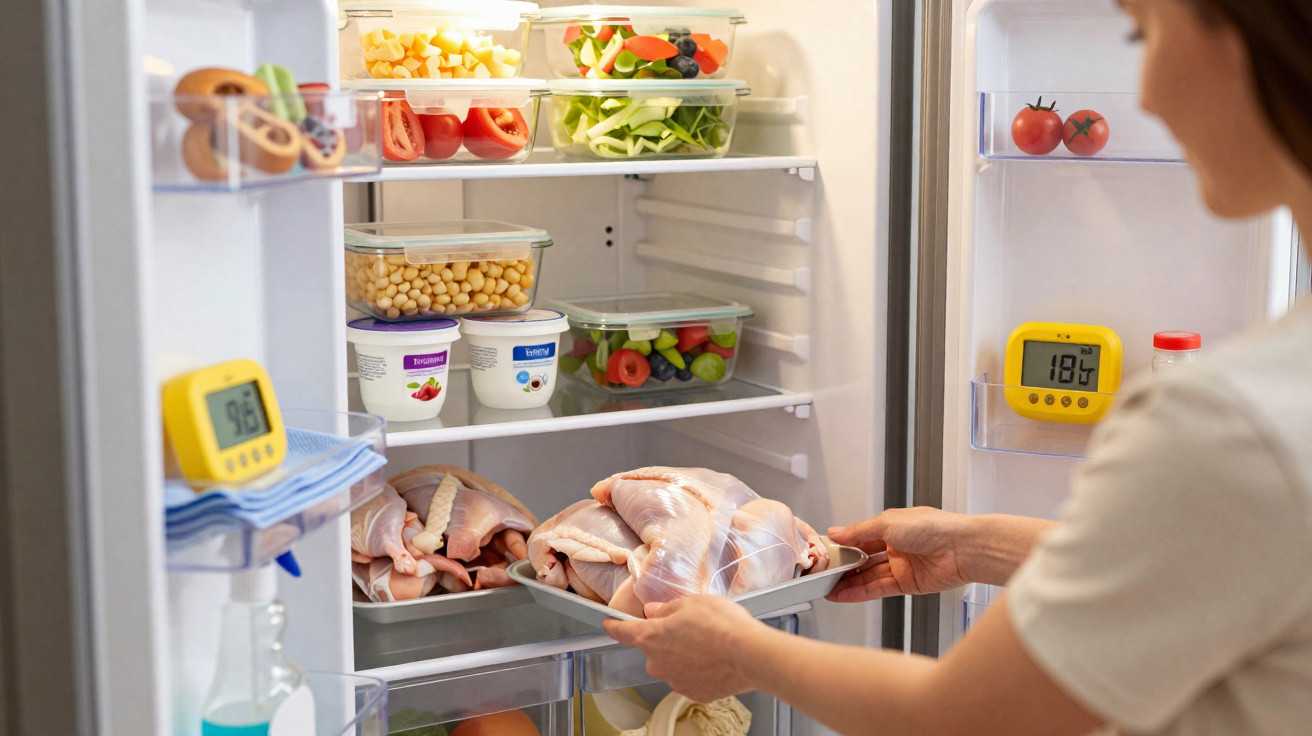
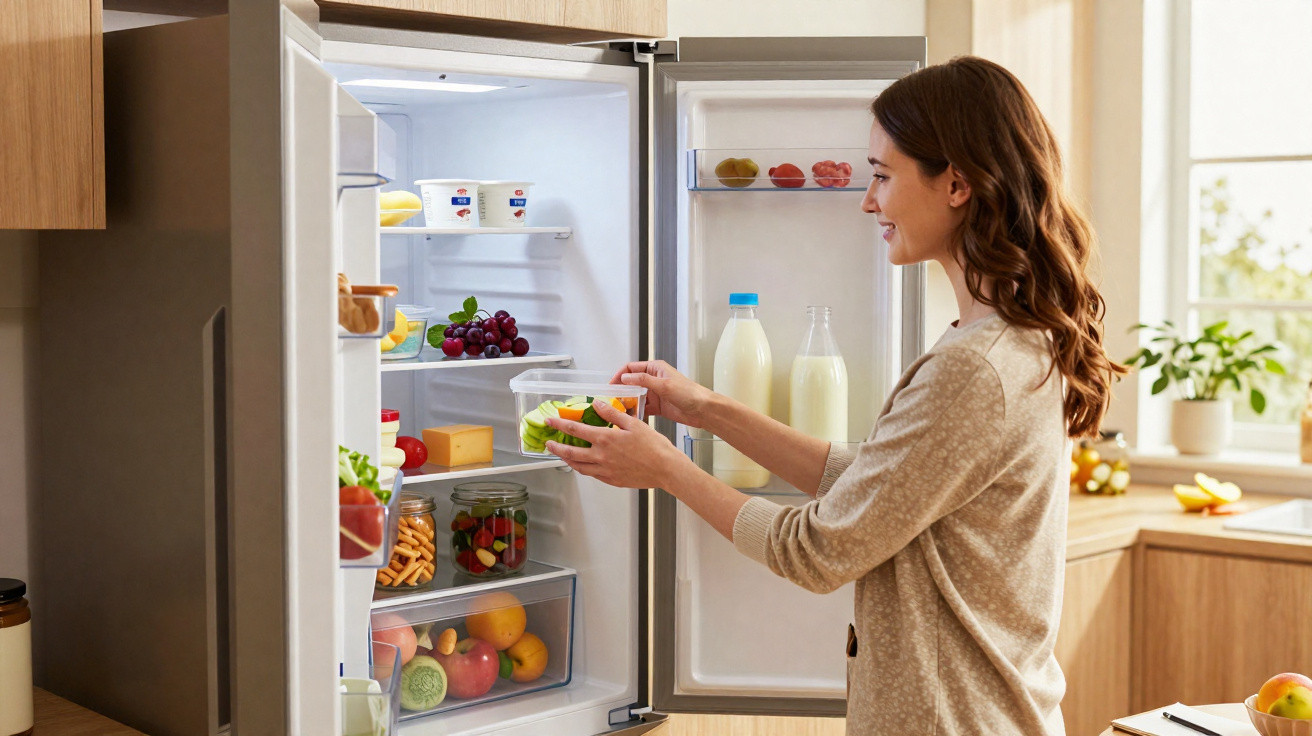
1. The right shelf: raw food at the bottom, ready-to-eat food at the top
- Bottom shelf: raw meat, poultry, fish and seafood, kept in tightly closing tubs or securely sealed containers, with no outer cardboard packaging.
- Middle shelf: prepared meals, leftovers, bakes and soups, well covered and stored for no more than two to three days.
- Top shelf: cheese, sliced meats, yoghurts and opened tins transferred into sealed containers.
- Vegetable drawer: uncooked fruit and vegetables, preferably without direct contact with meat packaging.
- Door shelves: drinks, sauces, mustard, ketchup, eggs and jam.
This arrangement prevents drips from raw products falling onto food that will later be eaten cold.
2. Clean containers instead of dripping film
Raw meat should never be placed on a shelf uncovered or only in a thin plastic tray. Use instead:
- sturdy containers with lids;
- freezer bags with a secure seal;
- glass containers, where available.
Remove unnecessary outer packaging before putting food away. This introduces fewer germs into the fridge and prevents cardboard from absorbing water and becoming soggy.
3. A quick clean, a major effect
A brief check once a month is worthwhile:
- Remove shelves and wipe them with hot water plus a little washing-up liquid or a vinegar solution.
- Clean up meat-juice spills immediately rather than allowing them to dry.
- Empty the vegetable drawer, remove crumbs and leftover leaves, then wipe it dry.
“Regular wiping with hot water and washing-up liquid significantly reduces the number of germs, without expensive specialist cleaners.”
How Salmonella survives in the fridge – and when it becomes dangerous
Salmonella usually comes from animals, including poultry, pork and eggs. It thrives best at room temperature, but can also persist in the refrigerator. Cold does not stop it entirely; it merely slows down its reproduction.
It becomes particularly problematic when:
- a contaminated product has been left unrefrigerated for a long time before being put in the fridge;
- the refrigerator temperature is set too high (above 7°C);
- leftovers are left uncovered for several days;
- salad, fruit or other cold foods come into contact with meat juice.
For complete reassurance, place a thermometer inside the refrigerator. Around 4°C in the coldest area is ideal. Many appliances are set too warm when they leave the factory.
Practical examples: storing typical problem foods safely
A few everyday situations show how easily mistakes can happen, and how to avoid them.
| Product | Unsafe storage | Safe storage |
|---|---|---|
| Raw chicken breast | Open tray on the middle shelf, beside cheese and salad | Sealed container on the bottom shelf |
| Minced meat | In its original wrapping above the vegetable drawer | In a box, below the level of the vegetable drawer |
| Pasta salad | Open bowl covered with cling film, directly below meat | Tightly closing container in the middle area |
| Washed leaf salad | Uncovered in the vegetable drawer, alongside packaged sausage | Separate bowl, not stored with meat or sausage |
How to reduce the risk further for children and older people
Anyone cooking for children, very elderly people or people with pre-existing health conditions should take an even closer look. Alongside correct storage, the following strategies help:
- prepare raw eggs and dishes containing raw egg, such as homemade mayonnaise, only when fresh and eat them promptly;
- discard leftovers after three days at the latest, or sooner if in doubt;
- always cook meat thoroughly, especially poultry and minced meat;
- keep chopping boards for raw meat separate from those used for salad.
Following these points greatly reduces the chance of catching an infection through your own refrigerator, without requiring much extra effort. Once established, the new arrangement becomes almost automatic and also makes it easier to keep track of your supplies.






Comments
No comments yet. Be the first to comment!
Leave a Comment