He chooses the identical order, takes the identical table and creases the same newspaper with the same deliberate precision. Watch him for seven days and you might assume he is moving on autopilot, with hardly a thought involved.
I once asked whether he ever found it dull. He laughed, gestured towards his head and said, “This, is how I remember who I am.” He explained that he could not remember his evening meal from three days earlier, but could still recall names, telephone numbers and stories from his childhood with striking clarity.
What appeared to be an unconscious routine, he said, had become his way of surviving forgetfulness. He was not simply passing the time; every day, he was discreetly exercising his memory.
Perhaps he has discovered something that we are only beginning to grasp.
When repetition quietly reshapes long-term memory
Look at people on a crowded commuter train and their habits are almost visible. The same seat, the same podcast, the same thumb moving through the same apps. From the outside, it can seem like wasted time. Within the brain, however, these patterns are being established.
Neuroscientists use the rather unexciting term “automaticity”. But actions that become automatic are founded on innumerable small memory choices that initially demanded conscious effort. At first, you must consider where your ticket is, which platform you need and which way to go. Eventually, your body seems to arrive before your mind does.
This is how habits find their way into long-term memory: not through dramatic acts of determination, but through modest repeated actions that gradually form the background rhythm of your life.
Consider learning a language. A 2021 study by University College London tracked adults who used a language app daily. Participants who maintained a brief, consistent practice of 10–15 minutes retained far more over the following months than those who worked in large, irregular sessions.
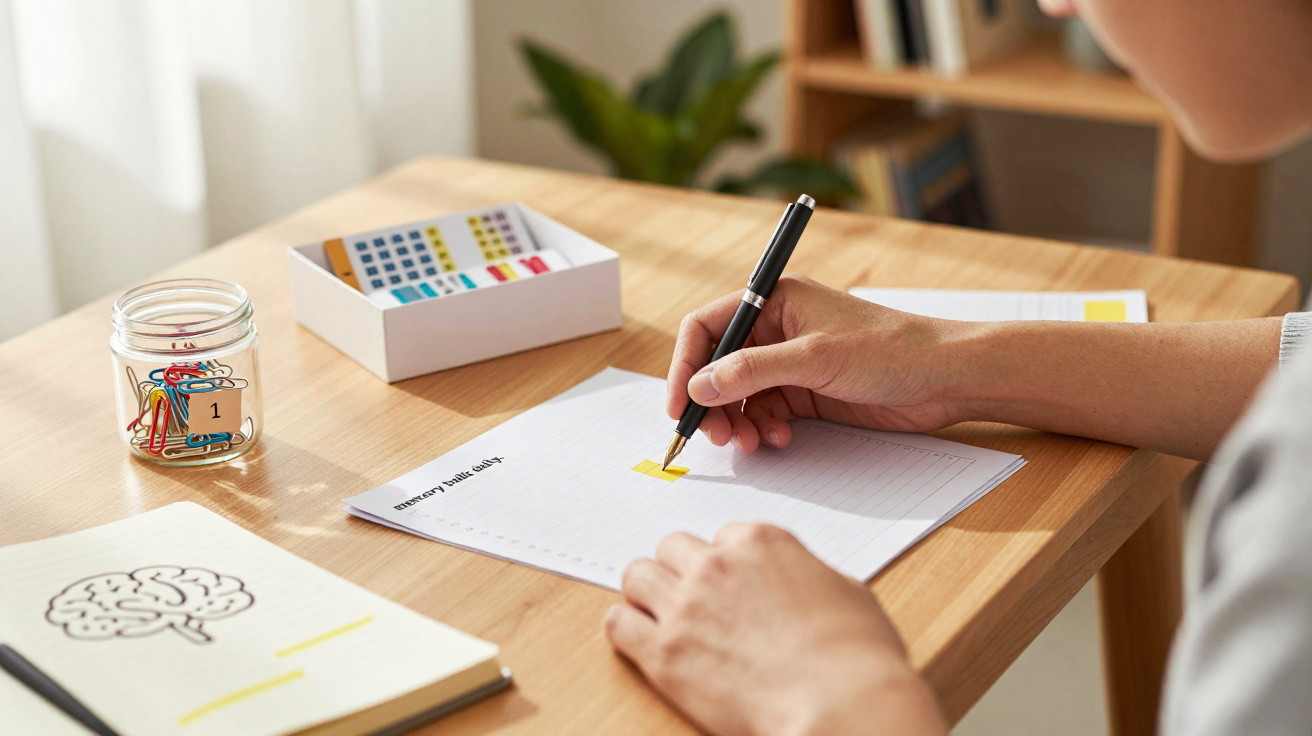
One researcher spoke about a participant who approached Spanish as she did brushing her teeth. She used the same chair, at the same time, with the same notebook. There was no drama or motivational speech, only steady consistency. She did not feel that she was achieving very much.
But when her recall was tested, she remembered words she had not looked at for weeks. Her brain had stored them alongside that known chair and familiar point in the day, like pieces of mental furniture fixed firmly to the floor.
Long-term memory is not especially interested in grand intentions. It responds to patterns. Whenever you repeat an action in a comparable setting, the neural pathway associated with it becomes stronger. Your brain begins grouping the details: the location, feeling, time and movement.
This is why revising for an exam each evening at the same desk is more effective than cramming once in a café you will never return to. You are doing more than learning information. You are signalling to your brain: “When I sit here like this, remember this stuff.”
Habits act as mental scaffolding, keeping memories secure so that they do not disappear as soon as life becomes loud or stressful.
Making habits into useful memory anchors
To put your long-term memory to work, begin by connecting habits to clear cues: the same time, place and trigger. Before getting into complex theory, try one straightforward approach: pair something you already do with something you want to remember more effectively.
For instance, you could decide to spend ten minutes each evening, immediately after washing up, revising a skill, some vocabulary or notes from your day. Washing up is the cue. Ten minutes is the habit. After several weeks, your brain starts to link that quiet period after dinner with “this is when we store things”.
At first, it may feel absurdly minor. That is precisely the idea. Long-term memory prefers repetition to intensity. You are creating a rhythm rather than staging a performance.
Most people begin on too large a scale. They attempt to transform their lives within a week, then fault their “bad memory” when nothing remains. The issue is not memory itself, but the burden we place on it. Your brain does not respond well to two hours of infrequent, draining effort on a random Tuesday evening.
Choose micro-habits instead: a single page of a book every morning, five unfamiliar words on a sticky note during lunch, or a two-line account of your day before sleep. These are tiny, nearly comical actions that do not make your brain resist.
Let’s be honest: nobody really does this every day. You will miss some evenings, misplace notebooks and forget your own rules. That is all right. What matters is having a habit with a form you can resume without guilt, like a grassy path that remains easy to locate after a few days away.
“Memory is the residue of thought,” wrote psychologist Daniel Willingham. The more often you return to a thought in the same way, the deeper it sinks into the long-term storehouse.
Think of habits, then, as a form of mental choreography: the same movements to the same music, until your mind can perform them while half-asleep. To make this choreography more manageable, it is useful to set it out clearly in your life, almost as though it were an instruction manual.
Here is a short guide to pin on the wall or save on your phone:
- Choose one small memory-related habit, such as note-taking, revision or reflection.
- Link it to an existing daily cue, such as coffee, your commute or bedtime.
- Make it brief enough that you will not come to dread it.
- Anchor it with the same location or object, such as a chair, notebook or app.
- Monitor it loosely rather than perfectly, simply to recognise your rhythm.
Living with habits that safeguard what matters to you
There is something reassuring about understanding that you do not need to “have a good memory” in order to retain what matters. You can create one. How you put down your keys, open your laptop or compose messages can all become small promises to your future self.
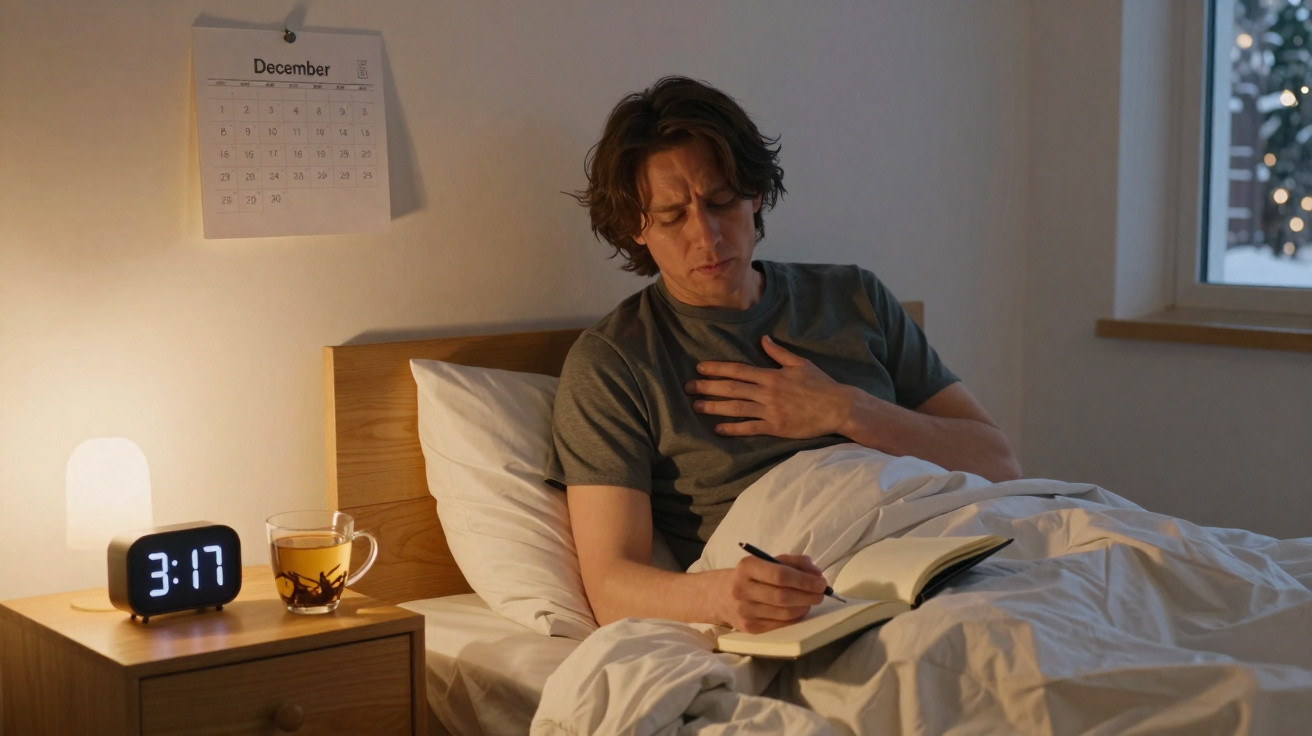
One woman I spoke with keeps a “living notebook” on her kitchen table. Each morning, she writes three lines: one thing she wants to remember, one thing she has learned and one thing she fears forgetting. It takes under five minutes. Her grandchildren now turn through years of its pages and see a life that was not merely lived, but observed.
On difficult days, that is what habits can truly provide: the feeling that your days are being gathered somewhere rather than simply disappearing into time’s blur.
| Key point | Detail | Benefit for the reader |
|---|---|---|
| Habits create memory pathways | Repeating actions in the same setting reinforces neural connections | Explains why modest routines can improve recall over time |
| Micro-habits outperform infrequent major efforts | Brief, regular practice works better than occasional intensive sessions | Encourages realistic adjustments suited to busy lives |
| Cues and context work as anchors | Time, location and objects can prompt access to long-term memories | Provides practical ways to remember names, facts and skills more easily |
















Comments
No comments yet. Be the first to comment!
Leave a Comment