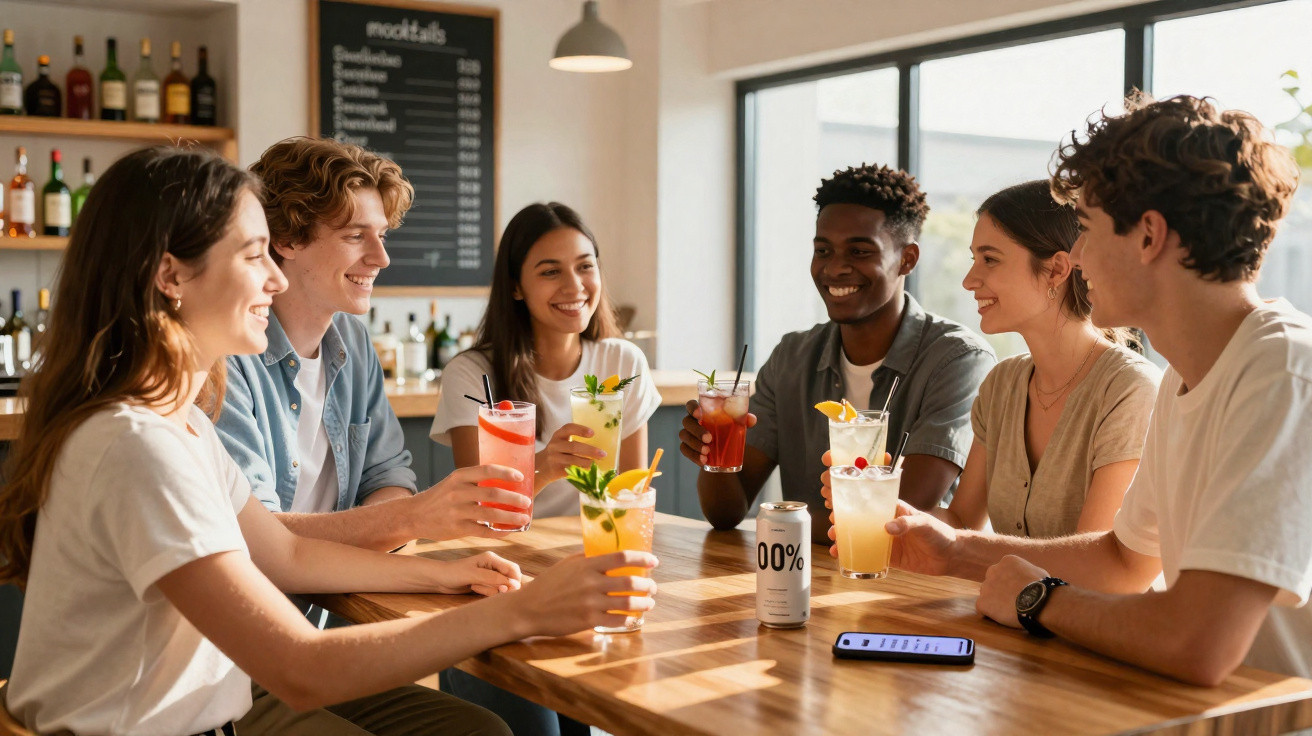
Full parties, half-filled glasses and photos featuring drinks becoming less common: a new approach to drinking is reshaping social life around the world.
From nightclubs to family dinners, attitudes towards alcohol are undergoing a quiet shift. Recent research repeatedly points in the same direction: fewer people drink, while those who do are consuming more moderately. Led largely by younger generations, the trend is visible across continents and is beginning to affect industry, culture and even the ways people enjoy themselves.
The figures confirm it: the world is drinking less
For years, the assumption that “everyone drinks” appeared beyond question. The data now tells a different story. International surveys reveal sustained declines both in the number of people drinking alcohol and in the amount they consume each week.
In the United States, a recent Gallup survey indicates a historic turning point. In 2025, just 54% of adults say they drink alcoholic beverages. Less than two years earlier, the figure stood at 62%. This is the lowest level in almost nine decades, a fall that is difficult to explain merely as a passing fashion.
The proportion of drinkers is not the only measure in decline. Volumes are also falling among people who still drink. The weekly average, once around 4 drinks, had dropped to 2.8 in 2025. In other words, even when they have not given up alcohol altogether, many people are treating it as something for more occasional use.
The decline in alcohol consumption is not a one-month challenge, but a profound lifestyle adjustment in several parts of the world.
In Australia, researchers at Flinders University identified the same pattern among people born between 1997 and 2012, known as Generation Z. Not only do they drink less than earlier generations, but they also make up a larger share of those choosing complete abstinence.
The change is also evident in the United Kingdom, a country long associated with the pub and the daily pint. Over two decades, average consumption per person has fallen from roughly 14 drinks a week to just over 10. The direction remains downward, with no clear indication of a reversal.
Generation Z: a different relationship with alcohol
The most visible driver of this transformation is generational. Today’s young adults do not regard alcohol as an essential part of socialising. Instead, they see drinking as one choice among many, rather than a rite of passage into adulthood.
Gallup data from the US illustrates the shift clearly: only half of young adults say they drink alcohol, compared with figures close to 60% just a few years ago. Put simply, being sober is no longer an embarrassing exception; it has become a commonplace decision.
Health takes centre stage
Health is playing an increasingly important role in this decision. The message that “there is no completely safe dose of alcohol” has moved beyond scientific reports and into everyday conversations. Reels, podcasts, doctors on social media and news coverage all repeat the same point: risk does not begin only with heavy drinking, but can arise even at low levels of consumption.
That message resonates strongly with people under 35, who have grown up amid anti-smoking campaigns, scrutiny of ultra-processed food and apps that track sleep and daily steps. In this setting, drinking heavily sits uneasily with the pursuit of physical, mental and professional performance.
For many young people, overdoing alcohol has stopped being “funny” and is now seen as a sign of neglecting oneself.
When inflation reaches the bar
There is another practical reason for ordering one fewer pint: money. Going out to drink has become expensive. In many countries, the cost of living has soared, rents have risen and household budgets have tightened. Against that backdrop, alcohol is an expense that can be cut.
With wages failing to keep pace with inflation, many young people are putting other experiences first: short breaks, selected concerts, courses, gym memberships and planned purchases. A night of excess, including taxis, entry charges, rounds of drinks and a late-night snack, is increasingly viewed almost as a luxury.
- More expensive alcohol in bars and restaurants
- Living costs strained by housing and food
- Greater priority given to leisure with “good memories” the following day
- More gatherings at home with alcohol-free choices
New social norms: drinking less is no longer unusual
For decades, anyone turning down a drink was expected to provide an explanation: “I’m driving”, “I have an early start tomorrow” or “I’m taking medication”. Social pressure was part of the package. In many circles, saying “I don’t drink” still attracted suspicious looks.
That social rule now seems to be breaking down. As more people choose to drink little or nothing, the notion of being a “killjoy” loses its force. It is becoming socially acceptable to spend an evening holding an alcohol-free drink - or simply a glass of water.
The industry has noticed the shift and moved quickly to create alternatives. There is now no shortage of alcohol-free beers, de-alcoholised wines and sophisticated cocktails made with botanicals, tonics and syrups, but without a drop of ethanol.
The availability of alcohol-free options at bars and events helps to normalise sobriety and removes the burden of constant justification.
The role of alcohol-free alternatives
Where the only non-alcoholic option was once the usual fizzy drink, today’s landscape is far more varied. Menus devoted entirely to “virgin” cocktails have become an attraction in bars across major cities. Brands are investing in refined labels, attractive bottles and the language of a “healthy lifestyle”.
For event organisers, providing alcohol-free alternatives has become almost essential: corporate parties, weddings and festivals already plan menus for guests who want to remain sober throughout the evening without feeling out of place.
| Trend | Effect on the relationship with alcohol |
|---|---|
| 0% drinks on the menu | Reduces pressure to drink, even in celebratory settings |
| Sober-friendly events | Makes it possible to socialise without a physical or social hangover |
| Wellbeing-focused marketing | Links sobriety with self-care and performance |
Perceptions of risk: from hangovers to cancer
Another turning point concerns how people understand risk. Previously, the issue seemed confined to hangovers, liver damage and, in extreme cases, alcohol dependence. Today, the discussion also includes cardiovascular disease, certain cancers and effects on mental health.
The belief that a daily glass of wine protects the heart has lost ground, replaced by reports presenting a much more complex picture. In more recent scientific communication, alcohol is described as a cumulative risk factor: every sip adds something to the eventual cost in years of healthy life.
In everyday life, this results in more deliberate decisions: drinking only on particular occasions, alternating alcoholic drinks with water, setting a maximum amount for the evening or taking entire months off alcohol during the year.
What this change means in practice
For many people, drinking less does not mean becoming completely abstinent. What is happening is a change in pattern: moving away from “drinking every week without thinking” towards planned consumption, usually linked to particular rituals such as a special dinner or a rare celebration.
This new landscape has tangible effects:
- Fewer blackouts and fewer risky behaviours associated with intoxication
- A decline in alcohol-related road accidents where policies accompany the cultural shift
- Fewer sick days linked to hangovers and post-party illness
- A hospitality sector forced to rethink menus and profit margins
At the same time, a different kind of leisure is emerging: daytime meet-ups, hiking, team sports, book clubs, board games and TV series marathons are sharing space with the traditional bar table. They do not replace it entirely, but they are gaining meaningful ground.
Concepts worth another look
Two terms appear frequently in this discussion: “risky drinking” and “heavy episodic drinking”. The first refers to intake levels that increase the likelihood of medium- and long-term health problems, even without dependence. The second describes episodes of “drinking until you drop”, when many drinks are consumed within only a few hours.
When research says that young people are drinking less, it often refers specifically to a decline in this heavy episodic drinking, once seen almost as a “university rite of passage”. In many countries, this behaviour is increasingly viewed more critically, rather than as an achievement to post on social media.
Possible scenarios and cumulative effects
If the global trend continues, several scenarios become more likely. Over the medium term, health systems may record fewer cases of illnesses directly linked to alcohol, freeing resources for other areas. Governments, meanwhile, may have to deal with reduced revenue from taxes specifically levied on alcoholic drinks.
At an individual level, the accumulation of small decisions - one fewer drink a week, one alcohol-free month each year, replacing alcoholic versions with alcohol-free alternatives - is likely to produce significant cumulative health effects. Risk never falls completely to zero, but the impact on the liver, heart, brain and sleep is reduced when drinking is less frequent and more moderate.
For people who still enjoy drinking, the current climate creates room for an honest question: is every sip worth it? The answer differs from one person to another, but the global change suggests that more and more people are saying “not always”. And, for the first time in a long while, that answer no longer sounds unusual at the bar table.














Comments
No comments yet. Be the first to comment!
Leave a Comment