Chinese cabbage has been a staple on Asian tables for thousands of years, yet in UK kitchens it still tends to sit quietly beside carrots and broccoli. This mild vegetable is easy to prepare, contains a surprisingly wide range of nutrients and works just as well in speedy stir-fries as it does in soups or crisp salads. It is time to take a closer look at this versatile ingredient.
Where Chinese cabbage comes from and which varieties are worth knowing
Botanically, Chinese cabbage belongs to the Brassica rapa species, placing it in the same family as broccoli and cauliflower. It has been cultivated in China for a very long time, where it remains a cornerstone of everyday cooking. Its long, tightly packed leaves, with pale ribs and tender light-green tips, are distinctive – visually somewhere between a lettuce heart and a cabbage.
Classic Chinese cabbage for supermarkets and gardens
The best-known type of Chinese cabbage forms compact, elongated heads that resemble romaine lettuce. It is generally sown in vegetable gardens during late summer and early autumn, then harvested in autumn. The heads are relatively light, with thin, delicate leaves that are ideal for brief cooking times and for eating raw.
Pak choi and other Asian cabbage varieties
Alongside traditional Chinese cabbage, pak choi is becoming increasingly popular in UK kitchens. Rather than producing a head, it grows in an open rosette with thicker white stems and dark green leaves. Its flavour sits somewhere between chard and mild cabbage.
When grown at home, these Asian cabbage varieties are vulnerable to cabbage white butterflies, whose caterpillars leave holes in the leaves. Gardeners often choose natural treatments such as nettle or tomato liquid fertiliser and pay attention to crop rotation: no other cabbage should be planted in the same spot for several years, helping to prevent diseases and pests from becoming established.
“Chinese cabbage and pak choi bring the flavours of Asian cooking to the pan – with far less pungency than traditional white cabbage.”
Chinese cabbage nutrients at a glance
Chinese cabbage may initially seem light and unremarkable. Its nutritional profile tells a different story:
| Nutrient | Amount per 100 g |
|---|---|
| Fibre | 1.2 g |
| Protein | 1.5 g |
| Calcium | 105 mg |
| Potassium | 252 mg |
| Vitamin K | 45 µg |
| Carotenoids (beta-carotene) | 751 µg |
| Glucosinolates | in significant amounts |
It also provides plenty of vitamin A and vitamin C, along with antioxidant plant compounds. At the same time, it remains low in calories: Chinese cabbage is largely made up of water but still supplies minerals such as calcium in a readily usable form.
If you want to freeze the vegetable, it is best to blanch it briefly in boiling water first. This deactivates enzymes that would otherwise speed up losses of flavour and vitamins.
What Chinese cabbage can offer for health
Its generous combination of minerals and secondary plant compounds makes Chinese cabbage a useful addition to the diet. Several potential benefits stand out:
- Protection against certain types of cancer: The glucosinolates it contains are converted by the body into active compounds such as isothiocyanates. Studies indicate that these substances support cellular repair mechanisms and influence signalling pathways involved in tumour development.
- Support for the heart and blood vessels: Potassium in Chinese cabbage helps counteract high blood pressure. Combined with its generally very low salt content, this vegetable fits well into a heart-friendly diet.
- Strong bones: Calcium and vitamin K work together. Vitamin K activates certain proteins in bone tissue, while calcium provides the building material. Chinese cabbage offers a readily available source of calcium.
- A filling side dish when losing weight: Paired with lean protein – such as chicken breast, tofu or fish – it creates a meal that keeps you full for longer without supplying many calories.
“Low in calories and rich in micronutrients: Chinese cabbage is ideal for a diet that should feel light without seeming meagre.”
Who should be cautious with Chinese cabbage
Most people tolerate Chinese cabbage without difficulty. However, its sulphur-containing compounds may cause bloating in those with irritable bowel syndrome or a particularly sensitive digestive system. In these cases, smaller portions, thoroughly cooking the vegetable and avoiding heavily spiced combinations can often help.
Flavour, texture and complementary ingredients
What Chinese cabbage tastes like
Compared with white or red cabbage, Chinese cabbage is considerably milder. The leaves are tender, while the ribs retain a slight crunch. Many people describe its flavour as gently cabbage-like, with a hint of pepperiness and freshness. This restrained character is precisely what makes it so adaptable, as it readily absorbs seasonings.
Preparing Chinese cabbage in the kitchen
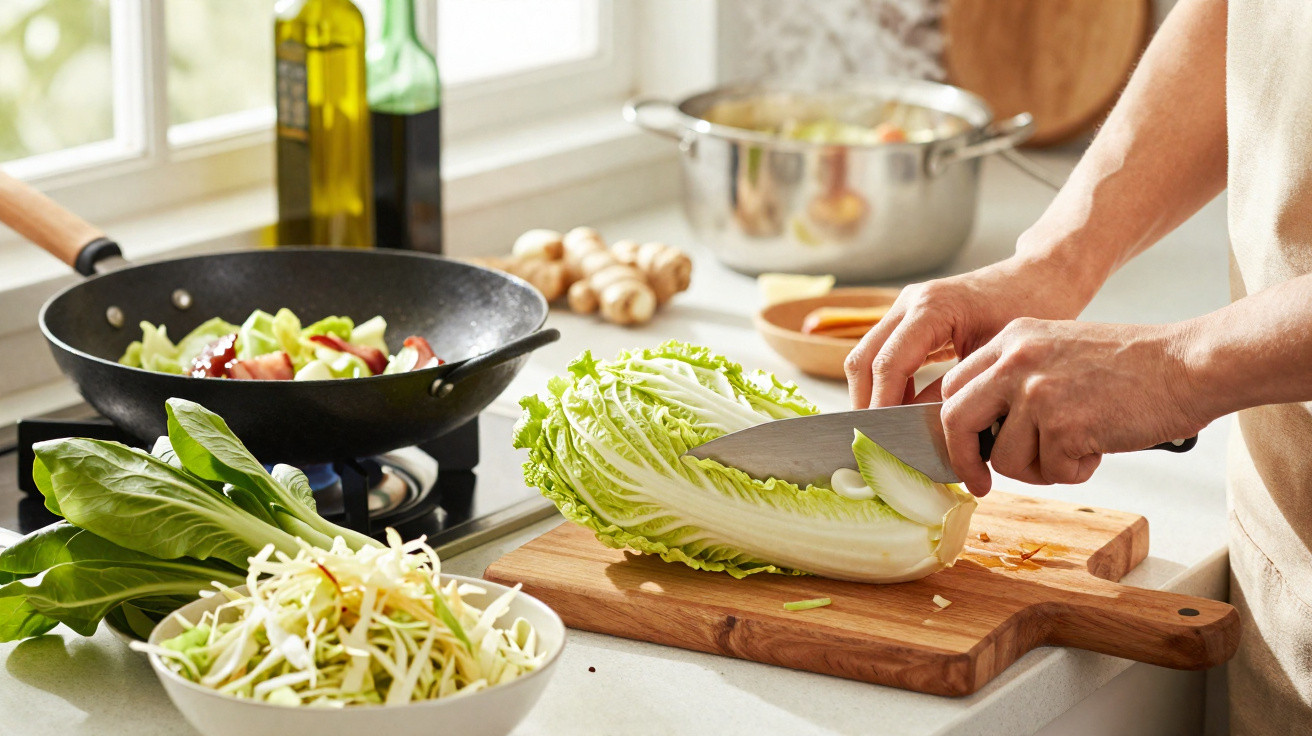
First, rinse the head thoroughly under cold water, as soil and sand often collect between the leaves. Larger heads can be halved lengthways, making the core easier to reach. Cut the thicker ribs into separate strips, while the tender leaf sections can be left slightly larger. Strips around two centimetres wide will cook evenly.
Cooking times and texture
The preparation method has a marked effect on the vegetable’s character:
| Method | Cooking time | Result |
|---|---|---|
| Steaming | 5–10 minutes | soft but still juicy |
| Wok or frying pan | 3–5 minutes | crisp with bite |
| Braising | 8–12 minutes | very tender, slightly sweet |
For quick everyday meals, a wok is the best option. For extra flavour, fry garlic and ginger first, then add the Chinese cabbage only at the end.
Seasonings, sauces and ideal partners
Chinese cabbage does not need much to taste good. It pairs particularly well with:
- light soy sauce
- sesame oil
- fresh ginger
- garlic
- fresh coriander or spring onions
Chicken, pork, strips of beef, prawns and delicate white fish are especially suitable protein partners. In vegetarian cooking, Chinese cabbage works well alongside tofu or tempeh.
Everyday recipes with Chinese cabbage
Crisp Chinese cabbage salad
Finely shred the cabbage and combine it with grated carrots and toasted nuts or almonds. Make the dressing with rice vinegar, a little mild honey, sesame oil and finely grated ginger. For a more substantial version, add a few crispy tofu cubes or strips of fried chicken.
Quick wok-fried Chinese cabbage
Heat oil in a hot wok or large frying pan, briefly fry the garlic and ginger, then add the Chinese cabbage in chunky pieces. Toss over a high heat for two to three minutes, season with soy sauce and finish with a splash of sesame oil. It is perfect with rice or fried noodles.
Pan-fried Chinese cabbage with bacon
For a more rustic dish, fry diced bacon first, remove it from the pan and use the rendered fat to cook the cabbage. Add onions, briefly fry the cabbage strips, stir the bacon back through and add a little soy sauce. The result is a robust side dish that goes well with potatoes.
Warming Chinese cabbage soup
Start with a pot of vegetable or chicken stock. Infuse it with garlic, ginger and spring onions, then add Chinese cabbage cut into strips and simmer for a few minutes. For a heartier soup, add rice noodles, glass noodles or small cubes of tofu. Stir in a few drops of sesame oil just before serving.
Buying and storing Chinese cabbage: how to keep it fresh
How to recognise good-quality produce
Chinese cabbage is usually available in supermarkets all year round, while locally grown produce is found mainly in autumn. Fresh heads feel heavy, and their leaves should be juicy and crisp, without yellow edges or dark patches. Asian supermarkets often also stock pak choi and other speciality varieties that are even more aromatic.
Storing and freezing it properly
An undamaged head will generally keep for a week in the fridge’s vegetable drawer. A perforated plastic bag or slightly open beeswax wrap is ideal, as it prevents condensation from building up. For longer storage, freeze blanched strips: a few minutes in boiling water is enough, then cool them rapidly in iced water, drain thoroughly and freeze in portions.
Practical tips for everyday cooking with Chinese cabbage
Many recipes recommend soaking Chinese cabbage before preparing it. A bath in lightly salted water not only releases sand but also draws some moisture from the cells. This concentrates the flavour and makes the leaves more pliable – useful, for example, for stuffed rolls or fermentation such as kimchi.
Anyone who is sensitive to cabbage is best starting with small quantities in cooked dishes and observing how their body responds. Gradually increasing the amount can often build tolerance, allowing this mild vegetable to become an easy part of the weekly menu.













Comments
No comments yet. Be the first to comment!
Leave a Comment