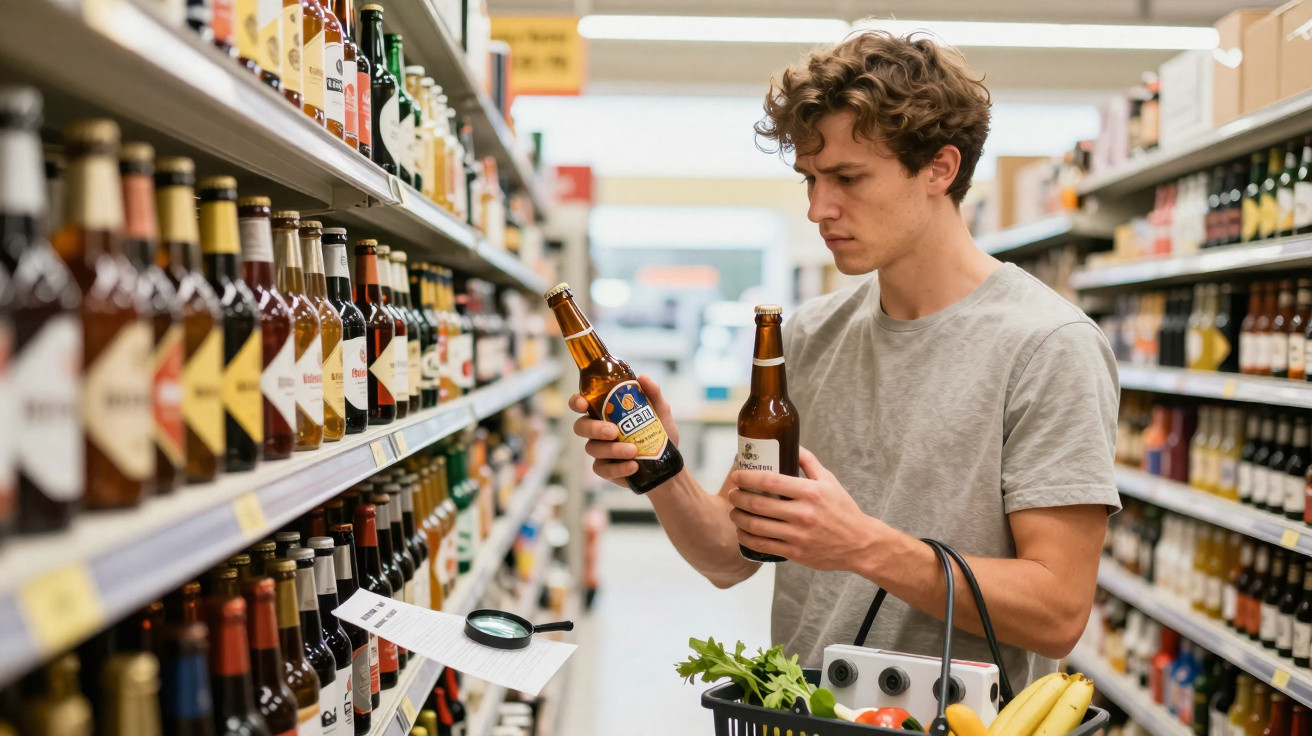
A new investigation by 60 Millions de Consommateurs examined dozens of widely sold beers from French supermarkets for pesticide residues, the clarity of their labels and value for money. The magazine placed three major brands in a red category it plainly calls “beers not to buy”.
Why French testers are concerned about your beer
Across Europe, beer is commonly presented as a straightforward, traditional drink made from barley, hops, water and yeast. This French investigation, however, suggests that the picture becomes less simple when pesticide residues are considered.
For its research, 60 Millions de Consommateurs sent 45 beers for laboratory analysis: 39 lagers, referred to as “blondes” in French, and six wheat beers, known as “blanches”. Researchers screened for roughly 250 pesticide molecules typically used on barley crops and hop fields.
Out of 45 beers tested, 34 contained detectable pesticide residues, while 11 showed no trace at all.
Four substances emerged most frequently in the results: glyphosate, the controversial herbicide, plus three fungicides intended to protect crops against mould and disease - boscalid, folpet and phthalimide.
Glyphosate was detected in 25 beers, two of which carried organic labels. Recorded concentrations ranged from approximately 0.41 micrograms per litre to around 9.23 micrograms per litre. Affligem Blonde, a prominent abbey-style lager, registered the highest glyphosate result in the whole sample, at nearly 9.3 micrograms per litre.
Is it harmful, or simply off-putting?
Even the highest recorded concentration remains well below a level associated with an immediate risk. The magazine estimated that someone would need to consume almost 2,000 litres of the most contaminated beer in one day to exceed the acceptable daily glyphosate intake established by health authorities.
This is therefore not a case of somebody becoming ill after drinking a couple of beers. Instead, the issue is cumulative low-level exposure, adding to pesticide intake from other foods and drinking water.
The watchdog’s message is less about immediate toxicity and more about long-term exposure, farming practices and the genuine quality of raw ingredients.
For plenty of drinkers, the effect may be more psychological than toxicological. Beer is widely regarded as a “natural” product, so the discovery that it may contain a mixture of weedkiller and fungicide traces undermines that perception.
The 3 beers the magazine says you shouldn’t buy
Having combined the laboratory findings with assessments of labelling, marketing statements and price, the publication identified three beers that shoppers should avoid adding to their regular shop.
According to the tests, three household names stand out for higher-than-average pesticide residues and disappointing value.
The brands named in the investigation
- Affligem Blonde – an industrial abbey-style lager.
- Hoegaarden – an extremely popular Belgian-style wheat beer.
- Itinéraire des Saveurs Blonde – a French supermarket own-brand lager.
All three had pesticide concentrations above the average across the 45-beer panel, while Affligem Blonde had the highest glyphosate reading. Although the figures remain comfortably within regulatory thresholds, the magazine challenges the agricultural sourcing and raw-material choices behind brands that rely heavily on messages of tradition and authenticity.
The investigators also took issue with their labels. Certain bottles reveal little about the origins of their cereals or hops. Others use language and imagery associated with monasteries or small villages, despite being made on a large industrial scale for global companies.
Price was another factor. In the view of 60 Millions de Consommateurs, the price per litre was not justified by the quality or transparency provided to shoppers when compared with rival beers on the same supermarket shelves.
Which beers had cleaner results?
The findings were not wholly negative. Eleven of the 45 beers analysed had no detectable pesticide residues, and these were not exclusively expensive craft products.
Several highly mainstream lagers performed well on this measure, including:
- Heineken Lager
- Carlsberg
- 33 Export
The results indicate that industrial-scale brewing does not automatically mean higher pesticide residues. Large brewing groups that closely manage their supply chains, or impose more demanding standards on cereal producers, can achieve cleaner profiles on this particular criterion.
Some of the biggest international brands showed zero detectable residues, proving cleaner sourcing is technically achievable.
The investigation does not go as far as describing any beer as entirely “safe” or “unsafe”. Its key point is that noticeable differences exist between products and that consumers can rely on several straightforward signs when making better choices.
How to choose a better beer in the supermarket aisle
At the beer shelf, shoppers usually consider price, alcohol strength and perhaps the packaging. The French test suggests adopting a few additional checks.
Practical checks before putting beer in your basket
- Read the ingredients list: simpler is generally preferable. Water, malted barley or wheat, hops and yeast are the standard ingredients. Added sugars, flavourings or “aroma” can increase complexity, or may simply reduce production costs.
- Seek origin information: some brewers now state where their barley and hops are sourced, and whether they partner with named farmers or schemes. Such traceability generally suggests tighter oversight of agricultural practices.
- Compare the price per litre: premium branding and imitation monastic imagery can inflate prices. The French study indicates that these added costs are not always supported by better quality.
- Check organic labels, while remaining realistic: organic farming substantially reduces pesticide use. Nevertheless, the analysis found tiny traces in some organic beers, potentially because of environmental drift or shared machinery.
- Alternate brands: varying the beers and styles you choose can reduce repeated exposure to the same residue patterns.
One principle does not change: beer should be consumed in moderation, whatever its residue level. Public-health guidance in many European countries recommends several alcohol-free days each week and a limit on weekly alcohol units.
What glyphosate and fungicides are doing in your beer
Glyphosate is a broad-spectrum herbicide used to eliminate weeds from fields. Brewing barley and wheat may be exposed directly, or indirectly through weed treatment on neighbouring land. Once it has entered the plant or soil, residues can remain in grain harvested for brewing.
Fungicides including boscalid and folpet are applied to control moulds that can reduce crop yields. Barley is especially susceptible during wet growing seasons, leading farmers to use these chemicals to protect harvests.
| Substance | Role in farming | Why it ends up in beer |
|---|---|---|
| Glyphosate | Herbicide used to clear fields | Residues may remain in grain used for malting |
| Boscalid | Fungicide against crop diseases | Applied to barley; traces can persist after harvest |
| Folpet | Fungicide for controlling mildew | Used during the growing season; small amounts may enter finished products |
| Phthalimide | Breakdown product associated with folpet | Occurs as a degradation product after treatment |
EU food-safety bodies establish maximum residue levels and daily exposure limits for each substance. Beer sold on European shelves must meet those requirements. The French tests found no breaches of these limits among the beers sampled, but raise the question of whether consumers accept a lawful yet potentially avoidable pesticide background in a drink that could theoretically contain no detectable residues.
What the findings mean for drinkers outside France
While the investigation covered beers purchased in French supermarkets, the named brands are also widely sold in the UK, Ireland, the US and elsewhere. Recipes and ingredient sourcing may differ slightly between markets, although supply chains for major brands are often internationally integrated.
For drinkers outside France, the findings should be seen as a warning rather than a final judgement on every bottle from a named brand. They nevertheless prompt useful questions to ask at home: does a label provide specific details on ingredients and origin, or does it merely sell a lifestyle image?
Viewing beer as part of overall pesticide exposure
A single beer containing glyphosate traces is unlikely to determine anyone’s health. The relevance comes from total exposure: residues on fruit and vegetables, traces in tap water, remnants in cereal-based foods and, finally, what is in a glass of beer.
A practical response is to focus on broader habits rather than panic. Opting for products with cleaner test results, choosing more organic options where possible, washing fresh produce and limiting alcohol consumption all help reduce cumulative exposure without requiring unrealistic lifestyle changes.
For people who enjoy a cold beer, this French investigation is not necessarily a reason to give it up. Rather, it is an encouragement to shop with a little more curiosity. Reading labels, challenging marketing language and occasionally changing brands can quietly show brewers and growers that residue-free products matter to the people drinking them.





Comments
No comments yet. Be the first to comment!
Leave a Comment